Thai Rainy-Season Street Food: Hot Bowls, Smoky Grills, Sweet Coconut Desserts, and Easy Ordering Tips
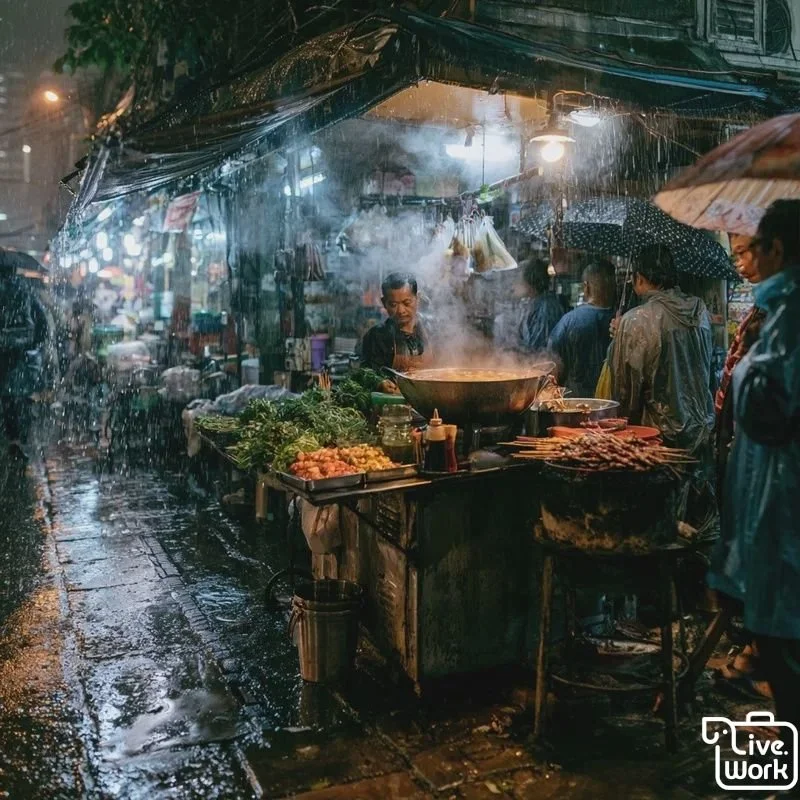
When rain starts pouring in Thailand, the street-food scene does not disappear. It changes mood. The air cools slightly, steam rises more visibly from soup pots, charcoal smoke gathers under awnings, and the sound of rain mixes with sizzling grills, clinking bowls, and vendors calling out orders. A rainy evening can turn an ordinary food stop into one of the most atmospheric meals of a trip.
Street food in the rain feels different because the food suddenly makes more sense. A hot bowl of rice porridge becomes comforting instead of merely simple. A noodle soup tastes deeper when the broth is steaming in front of you. Grilled pork skewers feel warmer in the hand. Coconut desserts become softer, sweeter, and more soothing after wet streets and grey skies. Instead of treating rain as a reason to retreat to a hotel, it can become the perfect excuse to eat like locals often do: under cover, close to the heat, with something hot, smoky, spicy, or sweet.
The key is choosing the right kind of food and the right kind of stall. In heavy rain, the best street-food dishes are usually fast, warming, and practical. You want bowls that are served hot, grills that turn over food quickly, desserts that feel cozy, and vendors who are busy enough that ingredients move constantly. Look for steam, bubbling broth, fresh herbs, local queues, and stalls that seem comfortable operating even when the weather is messy. Rain does not stop good street food. Sometimes it makes it better.
Why Rain Makes Thai Street Food Feel Even Better
Thailand’s heat often makes travelers think first of cold drinks, fruit shakes, iced coffee, and light snacks. But once the rain arrives, the appetite changes. The body wants warmth. A bowl of broth becomes more inviting. Rice porridge feels calming. Grilled meat under an awning feels like shelter and dinner at the same time. Even spicy food becomes more satisfying because it brings heat from the inside while rain cools the air outside.
Rain also changes the sensory experience of street food. Steam becomes more visible. Charcoal smoke smells stronger. The sound of oil, soup, rainwater, umbrellas, and traffic blends together. Vendors pull plastic sheets down around their stalls, customers crowd under roofs, and meals become more intimate. You are no longer eating in the open street as much as sharing a temporary shelter with everyone else waiting out the weather.
This is one reason rainy-season street food feels so memorable. The meal is not only about flavor. It is about the moment: wet pavement, bright stall lights, hot broth, chili, herbs, smoke, and the small comfort of holding something warm while the rain continues around you.
Start with Jok: Thailand’s Softest Rainy-Day Bowl
Jok is one of the best foods to eat when the weather turns wet. It is Thai rice porridge, usually soft, thick, and warming, with a texture that feels gentle after a long day. It may come with minced pork, egg, ginger, spring onion, crispy garlic, white pepper, or other toppings depending on the stall. The flavor is usually comforting rather than aggressive, which makes it a good choice when you want something warm but not too heavy.
In the rain, jok feels like a reset. It is easy to eat, easy to digest, and especially satisfying when served very hot. The bowl arrives steaming, the rice has broken down into a creamy texture, and the toppings add just enough aroma and bite. Ginger brings warmth, spring onion adds freshness, and pepper gives a mild lift without turning the meal into a chili challenge.
Jok is also a good option for travelers who are still building confidence with Thai street food. It is usually clear what you are ordering, the pot is often visibly hot, and the dish does not require complicated choices. You can point, smile, and let the vendor prepare the bowl. If there are condiments, add slowly. A little pepper or vinegar can brighten the flavor, but the beauty of jok is its softness.
Kuay Teow Nam Tok: Hot Broth, Herbs, and Rainy-Day Depth
For a stronger bowl, kuay teow nam tok is a perfect rainy-season choice. It is a rich noodle soup with a deep, savory broth, often served with pork or beef, noodles, herbs, bean sprouts, meatballs, and seasonings. The broth is darker and more intense than a simple clear soup, and the flavor can feel especially satisfying on a cool, wet evening.
This is the kind of dish that works because of contrast. The broth is hot and deep. The herbs are fresh. The noodles are soft. The chili can be adjusted. The bowl is quick, filling, and layered. A good vendor will keep the broth bubbling, assemble bowls quickly, and finish them with herbs and toppings that make the soup feel alive.
If you are sensitive to spice, this is a good dish to order carefully. Some stalls let you season the bowl yourself with chili flakes, vinegar, fish sauce, and sugar at the table. Others may prepare it already bold. Saying “mai phet” can help if you want it not spicy, while “phet nit noi” is useful if you want just a little heat. The broth itself may still be intense, but the chili level can often be managed.
Kuay teow nam tok is best eaten right away. Do not let it sit while you take too many photos. The noodles soften, the herbs wilt, and the heat fades. Rainy-day noodle soup is at its best in the first few minutes, when the steam is still rising and the bowl is almost too hot to hold.
Moo Ping: Smoky Pork Skewers Under the Awning
Moo ping, or grilled pork skewers, is one of Thailand’s great comfort snacks. In the rain, it becomes even better. The skewers are usually marinated, slightly sweet, salty, smoky, and caramelized from the grill. They are easy to eat, quick to serve, and often paired with sticky rice. When you are standing under an awning waiting for rain to soften, a few hot skewers can feel like exactly the right decision.
The appeal of moo ping is partly practical. You do not need a table. You do not need a long wait. You can order one skewer or several, add sticky rice, and eat while standing, sitting nearby, or walking once the rain slows. The smell of pork hitting charcoal is one of the most comforting rainy-street smells in Thailand.
Look for a vendor with active turnover. If locals are buying skewers quickly and the grill is constantly moving, the food is more likely to be fresh and hot. Avoid skewers that have been sitting too long without heat or protection. A busy grill is usually a good sign, especially in rainy weather when food should be served warm and fast.
Moo ping is also a good dish for travelers who do not want to navigate complex Thai menus. Point to the skewers, hold up fingers for the number you want, and add sticky rice if it is available. It is one of the easiest and most satisfying street-food orders in the country.
Grilled Chicken: Rain, Smoke, and Simple Comfort
Grilled chicken is another excellent rainy-season street-food choice. It may appear as whole pieces, wings, thighs, skewers, or chopped portions depending on the stall. Like moo ping, it works well in wet weather because it is warm, smoky, and familiar while still feeling distinctly Thai through marinades, dipping sauces, herbs, and sticky rice.
The best grilled chicken has a balance of char and juiciness. The outside should smell smoky, the skin should have color, and the meat should not look dry from sitting too long. If the vendor is actively grilling and turning pieces over the heat, that is usually a better sign than a pile of old chicken waiting under weak lamps.
Grilled chicken with sticky rice is a classic low-stress order. It is filling without being complicated, and you can add som tam or a spicy dipping sauce if you want more flavor. On rainy days, however, the simplest version is often enough: hot chicken, sticky rice, maybe a little sauce, and a dry place to stand or sit.
The comfort comes from the directness. Rain outside, grill in front of you, food in hand.
Sweet Comfort: Bua Loy in Warm Coconut Milk
Bua loy is one of the coziest Thai desserts to eat when the rain is falling. It usually consists of small glutinous rice balls served in warm coconut milk, sometimes with egg, pandan aroma, taro, pumpkin, or colorful variations depending on the vendor. The texture is soft and chewy, while the coconut milk is sweet, warm, and soothing.
This is not a dessert that needs to be flashy. Its strength is comfort. After spicy noodles or smoky skewers, a small bowl of warm coconut milk and rice balls feels like a gentle close to the meal. It is sweet but not always overwhelmingly heavy, and it has the kind of warmth that makes sense when the street is wet and the air has cooled.
Bua loy is especially good when the vendor serves it hot and the coconut milk tastes fresh. Watch the pot, the serving rhythm, and the number of people ordering. A dessert stall with steady customers is usually a good sign because coconut-based sweets are best when they are fresh and handled carefully.
Rainy-night bua loy is one of those quiet food memories that can stay with you longer than a famous restaurant meal.
Mango Sticky Rice: Best When Mango Is in Season
Khao niew mamuang, or mango sticky rice, is not necessarily a rainy-weather dish in the same way as hot soup or warm coconut desserts, but it can still be a beautiful comfort food when mango is in season. The combination of ripe mango, sweet coconut sticky rice, and salty coconut cream has a soft richness that feels indulgent without needing to be complicated.
During rain, mango sticky rice works best when you want something sweet after a hot meal. It is not served steaming like jok or bua loy, but the sticky rice may still be warm or room temperature, and the coconut flavor feels cozy. The mango brings brightness after chili, broth, and grilled meat.
Because mango quality matters, look for stalls where the fruit looks ripe, fresh, and actively prepared rather than old and tired. A good mango sticky rice portion should feel balanced: sweet mango, tender sticky rice, coconut cream, and a slight salty note that keeps the dessert from becoming flat.
If mango is not at its best, choose another dessert. Thai street sweets are varied, and part of eating well is choosing what looks fresh that day.
Rainy-Day Thai Street Food Guide
| Dish | Why It Works in the Rain | Best Way to Enjoy It |
|---|---|---|
| Jok | Soft rice porridge feels warm, gentle, and comforting when the streets are wet and the air cools slightly. | Eat it hot with ginger, spring onion, crispy garlic, egg, or pepper, and keep the seasoning simple if you want a calm bowl. |
| Kuay Teow Nam Tok | Deep broth, noodles, herbs, and heat make it feel like an instant reset during heavy rain. | Choose a stall with a bubbling stock pot, order the spice level clearly, and eat the bowl immediately while it is still steaming. |
| Moo Ping | Smoky grilled pork skewers are fast, warm, easy to eat, and especially satisfying under an awning. | Order a few skewers with sticky rice and look for a busy grill where food is moving quickly. |
| Grilled Chicken | Charcoal smoke, hot meat, sticky rice, and dipping sauce make it one of the simplest rainy-day comfort foods. | Choose pieces that are actively grilled and still hot rather than chicken that has been sitting too long. |
| Bua Loy | Warm coconut milk and chewy rice balls create a cozy dessert that feels made for rainy evenings. | Eat it after a spicy or smoky meal when you want something sweet, soft, and calming. |
| Khao Niew Mamuang | Mango sticky rice brings coconut richness and fresh fruit sweetness when ripe mango is available. | Choose it when the mango looks fresh and fragrant, and enjoy it as a softer finish after street-food grazing. |
How to Order Without Stress
Ordering street food in Thailand becomes easier when you keep it simple. You do not need perfect Thai to eat well. In many street-food situations, pointing, smiling, and using a few short phrases is enough.
The most useful phrase is “ao an-nee,” which means “I’ll take this” or “I want this one.” It works especially well when you can point directly to the dish, skewer, pot, dessert tray, or photo menu. Say it gently, smile, and use your fingers to show quantity if needed.
If you do not want spicy food, say “mai phet.” This means “not spicy.” It is useful for noodle soups, stir-fries, salads, and dishes where chili can be adjusted. If you want a little heat but not too much, say “phet nit noi.” This means “a little spicy.” It is one of the best phrases for travelers who want Thai flavor without overwhelming chili.
Tone and body language matter. Street-food stalls can be busy, especially during rain when everyone gathers under cover. Keep your order short, clear, and friendly. Point first, then speak. Watch how locals order. If the stall has a queue, follow the flow. If you are unsure, wait a moment and observe before stepping in.
Simple Thai Ordering Phrases for Rainy Street Food
| Phrase | Meaning | Best Use at a Stall |
|---|---|---|
| Ao an-nee | I’ll take this one. | Use while pointing to a bowl, skewer, dessert, tray, menu photo, or item you want. |
| Mai phet | Not spicy. | Use when ordering noodle soups, stir-fries, salads, or anything where chili can be reduced or left out. |
| Phet nit noi | A little spicy. | Use when you want some heat but prefer the vendor not to make the dish fully spicy. |
| Neung | One. | Useful when ordering one bowl, one portion, or one dessert. |
| Song | Two. | Useful when ordering two skewers, two bags, two drinks, or two portions. |
| Khop khun | Thank you. | Use after ordering, paying, or receiving food, especially when the stall is busy. |
What to Look for at a Good Rainy-Day Stall
Rainy weather makes stall choice more important. You want food that is hot, fresh, and moving quickly. High turnover is one of the best signs. If locals are lining up despite the weather, the stall is probably doing something right. A queue does not guarantee perfection, but it usually suggests that food is being cooked and sold continuously.
For soup stalls, look for a bubbling stock pot. Steam and active heat are good signs. The broth should be hot, the noodles should be cooked fresh, and herbs or vegetables should look lively rather than wilted. For grill stalls, look for active cooking rather than food sitting too long away from heat. Skewers, chicken, and satay-style items should smell smoky and look freshly turned.
For desserts, especially coconut-based ones, freshness matters. Choose stalls where sweets are served regularly and the ingredients look clean and protected. Rain can bring splashing, crowding, and damp surfaces, so a tidy stall setup becomes even more important.
The local queue is useful, but also watch behavior. If people are ordering confidently, eating nearby, and the vendor is moving quickly, that is a strong sign. If food looks tired, exposed to rain, or ignored, keep walking.
Hygiene Without Overthinking It
Street food is part of everyday life in Thailand, and many stalls are excellent. Still, basic hygiene awareness helps, especially during rainy weather. Heavy rain can splash water from streets, crowd stalls, and make surfaces messier than usual. This does not mean you should avoid street food. It means you should choose carefully.
Hot food is usually your safest starting point. Boiling broth, fresh grilling, steaming porridge, and food cooked directly in front of you are reassuring signs. Avoid items that have been sitting uncovered for a long time, especially if rainwater, dust, or traffic spray could reach them. Freshly cooked is better than lukewarm. Busy is better than forgotten.
Also watch the vendor’s system. Good stalls often have a rhythm: money handled separately from food when possible, utensils used properly, ingredients covered or protected, and cooked food kept hot. It does not need to look fancy. It just needs to look active, organized, and cared for.
Your own habits matter too. Carry hand sanitizer or wipes, keep your phone away from wet food surfaces, and avoid placing bags on damp ground. Rainy street food is more enjoyable when you can eat comfortably and confidently.
Where to Eat When It Rains
The best rainy-day street-food spots are places with cover. Look for stalls under awnings, market roofs, shopfront shelters, BTS-adjacent food areas, covered sidewalks, or night-market sections with proper tarps. A good rainy-food location lets you stand or sit without blocking the walkway and without getting soaked while ordering.
Areas near offices, markets, hospitals, universities, transport stops, and local neighborhoods often stay active during rain because people still need to eat. In these places, vendors are used to serving quickly under changing weather. The food may be less staged for tourists and more connected to daily routines.
Avoid standing in dangerous or inconvenient places just because the food looks good. If a stall is beside fast traffic, deep puddles, or an overcrowded shelter, it may not be worth the discomfort. Rainy street food should feel cozy, not stressful.
Building a Rainy Street-Food Meal
A good rainy street-food meal can be built in stages. Start with something hot, such as jok or kuay teow nam tok. This gives you warmth and substance. Then add something smoky, such as moo ping or grilled chicken, if you still feel hungry. Finish with something sweet, such as bua loy or mango sticky rice if the mango looks good.
This progression works because each dish does a different job. The soup or porridge warms you. The grill satisfies you. The dessert softens the meal. You do not need to order everything at once. In fact, rainy street-food eating is often better when you move slowly from one stall to another, waiting under cover and letting your appetite decide the next stop.
If the rain is heavy, stay near one cluster of stalls rather than crossing multiple streets. Let the weather define the meal. The best dish may be the one directly in front of you, served hot, while everyone else is also waiting for the rain to ease.
A Rainy Evening Street-Food Flow
| Part of the Evening | Atmosphere | Best Focus |
|---|---|---|
| First Rain Shelter | Sudden, noisy, and crowded, with people gathering under awnings, shopfronts, and market roofs. | Move toward a covered food area instead of standing exposed, then take a moment to observe which stalls are busy and active. |
| Hot Bowl Stop | Steaming, comforting, and grounding, with broth or porridge turning the rain into part of the meal. | Order jok for a gentle reset or kuay teow nam tok for a deeper, more flavorful bowl. |
| Grill Stop | Smoky, warm, and practical, with skewers or chicken served quickly under cover. | Choose moo ping or grilled chicken from a stall with active turnover and food still hot from the grill. |
| Sweet Finish | Cozy and slow, especially when warm coconut milk or fresh mango balances the savory dishes before it. | Look for bua loy if you want something warm, or mango sticky rice when ripe mango is fresh and in season. |
| Rain Eases | Cooler, calmer, and satisfied, with wet streets reflecting lights and the crowd beginning to move again. | Pack any leftovers carefully, thank the vendors, and continue your route once the heaviest rain has passed. |
Why Locals Still Line Up in the Rain
When you see locals lining up at a stall despite rain, pay attention. It usually means the food is worth the inconvenience. Rain makes people more selective. Nobody wants to stand under a crowded awning for a mediocre bowl unless the stall is convenient, trusted, or genuinely good.
Local queues also help you understand timing. Some foods are tied to certain parts of the day. Jok may be popular in the morning or evening. Grilled skewers can move quickly around commute times. Noodle stalls may fill during lunch, dinner, or rainy breaks. Dessert vendors may become more appealing after the main meal crowd has eaten.
The queue is not only a sign of quality. It is a sign of rhythm. Street food depends on timing, and rainy weather often concentrates customers around the stalls that serve quickly and reliably.
Eating Under an Awning: Small Etiquette Tips
Rain makes space tighter. Everyone is trying to stay dry, vendors are working in a smaller protected area, and customers may be balancing umbrellas, bags, food, and phones. A little awareness makes the experience smoother.
Do not block the front of a stall after ordering if other people are waiting. Step slightly to the side. Keep your umbrella low but not dripping onto someone else’s food. Have small cash ready if possible. If there are stools or tables, do not occupy more space than you need, especially during a downpour when others may be trying to eat too.
If you take photos, do it quickly and respectfully. Rainy street food is photogenic, but vendors are working. Do not hold up the queue for the perfect shot. A quick photo of steam, skewers, or a bowl is fine. Turning a busy stall into a personal photo session is not.
A smile goes a long way. Rain can make everyone slightly tense, and friendliness helps.
Conclusion
Rainy-season street food in Thailand is not something to avoid. It can be one of the most comforting and atmospheric ways to eat. When the sky opens, look for the foods that match the weather: steaming jok, rich kuay teow nam tok, smoky moo ping, grilled chicken, warm bua loy, and mango sticky rice when the fruit is fresh and in season. Use simple ordering phrases like “ao an-nee,” “mai phet,” and “phet nit noi,” and choose stalls with bubbling pots, active grills, high turnover, and locals lining up even in the rain. The best rainy street-food experience is warm, practical, flavorful, and deeply local: a bowl of broth, a skewer from the grill, a sweet coconut dessert, and the sound of rain all around you.