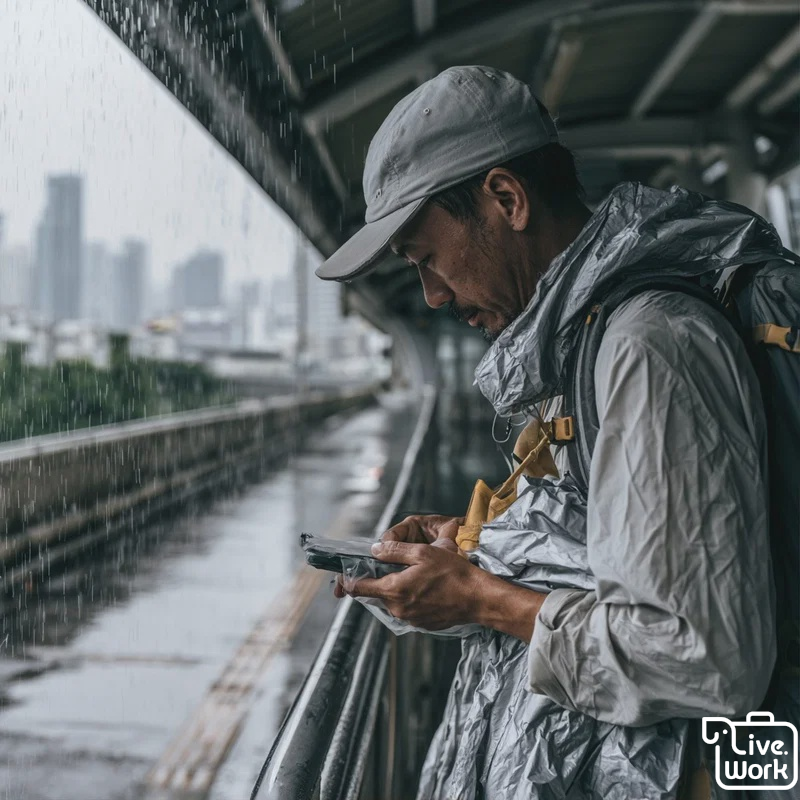
Bangkok Rainy Season Survival Guide: Dry Feet, Dry Tech, BTS Bridges, Mall Pit-Stops, and Calm Backup Routes
Bangkok’s rainy season does not have to ruin your day. It only becomes difficult when you treat the rain as a surprise every time it arrives. Once you accept that sudden showers are part of the city’s rhythm, rainy-season Bangkok becomes much easier to manage. The trick is not to avoid rain completely. The trick is to plan for dry feet, a dry phone, a protected bag, and a flexible route that can shift indoors for twenty minutes without turning the whole day into a failure.
Rain in Bangkok can be dramatic. A street may be bright and hot one moment, then dark, loud, and flooded with umbrellas a few minutes later. Traffic slows, motorbikes pull under bridges, taxis become harder to catch, and sidewalks can turn into a mix of puddles, slippery tiles, and awkward curb crossings. But Bangkok also gives you tools to keep moving: BTS stations, MRT connections, elevated walkways, malls, department stores, hotel lobbies, cafés, and covered market sections. Used well, these are not distractions from the city. They are part of how the city works during rain.
A good rainy-season day in Bangkok is built around calm movement. You start with footwear that can handle wet streets, protect your tech before the sky opens, carry one or two small waterproofing tricks, and use malls as short bridges rather than full-day traps. Grab a coffee, check the weather radar, wait for the hardest rain to pass, then rejoin your route through a covered walkway, BTS connection, or nearby station exit. Bangkok becomes much less stressful when you stop fighting the rain and start routing around it.
Why Rainy-Season Bangkok Needs a Different Mindset
Bangkok is not difficult in the rain because the rain itself is unusual. It is difficult because the city is dense, hot, and constantly moving. When a heavy shower arrives, everything reacts at once. Sidewalks fill with umbrellas. Street vendors pull plastic covers over their stalls. Motorbike riders shelter under overpasses. Traffic thickens. People crowd beneath BTS stairs, convenience-store awnings, and mall entrances. If you are standing outside with wet shoes, an exposed phone, and no backup route, the city can suddenly feel chaotic.
But if you prepare properly, the same situation feels manageable. A downpour becomes a pause, not a disaster. You step under cover, protect your bag, wait out the heaviest rain, and continue once the water slows. The goal is not to keep your entire body perfectly dry all day. In Bangkok humidity, that is often unrealistic. The goal is to protect the things that cause real discomfort: soaked socks, wet electronics, damp documents, a waterlogged laptop, and the feeling of being stuck without a plan.
Rainy-season travel in Bangkok is less about heroic waterproof gear and more about small practical systems. Shoes that grip. Spare socks in a pouch. Phone protection before the storm starts. A dry compartment for your power bank. A rain cover for your bag. A few mall and BTS connections saved in your mind. These details make the difference between a frustrating day and a surprisingly smooth one.
Start with Your Feet
Dry feet matter more than most travelers expect. Bangkok rain often means walking through shallow puddles, stepping over curbside water, crossing wet tiles, and moving quickly between station exits and indoor spaces. If your shoes become heavy, slippery, or soaked early in the day, every later decision becomes less comfortable.
Water-resistant sneakers can work well if they have decent grip and dry reasonably fast. They are useful when you plan to walk a lot, use public transport, and still want enough support for a full city day. Sandals can also work, but they should be secure and grippy rather than loose beach flip-flops. Smooth soles are a bad idea on wet BTS stairs, polished mall floors, tiled sidewalks, and pedestrian bridges.
The small luxury that changes everything is a spare pair of socks in a zip pouch. It sounds almost too simple, but it can rescue your mood. If your shoes are only slightly damp but your socks are wet, changing into dry socks during a café or mall stop can make you feel instantly more comfortable. Keep the spare pair sealed so it stays dry even if your bag gets splashed.
Footwear should also match the day’s route. If you are moving mostly through BTS-connected malls and central Bangkok, water-resistant sneakers may be ideal. If you are visiting markets, riverside areas, or streets with uncertain drainage, secure sandals may be easier. The wrong choice is any shoe that becomes dangerous when wet or painful after an hour.
Protect Your Phone Before the Rain Starts
Your phone is your map, translator, ticket checker, ride-hailing tool, weather radar, camera, payment backup, and emergency contact device. In rainy-season Bangkok, protecting it should happen before the rain begins, not after the first drops hit the screen.
A small waterproof phone pouch is the cleanest solution. It lets you keep your phone accessible while protecting it from heavy rain, splashes, and wet hands. If you do not have one, a simple zip-top bag works surprisingly well as a backup. It may not look elegant, but it is better than trying to wipe a wet phone under a crowded awning while rain keeps blowing sideways.
Your power bank also needs protection. Many travelers protect the phone but forget the charger, cable, or power bank in an outer pocket. Keep charging gear in an inner compartment, dry pouch, or separate zip bag. A wet power bank is more than inconvenient; it can become unsafe or unusable. Cables should also be kept dry, especially if you plan to rely on your phone for maps and transport later in the day.
Do not wait until you are already outside in a downpour to reorganize your tech. When clouds build, move your phone pouch, power bank, passport, wallet, and documents into dry zones immediately. Rain in Bangkok can turn from drizzle to heavy shower very quickly.
Your Bag Needs a Fast Rain Plan
A bag does not need to be expensive or fully waterproof to survive a Bangkok rainy-season day. It needs a fast rain plan. The main risk is not always a long walk through heavy rain. Sometimes the problem is thirty seconds of exposure while crossing a road, waiting at an uncovered pier, stepping from a taxi, or moving between station exits. That is enough time for water to soak into fabric, reach papers, or dampen a laptop compartment.
A compact rain cover is one of the easiest solutions. Many backpacks include one, but travelers often forget to keep it accessible. If the rain cover is buried under everything else, it is almost useless. Keep it in an outer pocket or top compartment where you can pull it over the bag in seconds.
A hotel shower cap can also be surprisingly useful. It can cover the top of a small bag, wrap around a camera, protect a laptop sleeve inside the bag, or create a quick water barrier for documents. It is not a perfect solution, but it can save you in the first moments of a sudden shower.
If you are carrying a laptop, documents, passport, or important papers, place them inside an additional plastic sleeve or dry pouch inside the bag. Do not rely only on the outer fabric. Bangkok rain can be heavy, and water often finds zippers, seams, and side pockets.
A Practical Rainy-Season Packing System
| Item | Why It Helps | Best Use in Bangkok Rain |
|---|---|---|
| Water-Resistant Sneakers or Grippy Sandals | Wet sidewalks, BTS stairs, mall floors, and pedestrian bridges can become slippery quickly during downpours. | Choose footwear that keeps traction when wet and still feels comfortable for a full day of walking and transport connections. |
| Spare Socks in a Zip Pouch | Dry socks can instantly improve your mood if your feet get wet early in the day. | Keep them sealed in your bag and change during a café, mall, or hotel lobby stop when your route pauses. |
| Waterproof Phone Pouch or Zip-Top Bag | Your phone is your map, camera, ride-hailing tool, weather checker, and communication backup. | Protect it before the rain becomes heavy, especially when walking between BTS exits, malls, markets, or taxi pickup points. |
| Dry Compartment for Power Bank and Cables | Charging gear is often forgotten in outer pockets and can get wet from splash, rain, or damp hands. | Store your power bank, cable, and adapter in an inner pocket, dry pouch, or separate zip bag. |
| Compact Bag Rain Cover | A sudden shower can soak a backpack in less than a minute, especially at open crossings or station entrances. | Keep it accessible, not buried, so you can cover your bag immediately when the sky turns dark. |
| Hotel Shower Cap | It is a tiny emergency waterproof layer that can protect small items, camera gear, documents, or the top of a bag. | Use it as a quick backup when you do not have a proper dry bag or rain cover ready. |
| Small Umbrella or Light Rain Jacket | Short walks between covered areas are common, even when most of your route uses BTS, malls, or skywalks. | Use it for station exits, taxi drop-offs, street crossings, and short uncovered gaps between indoor spaces. |
Do Not Wait It Out on the Street
One of the biggest mistakes in Bangkok rain is standing on the street and waiting for the storm to pass without moving toward better cover. A small shop awning or BTS stairwell may help for a minute, but it can quickly become crowded. You may also end up trapped beside traffic spray, puddles, or blocked sidewalks.
Instead, think in terms of indoor bridges. A mall, café, BTS concourse, MRT station, department store, hotel lobby, or covered walkway can become a temporary route connector. You are not giving up on your plan. You are simply moving the route indoors for a short section.
This mindset is especially useful in central areas such as Siam, Chit Lom, Phloen Chit, Asok, Phrom Phong, and other BTS-linked zones where malls and stations connect more easily. Instead of trying to walk several exposed blocks in heavy rain, move through the connected indoor or elevated sections, pause for coffee, and continue when the heaviest shower eases.
The goal is not to spend the whole rainy day inside a mall. The goal is to use indoor spaces strategically, like stepping stones.
Malls as Pit-Stops, Not Traps
Bangkok malls are extremely useful during rainy season, but they can easily swallow the whole day if you are not intentional. You enter to escape the rain, then suddenly two hours have passed and your original plan is gone. That is fine if you want a mall day. But if you still want to explore Bangkok, treat malls as short pit-stops.
A good mall stop has a simple purpose. Dry your shoes a little. Change socks if needed. Protect your bag properly. Grab coffee or a quick snack. Check the radar. Look at your route. Decide whether to continue by BTS, wait ten more minutes, or shift to an indoor-friendly backup stop.
This keeps the day moving. You do not need to sit in frustration watching rain through the glass. You can use the pause as a reset. Once the rain drops from heavy to manageable, you move again through a connected walkway, station exit, or short covered route.
The best rainy-season travelers in Bangkok are not the driest people. They are the ones who recover quickly and keep the day flexible.
Using BTS Connections and Covered Walkways
The BTS is one of the most useful rainy-season tools in Bangkok because it lifts you above traffic and connects many areas with partial shelter. Stations often connect directly or indirectly to malls, office buildings, hotels, and elevated walkways. These connections can save you from the worst of a downpour if you plan your movement carefully.
The important detail is to think before choosing an exit. In dry weather, the nearest exit may be fine. In heavy rain, the best exit may be the one connected to a mall, covered walkway, or sheltered side of the road. A two-minute detour under cover can be much better than a thirty-second sprint through deep puddles.
At major commercial areas, elevated walkways can help you move between malls, stations, and intersections without dropping immediately to street level. This is especially valuable when pavements below are crowded, wet, or interrupted by curbside flooding. Still, walk carefully. Elevated walkways can also become slippery, and crowded stairways move slowly when everyone has umbrellas.
Use the BTS as a dry-route backbone. Build your day around station clusters rather than isolated stops far from shelter. This way, even if rain arrives, you have options nearby.
A Rain-Smart Bangkok Movement Strategy
| Rain Situation | Best Reaction | Why It Works |
|---|---|---|
| Clouds Building but No Heavy Rain Yet | Move your phone, power bank, wallet, passport, and documents into dry compartments before continuing. | It is much easier to waterproof calmly before the rain starts than to reorganize your bag under pressure during a downpour. |
| Light Rain Starting | Put on your bag cover, choose a sheltered BTS or mall-connected route, and continue moving without panic. | Light rain is manageable if your essentials are protected and you avoid waiting until streets become crowded with people seeking cover. |
| Heavy Downpour | Step into a mall, café, station concourse, hotel lobby, or covered walkway instead of waiting exposed on the street. | Heavy rain often passes or softens, and a short indoor bridge keeps you dry, calm, and able to re-plan the next section. |
| Wet Feet or Damp Socks | Use a coffee stop or restroom break to change into dry socks and let shoes air out briefly. | Dry socks provide quick comfort and prevent the rest of the day from feeling uncomfortable or irritating. |
| Route Suddenly Feels Too Exposed | Shift to a BTS-linked district, connected mall cluster, museum, gallery, café, or indoor food court nearby. | A flexible backup route lets you keep enjoying Bangkok without forcing long wet walks or expensive traffic-heavy rides. |
| Rain Eases | Rejoin your route through covered walkways, station exits, or short taxi and ride-hailing connections. | The city becomes easier again once the downpour softens, and moving after the peak rain avoids the most chaotic street conditions. |
Check the Radar, Not Just the Forecast
A general weather forecast is helpful, but during rainy season the timing of showers matters more than the daily icon. A forecast may say rain, but that does not mean it will rain all day. Often the day includes dry periods, sudden heavy bursts, and then clearer windows. This is why checking a radar or hourly rain map can be more useful than looking only at a simple weather symbol.
Use radar during your pit-stops. If the downpour looks like a short cell, wait with coffee and continue when it passes. If the rain band looks wide and slow, shift to an indoor-friendly plan for the next few hours. This keeps you from making emotional decisions based only on what is happening outside the window at that exact minute.
In Bangkok, a calm backup route is better than a perfect itinerary. Rain may delay you, but it does not have to stop you.
Good Rainy-Day Districts for Flexible Movement
Some areas of Bangkok are easier in rain because they have more transport connections, malls, cafés, and covered transitions. Siam is one of the strongest rainy-day zones because it has major malls, BTS access, indoor food, shopping, and nearby cultural stops. Chit Lom and Phloen Chit also work well because of elevated walkway connections, department stores, hotels, and cafés.
Asok and Phrom Phong are useful for BTS and MRT access, malls, restaurants, bookstores, and indoor breaks. Silom and Sala Daeng can also work if you combine BTS, MRT, offices, malls, and cafés carefully. Riverside areas can be atmospheric in rain, but they require more attention because piers, boat transfers, and open walkways may be exposed.
The best rainy-day route is built around clusters, not isolated destinations. Choose areas where one dry stop leads naturally to another. This way, if rain intensifies, you can adapt without starting over.
What to Do During a 30-Minute Downpour
A 30-minute downpour is not lost time if you use it properly. First, get under reliable cover. Not a tiny awning beside traffic, but a mall, station, café, or proper sheltered walkway. Then check your bag. Make sure water has not reached your laptop, documents, phone, or charger. If your socks are wet, change them. If your phone pouch is foggy or wet outside, wipe it before using the screen.
Next, check the radar or hourly forecast. Decide whether the rain is likely to ease soon or continue. If it looks short, order coffee or a quick snack and wait. If it looks longer, adjust the plan. Move the next activity indoors, shift to a BTS-connected destination, or choose a route that avoids street-level walking.
Finally, do not rush out the second rain becomes lighter. Give the street a few minutes to drain and the crowd to spread. The first moments after heavy rain can still be awkward: taxis stopping suddenly, puddles at crossings, crowded exits, and slippery steps. Leaving calmly is usually better than sprinting.
Protecting Documents, Laptops, and Work Gear
Bangkok rainy season is especially tricky if you are carrying work gear. A laptop bag that feels safe in dry weather may not be enough in a sudden downpour. Water can enter through zippers, side seams, bottom fabric, or the space where the bag rests against your wet clothing.
If you carry a laptop, use an inner sleeve and place that sleeve inside a second waterproof layer when rain is possible. A plastic document folder, dry pouch, or even a strong plastic bag inside the backpack can make a big difference. Documents should never sit loose in an outer compartment during rainy season.
Keep your power bank separate from papers and fabrics. If something leaks, you do not want wet tissues, receipts, or clothing pressed against electronics. The more organized your bag is, the easier it is to protect quickly.
This may sound cautious, but it is much less annoying than arriving at a meeting, hotel, coworking space, or airport with damp work gear.
Why Rainy Bangkok Can Still Be Beautiful
Rain changes Bangkok’s mood. It reflects neon on pavements, softens the heat, brings a brief hush before traffic returns, and makes the city’s elevated walkways feel like viewing platforms over moving water and lights. Street vendors pulling plastic sheets over food carts, office workers sharing shelter at BTS exits, and umbrellas moving through narrow lanes are all part of the rainy-season city.
If you are prepared, you can enjoy this atmosphere instead of only fighting it. A coffee break during heavy rain can feel cozy. A BTS ride over wet streets can be strangely cinematic. A mall food court can become a practical refuge. A short walk after the rain can feel cooler and fresher than the hour before.
The rainy season asks for flexibility, not cancellation. Bangkok remains Bangkok: busy, flavorful, layered, and alive. It simply needs a different route logic when the sky opens.
A Sample Rainy-Season Bangkok Day
A smart rainy-season day might begin near a BTS-connected area rather than far from transit. Start with a morning café or museum stop while the weather is still manageable. Keep your phone pouch and bag cover ready even if the sky looks bright. Move by BTS to a central station cluster before the afternoon, when showers are more likely.
If rain starts, shift into a mall or covered walkway. Use that time for lunch, coffee, or a short indoor activity. Check the radar. If the storm is short, continue to your next neighborhood through a connected route. If it is heavy, stay within the station-linked district and save open-air markets or riverside walks for later.
After the rain eases, use the cooler evening for food, night markets with covered sections, or a short street-food route near your accommodation. The day may not look exactly like the original plan, but it can still feel full and satisfying.
Conclusion
Bangkok’s rainy season is much easier when you prepare for the problems that actually matter: wet feet, wet tech, soaked documents, and feeling trapped without a backup route. Choose water-resistant shoes or grippy sandals, carry spare socks in a zip pouch, protect your phone before rain starts, keep your power bank and laptop gear in dry compartments, and use a rain cover or even a hotel shower cap to protect your bag quickly. When heavy rain arrives, do not simply stand on the street waiting it out. Move into covered walkways, BTS connections, cafés, malls, and station-linked indoor spaces. Treat malls as short pit-stops rather than full-day traps: grab coffee, check the radar, dry your feet, adjust your route, and continue when the downpour eases. With the right mindset, rainy-season Bangkok becomes less of an obstacle and more of a city-navigation skill.