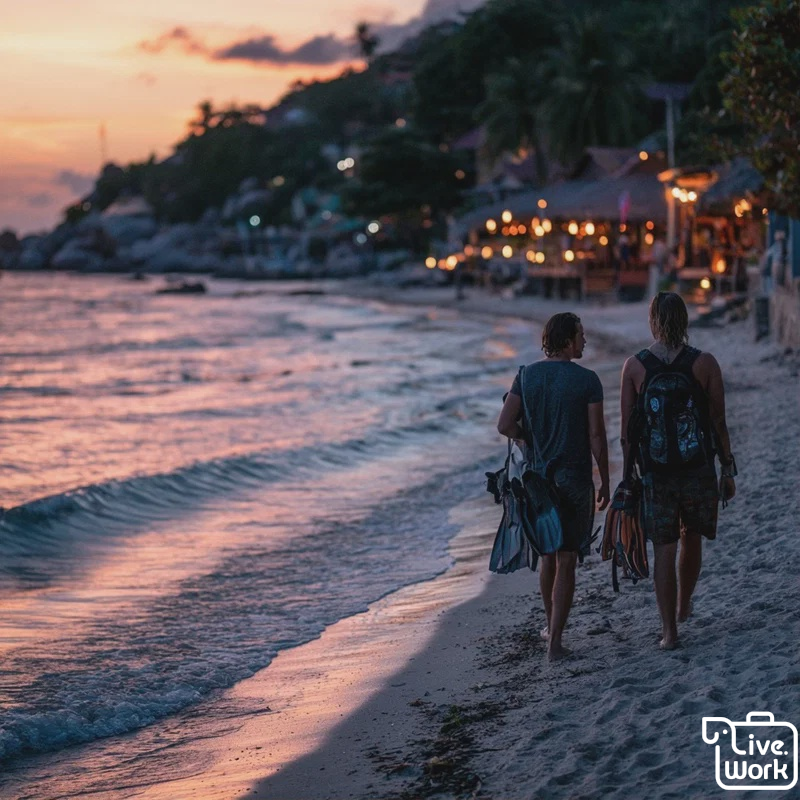
Koh Tao for First-Time Snorkelers and Beginner Divers: Calm Bays, Safe Dive Shops, Easy Beach-Hopping, and Slow Island Nights
Koh Tao is one of the easiest places in Thailand to begin exploring the underwater world without feeling overwhelmed. The island has a rare balance that works beautifully for beginners: clear-water bays close to shore, dive schools everywhere, a relaxed backpacker-meets-island atmosphere, and enough calm beach time to let you build confidence slowly. You do not have to arrive as a strong diver, an experienced snorkeler, or someone who already knows marine life by name. Koh Tao is a place where many people start from zero.
The best first experience on Koh Tao is not about proving anything. It is about choosing calm water, staying within your comfort zone, asking the right questions before booking a dive, and giving yourself enough rest between activities. Begin with easy snorkeling in bays such as Ao Leuk or Tanote Bay, where you can practice breathing through a snorkel in shallow water and watch reef fish close to shore. If scuba starts to interest you, choose a beginner-friendly dive shop that takes safety seriously, keeps groups small, maintains equipment well, and explains everything before you enter the water.
Koh Tao can feel very easygoing, but the sea still deserves respect. Conditions change, boats move between bays, sun exposure builds quickly, and a relaxed island mood should never replace basic safety. The best version of Koh Tao is calm, curious, and responsible: water time in the morning, shade and food in the afternoon, quiet evenings, and enough sleep to enjoy the next day clearly.
Why Koh Tao Is So Good for Beginners
Koh Tao has become famous for diving, but its real strength for first-timers is accessibility. You do not need to commit immediately to a full certification course to enjoy the water. You can start with snorkeling from shore, join a gentle boat trip, try an introductory dive under supervision, or take a full beginner certification course if you feel ready. This makes the island flexible for different confidence levels.
For people who are new to the sea, that flexibility matters. Some travelers arrive excited but nervous. Others are comfortable swimming but unsure about masks, fins, boats, or breathing underwater. Koh Tao gives you room to progress gradually. You can spend your first morning just standing in shallow water and practicing with a mask. You can float above reef fish before ever considering scuba. You can visit a dive shop, ask questions, and decide later.
The island also has a social but manageable atmosphere. There are beach bars, cafés, dive centers, restaurants, and guesthouses, but the water remains the main reason many visitors come. This creates a helpful daily rhythm: early starts, boat trips, beach time, simple meals, relaxed evenings, and sleep before the next morning’s dive or snorkel session.
Start with Snorkeling Before You Think About Scuba
For many first-time visitors, snorkeling is the best way to begin. It teaches you the basic comfort skills that also matter later in diving: breathing steadily, floating calmly, clearing a little water from your mask, relaxing your body, and observing marine life without chasing it.
Ao Leuk and Tanote Bay are strong beginner choices because they offer the kind of shore-based snorkeling that feels approachable. You can enter from the beach, stay close to land, and build confidence step by step. Instead of jumping straight from a boat into deeper water, you can test your mask, adjust your fins, stand up when needed, and rest whenever you feel tired.
The first few minutes with a snorkel can feel strange. Breathing through a tube may seem unnatural at first, especially if small waves splash around your face. The key is to start slowly. Stand in shallow water, place your face down, breathe gently, and remind yourself that you do not need to swim far. Once your breathing feels steady, float a little longer. Look down, not forward. Let the fish come into view naturally.
A beginner snorkel session should feel calm, not athletic. You are not trying to cover distance. You are learning how to be relaxed at the surface.
Ao Leuk: Gentle Confidence and Easy Reef Fish
Ao Leuk is a good first bay because it often feels welcoming and scenic, with water access that suits cautious beginners when conditions are calm. The bay has a relaxed shape, and the underwater life can begin surprisingly close to shore. That makes it ideal if you want to practice slowly rather than commit to deep water immediately.
The best way to experience Ao Leuk is to arrive early, when the sun is not too intense and the beach is quieter. Put on your mask before entering the water, check that the seal feels comfortable, and avoid rushing into the deeper sections. Stay where you can still control your position easily. Once you are floating comfortably, move slowly and keep your kicks gentle.
Marine life is more enjoyable when you do not chase it. Reef fish often come into view when you float quietly. If you move too quickly, splash too much, or kick downward, you disturb both the water and the animals. A slow, horizontal position helps you see more and protects the reef below.
Ao Leuk is also a good place to learn your limits. If the water feels choppy, visibility is reduced, or you feel tired, there is no need to push. Sit on the beach, drink water, and try again later or on another day.
Tanote Bay: Clear Water, Rocks, and a More Adventurous Feel
Tanote Bay has a slightly different personality. It is often loved for its clear water, rocky scenery, and accessible snorkeling, but it can feel more adventurous than a very sheltered beach. Granite boulders, deeper patches, and open water views give the bay a more dramatic atmosphere.
For beginners, Tanote is best approached with patience. Start near the shore, check conditions, and do not assume every part of the bay will feel equally easy. If you are confident in the water, you may enjoy exploring farther out when conditions are calm. If you are new, stay closer to the beach and focus on comfort first.
Tanote is also a good reminder that beautiful snorkeling does not always mean perfectly still water. Wind, tide, and boat movement can affect how easy the session feels. If the sea is active, choose a different bay or wait for better conditions. Koh Tao has enough options that you do not need to force one spot on the wrong day.
The best Tanote experience comes when you move slowly, keep space from rocks and coral, and treat the bay as a living place rather than a playground.
Snorkeling Etiquette: How to Protect the Reef While Learning
Beginner snorkelers sometimes damage reefs accidentally, not because they mean harm, but because they are still learning body control in the water. This is why the first rule is simple: keep your fins up. When you float horizontally and kick gently from the hips, your fins are less likely to strike coral, stir sand, or hit marine life.
Never stand on coral, even if it looks like rock. Coral is living and fragile. If you need to rest, swim back to a sandy area, use flotation if available, or return to shore. Do not touch fish, turtles, corals, sea cucumbers, or anything else underwater. Do not feed fish, because feeding changes natural behavior and can harm the balance of the reef.
Sun protection matters too. A rash guard or long-sleeve swim shirt is better than covering yourself in sunscreen before entering the water. If sunscreen is needed, choose reef-conscious products and apply them before swimming so they have time to absorb. The goal is to protect your skin without leaving unnecessary chemicals in the water.
Good snorkeling is quiet. The less you interfere, the more you see.
When You Are Ready to Try Scuba
Scuba diving is one of Koh Tao’s biggest draws, and it can be beginner-friendly when done properly. The important part is choosing the right introduction. Some travelers start with a one-day introductory dive, while others choose a full Open Water certification course. Either way, you should feel informed before you book.
A reputable dive shop should explain the schedule clearly. They should tell you whether there is a pool or confined-water session, how many students are in the group, who your instructor is, what equipment is included, how boat logistics work, whether insurance is included, and what safety briefing you will receive. If the answers feel rushed or unclear, ask again or choose another shop.
Do not choose a dive shop only by price. Diving is not the place to save a small amount of money at the expense of safety, comfort, or instruction quality. A slightly more expensive shop with smaller groups, better-maintained gear, and patient instructors can make a huge difference, especially for beginners.
The best beginner dive experience should feel calm, structured, and supportive. You should know what is happening before it happens. You should never feel pushed into a dive that exceeds your comfort.
Questions to Ask Before Booking a Dive Shop
| Question to Ask | Why It Matters | What a Good Answer Should Clarify |
|---|---|---|
| How many students are in each group? | Smaller groups usually give beginners more attention, calmer pacing, and better instructor awareness. | The shop should give a clear maximum ratio and explain whether assistants are used during training or boat dives. |
| Is there a pool or confined-water session first? | Practicing basic skills in controlled water helps beginners feel safer before entering open water. | The shop should explain where the first skills are practiced and how confidence is checked before continuing. |
| What certification agency or program is used? | Recognized standards help ensure the course has a clear structure, skill requirements, and safety procedures. | The shop should name the agency, describe the course level, and explain what you can and cannot do after completion. |
| What equipment is included? | Beginners need properly fitting masks, fins, buoyancy equipment, regulators, wetsuits if needed, and safety gear. | The shop should explain what is included, how gear is checked, and what happens if something does not fit comfortably. |
| Is insurance included? | Coverage can vary between operators, activities, and courses, so it should never be assumed. | The shop should clearly state whether insurance is included, what type it is, and whether you need additional personal travel insurance. |
| How do boat logistics work? | Boat times, transfer points, seasickness risk, food, water, and return times all affect the comfort of the day. | The shop should explain departure times, boat facilities, what to bring, and how long you will be away from land. |
| What happens if I feel nervous? | Beginner nerves are normal, and good instructors should have a calm plan for supporting students. | The instructor should explain that you can pause, repeat skills, ask questions, or stop if you are not comfortable. |
Choosing Beginner-Friendly Dive Sites
Beginner-friendly dive sites are not only about marine life. They are about conditions. Gentle water, manageable depth, good visibility, easy entry and exit, limited current, and enough space for training all matter. A site can be beautiful but still not ideal for a nervous beginner if the current is strong or the surface is rough.
This is why you should let instructors choose sites based on conditions rather than insisting on a famous location. A good dive shop will adjust the plan according to weather, visibility, student level, and safety. The best first dive is not necessarily the most dramatic dive. It is the one where you feel calm enough to breathe slowly, listen, practice, and actually enjoy being underwater.
Visibility can change from day to day. Do not expect every dive to look like a perfect video. Some days are clearer than others. A beginner who accepts that will enjoy the experience more. Diving is not only about seeing far; it is also about learning buoyancy, breathing, moving gently, and becoming comfortable in a new environment.
Scooter, Taxi, or Longtail: Getting Around Without Stress
Koh Tao’s beaches and bays are spread out, and getting between them requires planning. Scooters are common on the island, but they are not the right choice for everyone. Roads can be steep, sandy, uneven, wet after rain, or difficult for inexperienced riders. Adult travelers should only ride if they are properly licensed, confident, and already experienced on similar roads. A helmet is essential, and rainy-road shortcuts should be avoided.
If you are not fully confident, use taxis, shared rides, hotel transfers, or longtail boats where available. They cost more than a scooter, but they reduce stress and risk. For beach-hopping, this can be a better choice because you can focus on the water rather than worrying about parking, road conditions, or carrying wet gear.
Longtails can be especially enjoyable when sea conditions are calm. They let you approach bays from the water and turn transport into part of the experience. As always, listen to local advice about weather and waves before choosing a boat route.
The safest transport plan is the one that matches your actual comfort level, not the one that looks cheapest or most adventurous.
A Simple Koh Tao Water-Focused Day Flow
| Part of the Day | Atmosphere | Best Focus |
|---|---|---|
| Early Morning Bay Time | Cooler, calmer, and clearer, with softer light and fewer people in the water. | Start at Ao Leuk or Tanote Bay, practice relaxed snorkel breathing, and stay close to shore until you feel fully comfortable. |
| Late Morning Snorkeling | Brighter and more active, with reef fish, coral areas, and changing water movement depending on conditions. | Float calmly, keep fins up, avoid touching coral, and stop before you become tired or sunburned. |
| Midday Shade Break | Hot, bright, and better suited to rest than pushing through another full water session. | Hydrate, eat something light, sit in shade, and decide whether the afternoon should be another beach, a dive shop visit, or a rest period. |
| Afternoon Dive Planning | Practical and confidence-building, especially if you are considering scuba for the first time. | Visit dive shops, ask about group size, safety briefings, equipment, certification standards, insurance, and beginner-friendly site choices. |
| Sunset Wind-Down | Relaxed and social, with beach bars, simple food, and a slower island mood after water time. | Keep the evening easy, avoid staying out too late before diving or snorkeling, and rest early enough to enjoy the next morning. |
Sun, Hydration, and Changing Sea Conditions
Water days can be tiring in sneaky ways. You may not notice how much sun you are getting while floating, and saltwater can make you feel dehydrated faster than expected. Drink water before and after snorkeling. Use shade breaks deliberately. Wear a rash guard, hat, and sunglasses when you are out of the water.
Sea conditions can shift during the day. A bay that is calm in the morning may become choppier later. Visibility can change with wind, tide, boat traffic, or weather. If conditions do not look right, do not force the session. Koh Tao rewards patience. There is usually another bay, another morning, or another calmer window.
For beginners, comfort is the priority. The ocean should not feel like something you are fighting. If you feel tired, cold, nervous, or unsure, get out, rest, and try again when conditions feel better.
What to Pack for Snorkeling and Beginner Diving Days
| Item | Why It Helps | Best Use on Koh Tao |
|---|---|---|
| Rash Guard or Sun Shirt | Protects shoulders and back from strong sun while reducing the amount of sunscreen needed in the water. | Wear it during snorkeling, boat rides, beach-hopping, and any long session near the surface. |
| Reef-Conscious Sunscreen | Helps protect skin when clothing coverage is not enough while reducing unnecessary impact on marine environments. | Apply before swimming, use only what you need, and avoid applying immediately before entering the sea. |
| Dry Bag | Keeps your phone, wallet, camera, passport, and dry clothes safe from spray, wet boats, rain, and beach sand. | Use it for longtail rides, beach-hopping, and any day when you are moving between water and transport. |
| Reusable Water Bottle | Snorkeling, sun exposure, and salty air can dehydrate you quickly. | Carry it to beaches and refill whenever possible so you keep drinking throughout the day. |
| Light Towel or Sarong | Useful for drying off, sitting on sand, covering shoulders, or warming up after a long swim. | Keep it in your day bag for beach stops, boat rides, and post-snorkel breaks. |
| Water-Friendly Footwear | Some beach entries, rocks, boat steps, or sandy paths can be hot, uneven, or slippery. | Use secure sandals or water shoes when moving between beaches, longtails, and rocky shorelines. |
| Small Cash | Useful for beach access fees, taxis, longtails, snacks, drinks, or small local payments. | Keep it protected in your dry bag and separate from larger valuables. |
Keeping Nights Chill So Mornings Stay Good
Koh Tao has relaxed beach bars and an easy evening scene, but if your trip is built around snorkeling or diving, mornings matter more than late nights. Water activities are much more enjoyable when you are rested, hydrated, and clear-headed. A late night can make boat movement feel worse, reduce your focus, and make early dive schedules unnecessarily difficult.
The best evening rhythm is simple. Have dinner near the beach, enjoy a drink or mocktail if that fits your plans, listen to music, watch the water, and go to bed early enough to wake up fresh. Koh Tao does not need to be intense at night to be memorable. In many ways, the island is better when the evening stays soft and the next morning starts easily.
A good water trip is built the night before. Charge your phone, pack your dry bag, set out swimwear, drink water, and sleep properly. The next day will feel much better.
Why the Right Pace Matters
The easiest mistake on Koh Tao is trying to do too much too quickly. Snorkeling one bay, diving in the afternoon, riding across the island, staying out late, and repeating the next day can become exhausting. The island may look small, but sun, water, hills, boats, and heat all take energy.
A better plan is to choose one main water activity per half day. Morning snorkeling, afternoon rest. Morning dive, afternoon café. Beach-hopping one day, dive course the next. This pace lets you enjoy the underwater world without turning it into a checklist.
Koh Tao is beginner-friendly because it allows gradual confidence. Let it work that way. Start small, ask questions, choose good operators, and leave space for rest.
Conclusion
Koh Tao is one of Thailand’s best islands for first-time snorkelers and beginner divers because it makes underwater exploration feel approachable. Calm bays such as Ao Leuk and Tanote Bay let you practice breathing through a snorkel, float close to shore, and enjoy reef fish without pressure. If you want to try scuba, choose a reputable dive shop that values small groups, well-maintained equipment, clear safety briefings, recognized certification standards, and honest answers about what is included. For beach-hopping, use transport that matches your real comfort level, whether that means licensed adult scooter riding, taxis, transfers, or longtails. Protect yourself from sun, stay hydrated, respect changing sea conditions, and keep your evenings relaxed so you are ready for morning water time. Koh Tao works best when you keep it calm, curious, and responsible.