Bangkok Street Art Walk: Charoen Krung, Talat Noi, and the Riverside
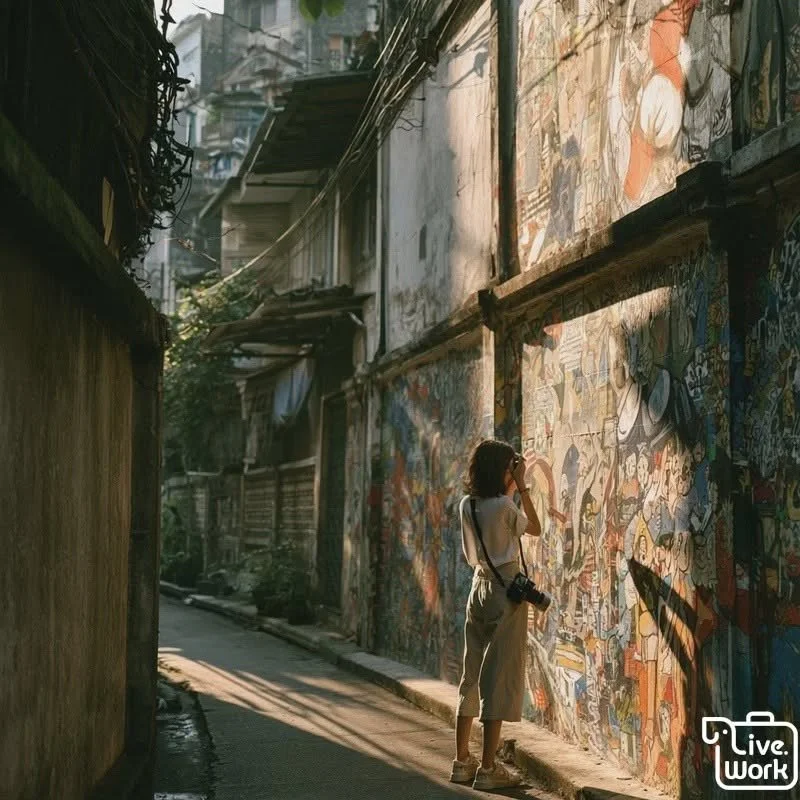
Bangkok’s street art is best experienced as part of a neighborhood walk rather than as a checklist of individual murals. Around Charoen Krung, Talat Noi, and the riverside lanes of Bang Rak, colorful walls appear between old shophouses, mechanic workshops, cafés, warehouses, shrines, and everyday residential spaces.
A convenient daytime route begins around MRT Hua Lamphong and continues toward Talat Noi and Charoen Krung before gradually heading south toward the Bang Rak riverside and BTS Saphan Taksin. This creates a more natural walking route than repeatedly changing trains, and it allows the character of the neighborhoods to change gradually along the way.
Allow roughly half a day if you want time for photographs and one or two coffee stops. The route is largely flat, but Bangkok’s heat makes early morning the most comfortable time to begin.
Why Charoen Krung Is Bangkok’s Main Street-Art District
Charoen Krung is one of Bangkok’s oldest major roads and today forms the backbone of a wider creative district stretching through Bang Rak and toward Talat Noi.
Street art here is not concentrated inside one formal outdoor gallery. Murals appear on warehouse walls, metal shutters, building corners, narrow alleys, and surfaces beside working businesses.
That unpredictability is part of the appeal. A large mural may appear beside an old engine workshop, while a tiny painted character may be hidden around the next corner. Cafés, galleries, historic buildings, and contemporary creative spaces have gradually joined the older commercial neighborhood.
Street art also changes. Murals fade, shutters are repainted, buildings are renovated, and new pieces replace older ones. Rather than arriving with a list of ten exact paintings to photograph, treat the neighborhood itself as the attraction.
Start at MRT Hua Lamphong and Walk toward Talat Noi
MRT Hua Lamphong is a useful starting point because it places you within walking distance of Bangkok’s old Chinese and riverside districts.
From the station, begin moving toward Charoen Krung and Talat Noi rather than trying to reach a specific mural immediately. The streets gradually become narrower, and old commercial buildings replace the larger roads surrounding the station.
Talat Noi, ตลาดน้อย, literally means “small market.” It is an old Chinese-Thai riverside community known for metal workshops, car-part businesses, shrines, historic houses, cafés, and street art.
This combination makes Talat Noi more interesting than a purpose-built mural district. Painted walls exist beside machinery, piles of engine parts, family homes, spirit shrines, and businesses that have operated in the neighborhood for generations.
Talat Noi Is More Than a Photo Background
It is tempting to visit Talat Noi only for photographs, but the neighborhood becomes much more interesting when you pay attention to what surrounds the murals.
Old workshops remain active. Chinese shrines sit inside narrow lanes. Small restaurants prepare breakfast and lunch for local residents. Modern cafés occupy buildings that still reveal their original brickwork, shutters, and wooden details.
Street art often responds to this environment, incorporating neighborhood history, local characters, machinery, animals, and elements of Bangkok life.
Walk slowly enough to notice smaller pieces rather than searching only for large walls. Some of the most enjoyable discoveries are paintings on shutters or corners that would be easy to miss from a car.
Morning works particularly well because many lanes are quieter and the heat has not yet become intense.
Explore the Charoen Krung Art Pockets
From Talat Noi, continue through the Charoen Krung side streets. Areas around the sois in the 20s and 30s contain a mixture of murals, old warehouses, galleries, and creative businesses.
Charoen Krung Soi 32 has long been associated with Bangkok’s street-art scene. The appearance of individual works changes over time, so visitors should expect an evolving wall rather than a permanent collection.
Nearby warehouse areas also make useful stops. Even when there is no street art directly in front of you, the combination of weathered industrial architecture and newer creative spaces makes the walk visually interesting.
This is where a coffee break fits naturally. Rather than selecting a café solely because it is famous online, choose somewhere along your route and use the stop to escape the heat for 30 minutes.
Continue South toward Bang Rak and Saphan Taksin
A practical half-day route can continue south along Charoen Krung toward Bang Rak and BTS Saphan Taksin.
This section feels slightly different from Talat Noi. The road becomes busier, hotels and larger buildings appear, and the creative district mixes with traditional shops, places of worship, restaurants, and riverside businesses.
Small lanes leading toward the Chao Phraya River are worth exploring when they are clearly public. They can reveal older architecture, small courtyards, local businesses, and unexpected wall art away from the main road.
Saphan Taksin provides a convenient finishing point because the BTS allows an easy return to other parts of Bangkok. Sathorn Pier is also nearby for travelers continuing by Chao Phraya boat.
| Area | What to Look For | Suggested Pace |
|---|---|---|
| Hua Lamphong | Older city streets and the transition toward Bangkok’s Chinese and riverside neighborhoods. | Use mainly as the starting point and begin walking toward Talat Noi. |
| Talat Noi | Murals, old workshops, shophouses, shrines, cafés, machinery, and narrow residential lanes. | Allow the most time here and explore slowly on foot. |
| Charoen Krung | Changing street art, warehouse architecture, galleries, creative spaces, and old commercial buildings. | Combine mural hunting with a coffee or gallery stop. |
| Bang Rak and Saphan Taksin | Riverside lanes, traditional businesses, larger urban murals, and the changing character of lower Charoen Krung. | Finish the route here and continue by BTS or river boat. |
An Alternative Route from BTS Saphan Taksin
The walk can also be done in reverse.
Starting at BTS Saphan Taksin works well if you are staying along the Sukhumvit or Silom BTS lines. From the station, walk north through Bang Rak and Charoen Krung, exploring public riverside lanes and art pockets along the way.
Continue toward Charoen Krung Soi 32, the warehouse district, and eventually Talat Noi. From there, either finish at MRT Hua Lamphong or continue into Chinatown and use MRT Wat Mangkon.
This direction is particularly convenient if you want the densest Talat Noi section to come later in the walk rather than at the beginning.
There is no need to use both MRT Hua Lamphong and BTS Saphan Taksin during the middle of the same route. They work better as opposite ends of one long walk.
The Best Time for a Bangkok Street-Art Walk
Morning between roughly 8:00 and 11:00 is usually the most comfortable period.
Temperatures are lower, pedestrian traffic is lighter, and soft morning light works well on weathered walls and old buildings. Narrow lanes can become noticeably hotter around midday.
Morning has one disadvantage: some murals painted on shop shutters may be hidden once a business opens, while other works may actually be covered by parked vehicles or market activity at different times of day. Street art in an active neighborhood is never completely predictable.
Late afternoon is another good option, particularly from around 4:00 until sunset. The light becomes warmer and the temperature begins to fall, but narrow lanes and cafés may be busier.
Midday is possible if you plan regular air-conditioned breaks, but it is unnecessarily tiring for a walking-focused itinerary.
Photography Works Best When You Include the Neighborhood
A close photograph of a mural records the artwork, but a wider frame often tells a better Bangkok story.
Include old shutters, motorcycles, workshop equipment, overhead wires, trees, street signs, or shophouses when they complement the composition. The contrast between contemporary art and older urban architecture is one of the defining characteristics of Charoen Krung and Talat Noi.
Early light can create strong shadows in narrow sois. Cloudy days are also excellent because diffused light reduces glare and makes mural colors easier to photograph.
Avoid standing in the road to obtain a perfectly centered image. Traffic can appear suddenly even in small lanes.
Murals should never be climbed on, touched unnecessarily, or used as backgrounds for setups that interfere with residents and businesses.
Respect the People Who Actually Live and Work Here
Talat Noi and Bang Rak are living neighborhoods, not outdoor studios created solely for visitors.
Do not block doorways, workshop entrances, driveways, or shop shutters while taking photographs. A location that looks visually interesting may also be the entrance to someone’s home.
Avoid stepping across private thresholds unless invited. Small alleys can blur the boundary between public and private space, so pay attention to gates, footwear outside homes, furniture, and other signals.
If a person will be the main subject of a photograph, ask first. Pointing at your camera and smiling is often enough when language is limited.
Keep voices relatively low in narrow residential lanes. Large groups can sound surprisingly loud between closely spaced buildings.
The same respect applies inside shrines and religious spaces. Street-art exploration may lead directly past Buddhist temples, Chinese shrines, churches, and community worship areas where normal cultural etiquette takes priority over photography.
Coffee Stops Are Part of the Route
Charoen Krung and Talat Noi have become well known for cafés occupying converted shophouses, warehouses, and historic buildings.
A coffee stop is useful for more than caffeine. Bangkok mornings become hot quickly, so sitting indoors for half an hour can make the second part of the walk much more comfortable.
Independent cafés also reveal another layer of the neighborhood’s transformation. Old industrial and commercial spaces increasingly sit beside contemporary coffee, design, and art businesses.
There is no need to plan every café before arriving. Walking until you find somewhere appealing keeps the day flexible and prevents the route from becoming another checklist.
If a café occupies a residential-looking building, check signs and opening information before entering rather than assuming every interesting doorway is a business.
What to Bring for the Walk
Comfortable shoes matter more than specialized equipment. The route is mostly urban and relatively flat, but uneven pavements, broken surfaces, steps, and narrow lanes are common.
Carry water, especially if walking beyond 11:00. A small umbrella provides useful sun protection as well as protection from sudden rain.
Light clothing makes the walk more comfortable, although modest dress is useful if you plan to enter temples or shrines along the way.
A small power bank is practical because navigation and photography can drain a phone quickly.
During the rainy season, a compact rain jacket or umbrella can keep a short shower from ending the walk. Wet pavement and metal surfaces can become slippery, so slow down after heavy rain.
How Long to Allow
A focused street-art walk can be completed in approximately two hours, but that requires keeping café and photography stops short.
Three to four hours is more comfortable for a route from Hua Lamphong through Talat Noi and Charoen Krung toward Bang Rak. This provides time to enter side streets, have coffee, and pause when something interesting appears.
A half-day is ideal if you also want galleries, lunch, historic buildings, or a longer riverside break.
Avoid trying to combine the walk with too many major Bangkok attractions. Street art is enjoyable precisely because the route rewards wandering and small discoveries.
Common Mistakes on a Bangkok Street-Art Walk
The first mistake is searching for exact murals from old photographs. Bangkok street art is temporary by nature, and a wall may have changed completely since a guide was published.
Another is spending the entire walk looking at a navigation screen. Use the map to stay within the general area, then look around.
Do not assume every narrow lane is a public shortcut. If a route clearly enters a home, workshop, private courtyard, or closed property, turn around.
Starting at midday is another avoidable mistake. Bangkok heat can turn a relaxed creative-district walk into an exhausting exercise.
Finally, do not rush from mural to mural. The old garages, shrines, cafés, river glimpses, architecture, and everyday street life between the artworks are what give this part of Bangkok its character.
Conclusion
Bangkok’s Charoen Krung and Talat Noi districts offer an easy street-art experience that combines murals with old architecture, cafés, workshops, riverside lanes, and living neighborhood culture.
For a simple half-day route, begin at MRT Hua Lamphong, explore Talat Noi, continue through the street-art pockets around Charoen Krung, and gradually walk south toward Bang Rak and BTS Saphan Taksin. The same route works equally well in reverse.
Morning is usually the best time for cooler temperatures, softer light, and quieter lanes. Bring water, take café breaks, and expect the artworks themselves to change over time.
Most importantly, treat the area as a neighborhood first and an outdoor gallery second. Respect homes and businesses, ask before photographing people, and leave enough time to notice the details between the murals. That is where Bangkok’s creative riverside districts become most interesting.