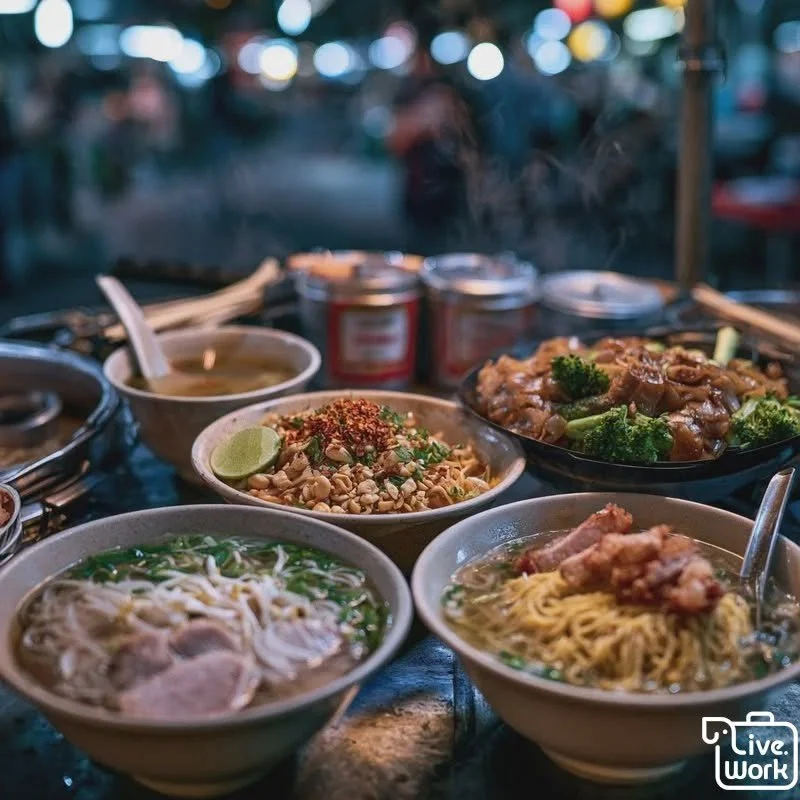
How to Order Noodles in Thailand: Noodle Types, Broths, Toppings, and Useful Thai Phrases
Ordering noodles in Thailand becomes much easier once you understand the basic formula: choose the noodle, decide whether you want soup or dry noodles, then select the style of broth and toppings.
At a typical Thai noodle shop, you may be able to choose between thin rice noodles, wide rice noodles, egg noodles, or glass noodles. The same ingredients can then be served in clear broth, spicy tom yum soup, pink yen ta fo broth, or without soup as a dry noodle bowl.
You do not need to memorize an entire Thai menu. Learning a handful of terms such as sen lek, sen yai, ba mee, nam, and haeng is enough to start customizing a bowl confidently.
The Four Noodle Types to Know
Thai noodle shops may offer several noodle varieties, but four appear particularly often.
เส้นเล็ก, sen lek, means small or thin rice noodles. They are slightly wider and firmer than very fine rice vermicelli and work well in both clear soup and tom yum noodles. Sen lek is a good starting point for anyone who enjoys Vietnamese pho-style rice noodles.
เส้นใหญ่, sen yai, means large noodles. These are broad, soft rice noodles with a smooth and slightly chewy texture. They are especially well known as the noodle used in pad see ew and are also available in some soup dishes.
บะหมี่, ba mee, means wheat-and-egg noodles. They are yellow, springy, and closer in texture to Chinese-style noodles or some types of ramen. Ba mee works particularly well with roast pork, crispy pork, wontons, or barbecue pork.
วุ้นเส้น, wun sen, means glass noodles. These translucent noodles are commonly made from mung bean starch and become soft and slippery when cooked. They appear in soups, salads, stir-fries, and dishes such as sukiyaki.
| Noodle | What It Is | Texture | Good Choice For |
|---|---|---|---|
| Sen lek | Thin rice noodles. | Soft but slightly firm and springy. | Clear soup, tom yum noodles, and anyone who enjoys pho-style noodles. |
| Sen yai | Wide fresh rice noodles. | Broad, soft, and chewy. | Pad see ew, rad na, and some noodle soups. |
| Ba mee | Yellow wheat-and-egg noodles. | Springy and slightly firm. | Roast pork, crispy pork, wontons, and soup or dry noodle bowls. |
| Wun sen | Transparent glass noodles, commonly made from mung bean starch. | Light, slippery, and soft. | Soups, salads, sukiyaki, and lighter noodle dishes. |
Some shops also offer เส้นหมี่, sen mee, very thin rice vermicelli, so do not be surprised if there are more than four choices.
Nam or Haeng: Soup or Dry Noodles
Once you have selected the noodle, the next decision is whether you want broth.
น้ำ, nam, means water or liquid and in a noodle-shop context indicates that the noodles are served in soup. For example, ba mee nam means egg noodles in broth.
แห้ง, haeng, literally means dry. Ordering noodles haeng means the noodles arrive without a bowl full of soup. Instead, they are usually seasoned with sauces, oil, garlic, or other condiments. Some shops provide a small bowl of broth on the side.
Dry noodles are not simply drained soup noodles. A good haeng bowl has its own seasoning and can taste richer and more concentrated than the soup version.
If you enjoy ramen or noodle soup, starting with nam is straightforward. If you prefer noodles where sauces and toppings have a stronger flavor, try haeng.
Clear Noodle Soup: The Easy Starting Point
A standard Thai noodle soup usually begins with a relatively clear pork, chicken, or mixed stock. The exact recipe depends on the shop.
The broth may taste gently salty, slightly sweet, and aromatic with garlic, pepper, coriander root, or other seasonings. Meatballs, sliced pork, chicken, fish balls, vegetables, bean sprouts, herbs, or wontons may be added.
For a simple first bowl, sen lek nam is an easy order. Thin rice noodles work well with a light broth and allow the toppings to remain prominent.
Travelers who enjoy pho may find this style familiar, although Thai noodle soup has its own seasoning and topping traditions.
Condiments on the table allow diners to adjust the finished bowl rather than expecting the kitchen to make every bowl heavily seasoned.
Tom Yum Noodles: Spicy, Sour, and More Intense
ก๋วยเตี๋ยวต้มยำ, kuay teow tom yum, is one of the most flavorful Thai noodle options.
Unlike the famous tom yum seafood soup served in restaurants, noodle-shop tom yum usually refers to a noodle bowl seasoned with a mixture that may include chili flakes, lime, fish sauce, sugar, peanuts, and other ingredients.
The result is spicy, sour, salty, slightly sweet, and often nutty.
Tom yum noodles can be ordered either nam or haeng. Tom yum nam gives you the spicy-sour seasoning in broth, while tom yum haeng concentrates the flavors directly around the noodles.
If you enjoy spicy food, tom yum haeng is worth trying. Because there is less broth to dilute the seasoning, the chili and acidity can feel particularly strong.
Spice levels vary considerably, so asking for less chili on your first order may be sensible.
Yen Ta Fo: Thailand’s Pink Noodle Soup
เย็นตาโฟ, yen ta fo, is immediately recognizable because of its pink or reddish broth.
The color traditionally comes from fermented red bean curd sauce, which gives the soup a distinctive sweet, salty, tangy, and fermented flavor. Recipes vary, and some shops create brighter pink versions than others.
Yen ta fo commonly includes fish balls, fish cakes, squid, tofu, morning glory, wontons, or other seafood-related toppings.
It has a stronger and more unusual flavor than a standard clear noodle soup, making it a good choice after you have tried the basics.
Yen ta fo can also be ordered with different noodle types. Sen yai works especially well because its broad surface carries the flavorful broth.
Some shops offer yen ta fo tom yum, combining the fermented flavor with additional chili and sour seasoning.
If You Like Ramen, Try Ba Mee
Ba mee is probably the easiest Thai noodle choice for someone who enjoys ramen or Chinese wheat noodles.
A common combination is ba mee with moo daeng, Thai-style red roast pork. Another is ba mee with moo krob, crispy pork belly.
You can order it as ba mee nam for noodles in broth or ba mee haeng for the dry version.
Ba mee haeng with roast or crispy pork is particularly satisfying because the noodles are seasoned with sauces and oil while the meat provides richness and texture.
Wontons, called เกี๊ยว or kiao, are another common addition. Some shops specialize in combinations of ba mee, roast pork, and wontons.
If You Like Pho, Start with Sen Lek Nam
Sen lek nam provides one of the easiest introductions to Thai noodle soup.
The thin rice noodles sit naturally in clear broth and may be served with pork, beef, chicken, meatballs, bean sprouts, morning glory, herbs, or other vegetables.
The experience is not identical to Vietnamese pho. Thai broth, seasoning, garnishes, and table condiments create a different flavor profile.
However, someone already comfortable with a bowl of rice noodles and broth will usually find sen lek nam familiar enough to order confidently.
Once you know the shop's broth, you can experiment with tom yum, different toppings, or a dry version on the next visit.
Stir-Fried Noodles Are a Different Category
Not every Thai noodle dish follows the soup-or-dry noodle-shop system.
ผัดซีอิ๊ว, pad see ew, is a stir-fried dish usually made with sen yai. Wide rice noodles are cooked with dark and light soy seasoning, egg, Chinese kale, and typically pork, chicken, beef, seafood, or tofu.
The flavor is savory, slightly sweet, and smoky when cooked well over strong wok heat.
Pad Thai is another stir-fried noodle dish, commonly made with medium or thin rice noodles. Tamarind, fish sauce, sugar, egg, tofu, bean sprouts, and peanuts create its familiar sweet-sour-savory balance.
If you want a noodle dish without broth but do not necessarily want a traditional haeng noodle bowl, pad see ew and pad Thai are two easy alternatives.
Choosing Your Toppings
Thai noodle shops may offer more customization than the menu initially suggests.
Common toppings include pork meatballs, beef meatballs, sliced pork, minced pork, roast pork, crispy pork, chicken, fish balls, fish cakes, seafood, wontons, tofu, and vegetables.
Some shops specialize in only one protein. A beef noodle restaurant may offer several beef cuts but no pork, while a ba mee stall may focus almost entirely on roast pork and wontons.
Watching what other customers order can be useful. If nearly everyone receives the same distinctive topping, it is probably one of the shop's specialties.
You can also point if you do not know the Thai name.
Use “Mai Sai” to Leave Something Out
ไม่ใส่, pronounced approximately “mai sai,” means “don't put in” or “don't add.”
This is extremely useful for noodle orders.
If you do not want bean sprouts, for example, you can say mai sai tua ngok. If you dislike coriander, you can ask for mai sai phak chi.
The phrase is also useful when pointing at an ingredient you do not recognize. Say mai sai while indicating it, and the vendor will usually understand.
For allergies, however, this is not enough. Noodle broths and sauces may already contain fish sauce, soy, shellfish, peanuts, or other allergens, and kitchens commonly use shared utensils.
The Condiment Set on a Thai Noodle Table
Many traditional noodle shops provide a set of condiments so diners can adjust the flavor themselves.
You may see dried chili flakes for heat, vinegar containing sliced chilies for acidity, sugar for sweetness, and fish sauce for saltiness. Some shops provide additional chili sauces or crushed peanuts.
Do not assume that you are expected to use all of them.
Taste the noodles first.
If the broth needs acidity, add a small amount of chili vinegar. If you want more heat, add dried chili carefully. Fish sauce can intensify saltiness, while sugar balances overly sour or spicy flavors.
Adding several spoonfuls before tasting can easily ruin a bowl that was already properly seasoned.
Useful Thai Phrases for Ordering Noodles
To order soup noodles, use the noodle name followed by nam. “Sen lek nam” therefore means thin rice noodles with soup.
For the dry version, substitute haeng: “sen lek haeng.”
To ask for less spice, say เผ็ดน้อย, pronounced “phet noi.”
For no added chili, say ไม่เผ็ด, “mai phet.” This may not make a premixed tom yum seasoning completely mild, so ask if you have very low spice tolerance.
To remove an ingredient, use ไม่ใส่, “mai sai,” followed by the ingredient.
And if you simply want to point at somebody else's bowl, เอาแบบนี้ครับ/ค่ะ, approximately “ao baep nee khrap/kha,” means “I'll have it like this.”
A Simple First Order
For your first visit to a Thai noodle shop, keep the order uncomplicated.
Choose sen lek if you like rice noodles or ba mee if you prefer egg noodles. Order nam for soup. Select a familiar topping such as pork, chicken, or meatballs.
Taste the bowl before using the condiment set.
On the next visit, try the same noodle haeng, order tom yum, switch to yen ta fo, or experiment with another noodle type. Thai noodle culture becomes much easier once you understand that the shop is essentially allowing you to build your own bowl.
Conclusion
Ordering Thai noodles is easier when you break the decision into three parts: noodle type, soup or dry, and toppings.
Choose sen lek for thin rice noodles, sen yai for broad rice noodles, ba mee for springy egg noodles, or wun sen for glass noodles. Add nam for soup or haeng for a dry, seasoned bowl.
Start with clear broth if you want something light, choose tom yum for spicy-sour flavor, or try yen ta fo when you want something more distinctive. For stir-fried noodles, pad see ew and pad Thai follow their own styles and are easy alternatives.
Most importantly, taste before seasoning. The chili flakes, vinegar, sugar, and fish sauce on the table are there to personalize the bowl—not to be added automatically.