Bangkok Canal Boats: How to Ride the Khlong Saen Saep Express Boat with Confidence
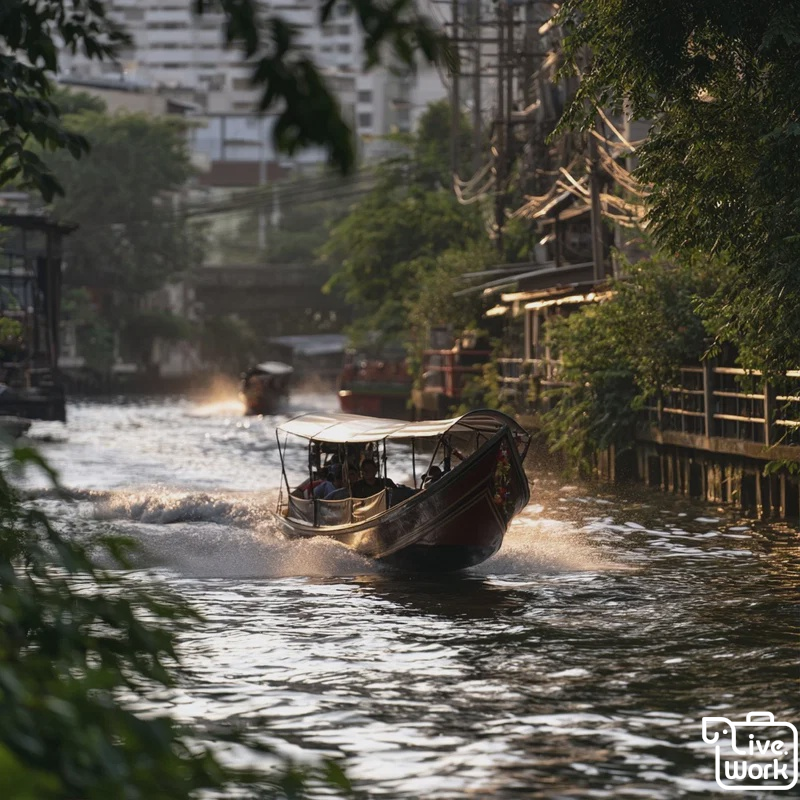
Bangkok’s canal boats offer one of the city’s fastest and most distinctive ways to avoid road traffic. Instead of sitting in a taxi beneath an unmoving line of cars, passengers board from compact waterside piers and travel through central Bangkok at canal level, passing homes, markets, bridges, office buildings, temples, and narrow neighborhood paths.
The best-known commuter service is the Khlong Saen Saep Express Boat, called เรือคลองแสนแสบ in Thai and pronounced approximately “ruea khlong saen saep.” It is a practical public transport route rather than a sightseeing cruise. Boats stop briefly, local passengers board and leave quickly, fares are collected during the journey, and the atmosphere can be energetic during commuter periods.
First-time visitors can use the service successfully without speaking Thai. The main requirements are knowing the destination pier, carrying small cash, standing in the correct direction, and being ready to move when the boat arrives. Boarding can feel fast, but watching local passengers and following the crew’s instructions usually makes the process straightforward.
What Is the Khlong Saen Saep Boat Service?
Khlong Saen Saep is a canal running through a long section of Bangkok. Its commuter boats connect neighborhoods and commercial districts that can be slow to reach by road, particularly along the Phetchaburi Road, Ramkhamhaeng, and Bang Kapi corridor.
The traditional service is divided around Pratunam Pier. Boats on the western section travel toward Panfa Leelard Pier, close to the Golden Mount and Bangkok’s historic districts. The eastern section continues toward areas including Nana Nuea, Asok, Thong Lo, Ramkhamhaeng, Bang Kapi, and Wat Sriboonruang. Passengers making a longer journey may need to change boats at Pratunam while retaining the ticket issued for the route.
The Khlong Saen Saep service should not be confused with the Chao Phraya Express Boat or the Chao Phraya Tourist Boat. Those services operate on Bangkok’s main river and connect riverside destinations such as Sathorn, Chinatown, Wat Arun, the Grand Palace area, and Phra Arthit. The canal boat travels through narrower urban waterways and functions primarily as a cross-city commuter service.
Why Use a Canal Boat Instead of the BTS, MRT, or Taxi?
The canal boat is most useful when the origin and destination are both reasonably close to a pier. It can bypass congested roads and provide direct access to areas not located immediately beside a BTS Skytrain or MRT station.
A boat journey may also create a useful connection between different transport systems. Hua Chang Pier is within walking distance of the BTS around Ratchathewi, while Asok Pier provides access to the area around MRT Phetchaburi and the Airport Rail Link at Makkasan. Bang Kapi connects with the eastern part of Bangkok and the MRT Yellow Line area.
The journey is inexpensive, open to the air, and often faster than traveling the same corridor by road. It also reveals a side of Bangkok that remains hidden from elevated trains and major streets. Wooden homes, apartment buildings, small bridges, mosques, temples, workshops, gardens, and waterside walkways appear only a few meters from the boat.
The disadvantages are equally important. Boats can be crowded, noisy, warm, and exposed to spray. Piers may have stairs, narrow entrances, uneven surfaces, and a noticeable gap between the platform and boat. The service is therefore less convenient for travelers with large suitcases, pushchairs, significant mobility limitations, or discomfort around fast-moving boats.
Planning Your Route Before Reaching the Pier
The most important preparation is identifying the exact pier name. Do not rely only on the neighborhood name because several piers may serve the same broad district.
Search the route before leaving and save both the departure and destination pier names. Thai script can be useful when asking for help, especially at smaller piers where English signage may be limited.
It is also necessary to determine the correct direction. At many piers, boats traveling east and west use opposite sides of the canal or different waiting areas. Look for route signs, terminal names, arrows, or the direction in which waiting passengers are facing.
When uncertain, show the destination pier to a crew member or another passenger before boarding. A short question is easier to resolve at the pier than after the boat has started moving.
Pratunam is the system’s most important interchange. A passenger traveling across central Bangkok may leave one boat and board another there. Follow the movement of through-passengers, keep the ticket, and listen to instructions from the crew.
How Fares and Tickets Work
Khlong Saen Saep fares are calculated according to distance. The exact amount may change when operating costs and official fare rules are adjusted, so the posted chart at the pier or on the boat should be treated as the most reliable current information.
For most journeys, the fare remains within the low tens of baht. Small banknotes and coins make payment easier, particularly when the boat is crowded and the fare collector is moving along the narrow exterior edge.
Passengers normally board first and pay during the journey. A crew member moves along the side of the boat, asks for the destination, collects the fare, and provides a small ticket. Cash is the safest payment method to have available.
Say the destination pier clearly or show its name on a phone. Keep the ticket until the journey is complete, especially when changing boats at Pratunam.
Do not worry if the collector does not reach you immediately. The crew knows that newly boarded passengers still need to pay and will normally move through the boat once it is safely underway.
How to Wait at a Canal Boat Pier
Khlong Saen Saep piers are smaller and more functional than BTS or MRT stations. Some have covered seating and clear signs, while others are narrow platforms reached through alleys, shopping areas, bridges, or stairways.
Stand behind the edge and keep bags close to the body. Avoid blocking the route used by passengers leaving the boat. During busy periods, the waiting area may become crowded shortly before a boat arrives.
Observe where regular passengers gather. Their position often reveals where the boat doors or open sections will stop. However, leave enough room for people to disembark first.
Boats may create movement in the water before reaching the platform. Stay away from wet or uneven edges, particularly after rain. Phones should remain secure rather than being held loosely above the canal.
How to Board Safely and Efficiently
Canal boats stop for a short time because they operate as commuter transport. Passengers should be prepared, but there is no need to jump or push.
Let passengers leave before moving forward. When the crew signals that boarding can begin, step onto the boat deliberately, use the handrail, and move away from the entrance so the next passenger can follow.
The boat may move slightly against the pier as people board. Looking down at the step and holding a fixed rail is safer than trying to film the process.
Long skirts, loose trousers, shopping bags, and unsecured straps can catch on railings or seats. Keep clothing controlled and carry bags where they will not interfere with the step.
Do not board after the crew has released the rope or indicated that the boat is leaving. Waiting for the next service is safer than attempting to cross a widening gap.
| Stage of the Journey | What to Do | What to Avoid |
|---|---|---|
| Before boarding | Confirm the destination pier, direction, and whether a transfer at Pratunam is required. | Do not board simply because other passengers are moving quickly. |
| At the pier | Stand behind the edge, prepare small cash, and leave space for arriving passengers. | Avoid holding a phone or open bag over the water. |
| Boarding | Let others exit, step firmly, hold the rail, and move inside immediately. | Do not jump, push, or try to board after the boat begins leaving. |
| During the ride | Keep belongings zipped, stay clear of the side, and follow the crew’s signals. | Do not place hands outside the boat or lean beneath low bridges. |
| Leaving the boat | Prepare before the stop, move toward the exit calmly, and wait until the boat is secured. | Avoid standing up at the final second or blocking passengers continuing onward. |
What the Ride Feels Like
The Khlong Saen Saep boat experience is lively and practical. The engine is loud, the boat accelerates quickly between stops, and the city passes close on both sides.
Inside, passengers usually sit on long benches facing forward. Standing space may be available when seats are full, although movement is more noticeable while the boat turns or approaches a pier.
The sides remain open for ventilation, with flexible tarps that can be raised when spray increases. Passengers seated near the edge may need to help lift or hold the tarp when another boat creates a strong wake.
The ride is not designed to feel polished or leisurely. Its appeal comes from speed, directness, and the sense of participating in an ordinary Bangkok commute.
How to Avoid Getting Splashed
Canal spray is part of the experience, especially when two boats pass each other quickly. Passengers seated near the sides are most exposed.
Keep bags fully zipped and electronics away from the opening. A water-resistant pouch is useful for passports, phones, cameras, and other sensitive items.
Watch the crew and regular passengers. When they begin lifting the side tarp, spray is likely approaching. Raise the barrier promptly without pulling it beyond its normal position.
Avoid resting an arm outside the boat or leaning over the side. In addition to spray, the boat may pass close to piers, walls, bridges, and other vessels.
Canal water is not suitable for swimming or recreational contact. A small splash is usually only an inconvenience, but washing exposed skin and avoiding contact with the eyes or mouth is sensible.
Choosing the Best Time for a First Ride
A first journey is easier outside the main commuter periods. Mid-morning or early afternoon on a normal weekday may provide more space to understand the boarding process, see the route, and choose a seat.
Morning and evening rush hours offer the fastest commuter atmosphere but can involve packed boats and busy piers. Regular passengers move quickly because they know exactly where to stand and when to leave.
Weekends may feel calmer, although services can finish earlier or run less frequently than on working days. Timetables differ by route section and day, and operating arrangements can change, so current signs should be checked before relying on a late return journey. Recent route information continues to show longer weekday service and reduced weekend hours.
Heavy rain can affect comfort, visibility, pier surfaces, and service conditions. During thunderstorms, follow staff instructions and avoid exposed waterside areas.
Useful Piers for First-Time Visitors
Panfa Leelard Pier is useful for the Golden Mount, Wat Saket, Mahakan Fort area, and parts of Bangkok’s historic center. It forms the western end of the traditional route.
Hua Chang Pier is convenient for the Ratchathewi and Siam area. It can also be used for attractions around the Jim Thompson House and nearby shopping districts.
Pratunam Pier serves the Pratunam shopping area, CentralWorld surroundings, hotels, markets, and major road connections. It is also the transfer point between the western and eastern boat sections.
Nana Nuea and Asok piers provide access to parts of Sukhumvit and Phetchaburi Road, although a walk or onward transport may still be required.
Thong Lo Pier is located on the Phetchaburi side of the wider Thong Lo district rather than directly beside the BTS station. It is useful only when the final destination is positioned appropriately.
Farther east, the route serves Ramkhamhaeng, university areas, stadium surroundings, Bang Kapi, and Wat Sriboonruang. These sections are particularly valuable for local commuters because road congestion can be severe.
Walking distances between piers and well-known destinations vary. A pier that carries a familiar neighborhood name may still be some distance from its BTS station or main entertainment area.
Canal Boat Etiquette
The service works efficiently because passengers cooperate with its fast rhythm. Let people leave before boarding, keep the entrance clear, and move toward available seats rather than stopping at the first open space.
Large backpacks should be removed and held low. This prevents them from striking seated passengers and makes more room inside the boat.
Keep conversations and phone audio at a reasonable level. The engine is already loud, and shouting adds unnecessary stress in a crowded space.
Offer easier seating positions to older passengers, pregnant passengers, people with disabilities, adults carrying small children, and anyone visibly struggling with balance.
Avoid eating messy food during the journey. Drinks should have secure lids, and all rubbish should leave the boat with you.
Traveling with Children, Luggage, or Limited Mobility
Young children should remain beside an adult from the moment the pier is entered until the group has safely left the destination pier. Hold their hand during boarding and do not allow them to sit directly beside an open edge without close supervision.
A small backpack or cabin-size bag is manageable. Large suitcases are awkward on narrow stairs, crowded platforms, and rapidly boarding boats. A taxi, BTS, MRT, or arranged car is usually more comfortable when carrying substantial luggage.
Many canal piers are not fully step-free. Access may include steep stairs, narrow passages, uneven platforms, and a moving step into the boat. Travelers with mobility limitations should inspect the pier layout in advance and choose another form of transport when the boarding conditions are unsuitable.
The canal boat should not be treated as an activity that everyone must attempt. It is most enjoyable when passengers can board confidently and maintain their balance without assistance beyond the standard handrails.
Common First-Time Mistakes
The most common mistake is confusing the canal service with a Chao Phraya river boat. These systems use different waterways, piers, routes, and ticket arrangements.
Another mistake is reaching the correct pier but waiting on the wrong side. Confirm the terminal direction before the boat arrives.
Some visitors expect to buy a ticket from a machine or booth before boarding. On the traditional Khlong Saen Saep boats, payment is normally handled on board, so small cash should remain accessible rather than buried inside a backpack.
Waiting until the boat stops before searching for a phone, closing a bag, or gathering belongings can create unnecessary pressure. Prepare one stop in advance when possible.
Travelers also underestimate the distance from a pier to their final destination. Check the complete walking route rather than assuming that the pier name guarantees a nearby entrance.
Combining Canal Boats with Bangkok’s Rail Network
The canal boat works best as one part of a broader journey. A passenger might use the BTS to reach Ratchathewi, walk to Hua Chang Pier, and continue west toward the old city. Another might use the MRT to Phetchaburi and board near Asok Pier for a trip toward Pratunam or Bang Kapi.
This combination can reduce road travel while reaching areas that are not directly connected by one rail line.
Allow time for walking between systems. The canal pier, BTS station, MRT entrance, and Airport Rail Link are not always contained within one integrated building.
Stored-value cards used on rail systems should not be assumed to cover canal fares. Carrying small cash remains the simplest approach.
Conclusion
Bangkok’s Khlong Saen Saep boats provide a fast, inexpensive, and unmistakably local way to cross the city. They are especially useful for journeys between the historic center, Pratunam, Phetchaburi Road, Ramkhamhaeng, and Bang Kapi, where road congestion can make buses and taxis unpredictable.
A successful first ride depends on preparation rather than confidence alone. Identify the pier and direction, carry small cash, let passengers leave first, board with one deliberate step, hold the rail, and keep bags protected from spray.
Off-peak hours provide the most relaxed introduction, while commuter periods reveal the system at its fastest and busiest. The ride may be noisy and energetic, but it offers a practical view of Bangkok that cannot be experienced from a train, taxi, or sightseeing bus.