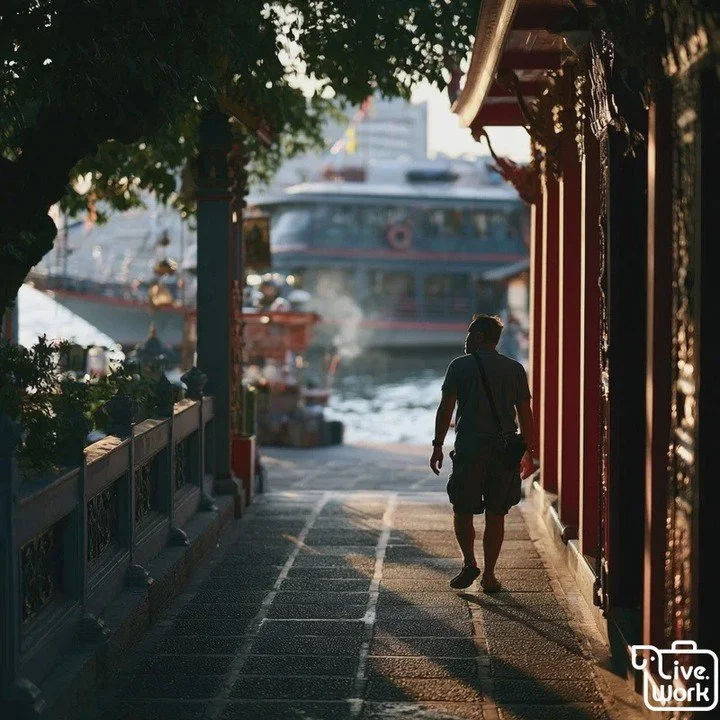
Bangkok by River: A Chao Phraya Boat Day from Saphan Taksin to Wat Pho, Wang Lang, and Phra Arthit
Bangkok makes the most sense from the river. From street level, the city can feel dense, hot, loud, and traffic-heavy. From the Chao Phraya, it becomes readable. Temples rise above rooftops, ferries cross between old neighborhoods, hotel terraces open toward the water, longtail boats cut across the current, and the skyline shifts between royal, local, commercial, and everyday Bangkok within minutes.
A good river day does not need to be complicated. Start at Saphan Taksin, use the Chao Phraya Express Boat as your moving viewpoint, watch the pier codes carefully, and let the river carry you north through some of Bangkok’s most atmospheric neighborhoods. The route can include Wat Pho, a view across to Wat Arun, street snacks around Wang Lang, and a golden-hour finish near Banglamphu or Phra Arthit. It is scenic, practical, and far easier than trying to move between these places by road.
The best part is that the boat is not only transport. It is part of the experience. The river gives you breeze, movement, perspective, and a sense of old Bangkok that traffic can easily hide.
Why the Chao Phraya Is the Best Way to Move Through Old Bangkok
Bangkok’s historic riverside neighborhoods were shaped long before modern roads and skytrains defined the city. The Chao Phraya was, and still is, one of Bangkok’s great arteries. Traveling by boat connects you to that older logic. Instead of sitting in traffic between temples, markets, and riverside districts, you move with the city’s natural line.
The river also gives you a visual rhythm that roads cannot. One moment you pass luxury hotels and glass towers. A few minutes later, you see temple roofs, old warehouses, small ferry crossings, wooden houses, and working piers. The river is not polished into one single tourist image. It is layered. Commuters, monks, office workers, students, vendors, tourists, hotel boats, express boats, and cross-river ferries all share the same water.
For a first river day, the Chao Phraya Express Boat is especially useful because it lets you hop between neighborhoods without overthinking road traffic. The route becomes part sightseeing, part transport, and part local observation.
Starting Point: Saphan Taksin and Sathorn Pier
The easiest place to begin is BTS Saphan Taksin. From the station, follow signs toward Sathorn Pier. This is one of the most useful connections in Bangkok because it links the Skytrain directly with the river. It is also a good starting point because you can ride north toward the old city, where many of the classic riverside stops are located.
Before boarding, take a moment to slow down and read the pier signs. Bangkok’s river system becomes much easier once you understand the codes. Many piers show the pier name in Thai and English, plus a code. Northbound piers commonly use “N” numbers, and those numbers increase as you travel upriver. This means that if you are starting around Sathorn and heading toward the old city, you are generally moving toward higher northbound pier numbers.
This simple rule makes the day feel much less confusing. You do not need to memorize every pier. You only need to match the pier code to your planned stop, check the direction of travel, and confirm the boat line or flag before boarding.
Understanding Boat Flags and Pier Codes
Bangkok’s river boats can look confusing at first because several services use the same river. Some are local commuter boats. Some are tourist boats. Some are cross-river ferries. Some are hotel shuttles. The important thing is to pause before boarding and confirm that the boat is going where you want.
The Orange Flag Chao Phraya Express Boat is often the practical workhorse for many river journeys, but schedules, stops, and service patterns can change, so it is always worth checking the latest information on the day you travel. Tourist boats are usually easier for visitors because they are designed around major sightseeing stops, but they cost more and operate differently from the regular express boats.
The pier code system is your anchor. Tha Tien is commonly associated with access to Wat Pho and the cross-river view toward Wat Arun. Wang Lang and Arun Ammarin sit around the west-bank food and hospital-market area. Phra Arthit is useful for Banglamphu, riverside cafés, and the Khao San / old-town edge. If you know your pier codes and listen for announcements, the river becomes much easier.
The best habit is to ask before boarding if you are unsure. A simple “Tha Tien?” or “Phra Arthit?” while pointing to the boat is usually enough. Staff and regular passengers are used to visitors checking.
First Ride: Sathorn to Tha Tien
The first section of the ride gives you a quick introduction to river Bangkok. Leaving Sathorn, the boat moves away from the BTS connection and into a corridor where the city begins to change. Watch both sides of the river rather than focusing only on your phone or map. This is one of the easiest ways to understand Bangkok’s contrasts.
As you ride north, the river widens and narrows visually depending on buildings, piers, ferries, and passing boats. The breeze helps soften the heat, and the constant movement gives the city a cinematic feeling. If you are lucky with light, temple roofs and riverside buildings catch the sun beautifully.
Tha Tien is the ideal first stop because it places you near Wat Pho and directly across from Wat Arun. Even if your main plan is not a long temple visit, this area gives you a strong old-Bangkok atmosphere. The lanes near the pier are busy, historic, and full of movement, with food vendors, small shops, temple visitors, ferries, and river traffic all meeting in one compact area.
Tha Tien: Wat Pho and the View Toward Wat Arun
Wat Pho is one of Bangkok’s great temple complexes, but a river-day visit does not have to become a full temple marathon. You can visit properly if you have time, or you can use Tha Tien as a shorter cultural stop before continuing upriver. Either way, the area is worth including.
Wat Pho’s courtyards, chedis, tiled details, and temple walls create a strong contrast with the busy pier streets outside. It is a reminder that Bangkok’s old city is not separated from everyday life. Sacred spaces, traffic, river piers, cafés, and markets sit close together.
The view across the river toward Wat Arun is one of the classic Bangkok moments. Wat Arun’s spires rise on the opposite bank, and the river in front of it is almost always moving with boats. It is a scene that changes constantly depending on light, water level, clouds, and traffic. Morning and late afternoon are especially beautiful, but even midday has energy.
If you cross to Wat Arun, build in extra time. If you are keeping the day light, simply pause near the river, take in the view, and continue. The point of this itinerary is not to exhaust yourself. It is to follow the river with enough time to enjoy each stop.
Second Ride: Tha Tien to Wang Lang or Arun Ammarin
After Tha Tien, continue toward the Wang Lang or Arun Ammarin area. This is where the day shifts from temple atmosphere to local food energy. Wang Lang is one of Bangkok’s most enjoyable riverside food areas because it feels busy, practical, and local rather than staged only for visitors. It is connected to hospital, university, ferry, and neighborhood life, which gives it a very different mood from purely tourist-focused markets.
This is a good place to arrive hungry but not desperate. The lanes can be crowded, and the best experience comes from walking slowly, looking carefully, and sampling as you go. Instead of choosing one restaurant immediately, let the area introduce itself through smell and movement: crispy pork, grilled snacks, fruit, Thai desserts, iced drinks, fried foods, noodles, and small takeaway portions.
The food here is not only about eating. It is about seeing how Bangkok eats during the day: quickly, casually, repeatedly, and with enormous variety.
Wang Lang Snacks: Crispy Pork, Mango Sticky Rice, and Thai Tea
A Wang Lang stop should be snack-led. Crispy pork is one of the great pleasures if you find a good vendor or shop: crackling skin, rich meat, rice or noodles, and sharp sauces that cut through the fat. Mango sticky rice gives you the opposite mood: sweet, soft, coconut-rich, and comforting. An iced Thai tea helps with the heat and gives you the sugar-and-caffeine lift that Bangkok walking often requires.
This is not the moment for a formal meal unless you truly want one. The best Wang Lang experience is built from small decisions. You see something, try it, walk a little more, stop again, drink something cold, then continue. The area rewards curiosity.
Because the lanes can be narrow and busy, be considerate. Step aside before stopping to take photos. Do not block shop entrances while deciding. Keep cash handy so small purchases are easy. If a stall is crowded, watch the ordering flow for a moment before joining in.
Third Ride: Toward Phra Arthit and Banglamphu
After eating, return to the pier and continue toward Phra Arthit or the Banglamphu edge of the river. This final stretch works best later in the afternoon, when the heat softens and the light begins to warm. The river feels different at this hour. Buildings turn golden, temple roofs catch the sun, and boats become silhouettes against brighter water.
Phra Arthit is a useful final stop because it gives you access to a slower old-town evening. The area is close to Banglamphu, with small restaurants, cafés, guesthouses, bars, street stalls, and river views. It has more backpacker energy than Tha Tien, but if you stay close to the river and choose your timing well, it can still feel atmospheric rather than overwhelming.
This is where the day should stop trying to be efficient. Find a place to sit, watch the river, let the light change, and give yourself time before dinner. A river day is best when it ends with a pause, not another rushed transfer.
Golden Hour by the River
Golden hour is one of the best reasons to finish near Phra Arthit or Banglamphu. The Chao Phraya becomes softer, wider, and more reflective as the sun drops. Boats keep moving, but the mood changes. The heat reduces, the sky warms, and the city begins to move toward evening.
A riverside seat is ideal, but even a short walk near the water can be enough. Watch express boats approach the piers, listen to engines, look at the opposite bank, and notice how the river holds many versions of Bangkok at once. This is not a polished postcard moment only. It is working river, commuter river, temple river, tourist river, and neighborhood river all together.
If you want photos, take them without blocking pier entrances or narrow walkways. River piers are functional spaces, not only viewpoints. People are trying to commute, work, and cross the water. The best travel photography in Bangkok respects that.
Ending with Boat Noodles or Grilled Satay
After golden hour, finish with something simple and satisfying. Boat noodles fit the river theme perfectly. They are small, rich, aromatic bowls traditionally associated with canal and boat culture, and they make a great final food stop because you can eat lightly or order several bowls if you are hungry. Grilled satay is another easy evening choice: smoky skewers, peanut sauce, cucumber relish, and enough flavor to close the day without needing a heavy meal.
Banglamphu and nearby old-town areas offer plenty of casual food options, so keep the final meal flexible. The best end to the day is not necessarily the most famous restaurant. It is the place that lets you sit down, eat well, and feel the route you have just traveled: river, temple, market, viewpoint, sunset, street food.
A Simple Bangkok River Day Flow
| Part of the Day | Atmosphere | Best Focus |
|---|---|---|
| Start at Saphan Taksin / Sathorn Pier | Practical, connected, and energetic, with the BTS feeding directly into the river system. | Use this as your easy starting point, check pier signs carefully, confirm your boat flag or route, and begin riding north along the Chao Phraya. |
| Boat Ride North | Fast, breezy, and scenic, with temples, hotels, ferries, longtail boats, and local piers passing on both sides. | Watch the pier codes, match your stop before boarding, and enjoy the river itself as part of the sightseeing rather than only transport. |
| Tha Tien / Wat Pho | Historic, busy, and atmospheric, with temple walls, old-town lanes, pier activity, and a classic view across to Wat Arun. | Visit Wat Pho if time allows, pause for the Wat Arun river view, and keep the stop relaxed instead of turning it into a full temple checklist. |
| Wang Lang / Arun Ammarin Area | Local, food-focused, and lively, with narrow lanes, market movement, hospital-area crowds, and casual snack culture. | Sample crispy pork, mango sticky rice, iced Thai tea, fruit, and small street snacks while moving slowly and keeping cash handy. |
| Phra Arthit / Banglamphu | Golden, relaxed, and old-town oriented, with river views, cafés, guesthouses, stalls, and a softer evening atmosphere. | Arrive for golden hour, take a riverside pause, and let the day slow down before dinner. |
| Final Food Stop | Casual, satisfying, and street-food friendly after a day of river movement. | End with boat noodles, grilled satay, or nearby street snacks before deciding whether to return by boat, taxi, MRT, or another route. |
How to Read the River Without Getting Confused
The river system becomes easier when you treat it like a sequence rather than a maze. Sathorn is your starting anchor. Northbound pier numbers increase as you go upriver. Your planned stops are simply markers along that direction. Before boarding, match your intended pier to the sign, check the flag or service type, and ask staff if unsure.
Do not rush at the pier. Boats arrive and leave quickly, but another boat will come. It is better to wait for the correct service than to jump onto the wrong one and spend the next 20 minutes correcting the mistake.
Keep your ticket or fare money ready. On some services you pay onboard, while tourist services may have different ticket systems. Keep small cash available, especially if you are using regular express boats or buying snacks near the piers.
What to Pack for a Bangkok River Day
A river day does not require much gear, but a few items make the experience much more comfortable. Bangkok’s heat, sudden rain, pier crowds, and repeated boarding all reward light, practical packing.
| Item | Why It Helps | Best Use During the River Day |
|---|---|---|
| Small Day Bag | Keeps your essentials together without becoming awkward on crowded boats or narrow pier walkways. | Use it for water, wallet, phone, camera, tissues, umbrella, and any small purchases from markets. |
| Small Cash | Useful for boat fares, street snacks, market purchases, ferry crossings, and quick drinks. | Keep smaller notes and coins accessible so you do not need to search your wallet at busy counters or stalls. |
| Water Bottle | Bangkok heat builds quickly, especially when walking between piers, temples, and food areas. | Drink regularly throughout the day, especially before and after temple visits or market walks. |
| Hat or Sunglasses | The river reflects strong light, and some pier waiting areas have limited shade. | Use during boat rides, riverside walks, and golden-hour photography stops. |
| Light Umbrella or Rain Jacket | Bangkok weather can shift quickly, and an umbrella also helps with sun exposure. | Carry it for sudden showers, exposed pier areas, or hot walks between stops. |
| Temple-Appropriate Layer | Stops such as Wat Pho require respectful clothing, especially shoulders and knees covered when entering sacred areas. | Use a light scarf, shirt, or breathable cover-up so you can move comfortably between boats and temple grounds. |
| Phone with Offline Map | Pier areas can be confusing, and mobile signal or attention may vary when moving quickly. | Save your planned stops before leaving and use the map to connect piers with nearby temples, markets, and food areas. |
Temple Etiquette on a River Route
Because this route includes Wat Pho and possible views or crossings toward Wat Arun, temple etiquette matters. These are not only beautiful buildings. They are active religious spaces. Dress respectfully, remove shoes before entering prayer halls, speak softly, and avoid blocking doorways or people who are praying.
The river-day format can sometimes make visitors move too quickly through sacred spaces. Try not to treat temples as quick photo backdrops between boat rides. Even a short visit should include a slower moment: standing quietly in a courtyard, noticing details, or letting people worship without interruption.
If you are hot or tired, take a shaded pause rather than rushing through with frustration. Bangkok’s temples are much more rewarding when you slow down enough to actually feel where you are.
Food Etiquette and Market Awareness
At Wang Lang and around Banglamphu, street-food etiquette is mostly about awareness. Walk slowly, do not block narrow lanes, and step aside when deciding what to eat. If a stall is busy, watch how others order before joining. Some places have informal queues, while others work by calling out orders or pointing.
Small cash helps the whole process move smoothly. So does patience. Many vendors are working quickly in hot conditions, often serving both locals and visitors. A smile, a clear order, and a calm attitude make everything easier.
If you buy snacks to eat while walking, dispose of packaging properly. River neighborhoods have enough pressure from crowds already. Carry a small bag for trash until you find a bin.
When to Use the Tourist Boat Instead
The regular express boats are practical and more local-feeling, but the tourist boat can be easier if you want less uncertainty. Tourist boats usually stop at major visitor-friendly piers, have clearer sightseeing orientation, and can be more comfortable for travelers who prefer a simpler system.
The trade-off is cost and atmosphere. The tourist boat may feel less local and more curated, while the express boat feels more like Bangkok’s everyday river transport. Neither is wrong. For a first river day, you can choose based on confidence. If you enjoy figuring out local transport, use the express boat. If you want a more straightforward hop-on/hop-off structure, use the tourist boat.
The important thing is not which one is more “authentic.” The important thing is choosing the service that lets you enjoy the day without stress.
Why This Route Works So Well
This route works because each stop gives a different version of Bangkok. Sathorn gives you modern connectivity. Tha Tien gives you old-city temples and the Wat Arun river view. Wang Lang gives you local food energy. Phra Arthit gives you golden-hour atmosphere and Banglamphu access. The boat ties it all together with breeze, movement, and perspective.
It also avoids one of Bangkok’s biggest challenges: trying to cover too much by road. Instead of jumping between taxis and traffic, you let the river do the work. The day feels more fluid, more scenic, and more memorable because the transitions are beautiful too.
A good Bangkok river day is not about rushing to the most famous sights. It is about understanding how the city lives along the water.
Conclusion
Bangkok’s best river day begins at Saphan Taksin and follows the Chao Phraya north through temple views, market snacks, old-town neighborhoods, and golden-hour river light. By learning the pier codes, checking the boat flag or service type, and using the river as both transport and sightseeing, you can move through the city without fighting traffic. Tha Tien gives you Wat Pho and the view toward Wat Arun, Wang Lang brings crispy pork, mango sticky rice, and iced Thai tea, and Phra Arthit or Banglamphu closes the day with sunset views, boat noodles, or grilled satay. The route is simple, scenic, and deeply Bangkok: a day where the river is not just a way to get somewhere, but the reason the journey feels so good.