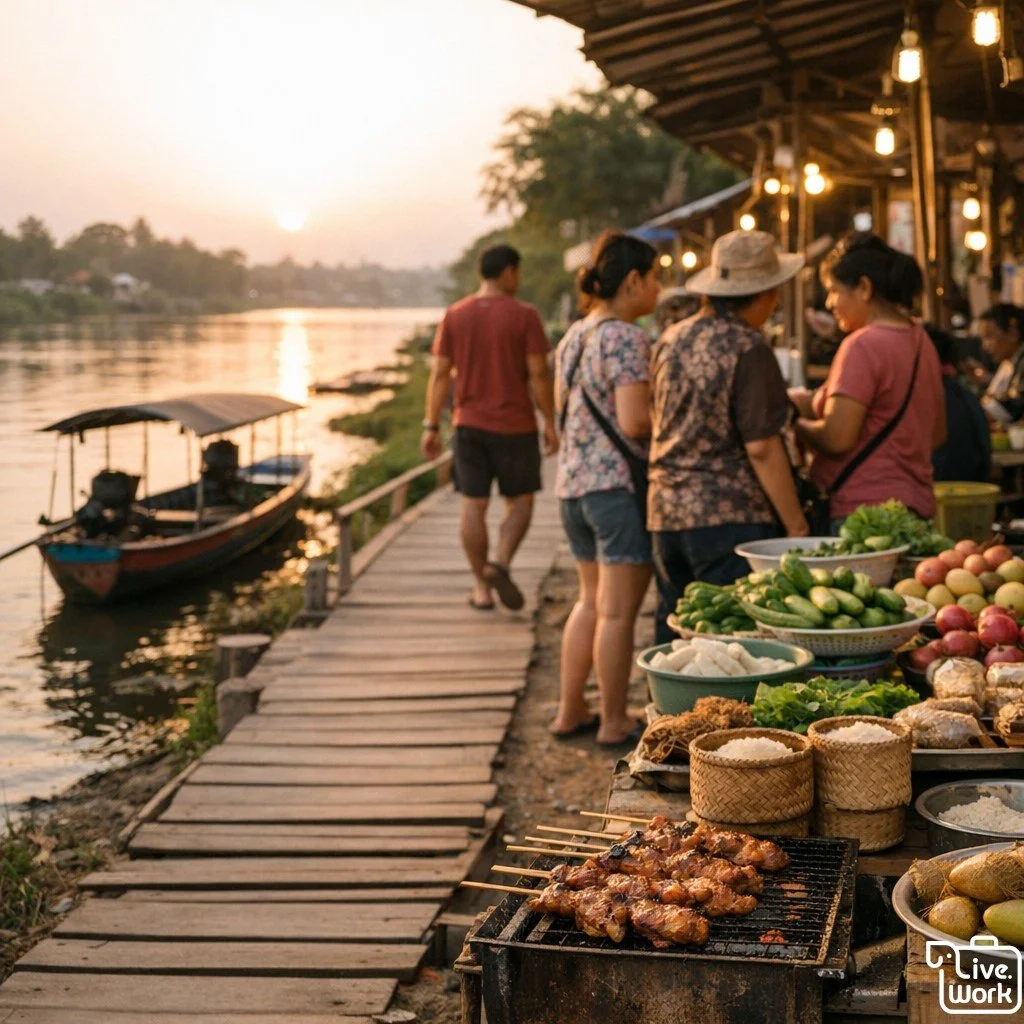
A Slow Local Day in Ubon Ratchathani: Riverside Walks, Isan Markets, and Easy Everyday Rhythm
Ubon Ratchathani is one of those Thai cities that rewards you most when you stop trying to “cover” it. It is not a place that needs to be rushed through with a strict attraction list. Its charm sits in the daily rhythm: the soft morning movement along the Mun River, the familiar energy of fresh markets, the smell of grilled chicken over charcoal, the cooling sweetness of iced herbal drinks, and the gentle evening shift when locals gather around food stalls after the heat begins to ease.
Located in Thailand’s Isan region, Ubon Ratchathani is closely tied to river landscapes, temple culture, and northeastern food traditions. Travel guides commonly describe the Mun River and nearby Mekong landscapes as part of the province’s scenic identity, while also noting the city’s strong temple presence and local market life.
This kind of day is not about spectacular sightseeing. It is about moving through Ubon like someone who has time.
Morning Along the Mun River: Let the City Wake Up Slowly
The best way to begin a local-feeling day in Ubon Ratchathani is close to the water. The Mun River gives the city a softer edge, especially in the morning when the light is still gentle and the air has not yet become heavy. A slow walk along the riverside lets you ease into the day without needing a destination immediately.
This is the hour when small details become memorable. Longtail boats move quietly across the water. Fishermen prepare their gear or return from early routines. People pass on motorbikes, vendors begin setting up, and the city gradually shifts from stillness into motion. The river does not create a dramatic scene in the way a famous viewpoint might. Instead, it creates atmosphere. It gives the morning space.
A coffee stop fits naturally into this rhythm. Choose somewhere simple and shaded, ideally with a view toward the water or a street that is beginning to wake up. This is not the moment for rushing through breakfast while checking a map. It is the moment to sit, sip slowly, and let the city introduce itself through ordinary movement.
What makes Ubon appealing is exactly this quality: it feels lived-in rather than staged. You are not watching a performance for visitors. You are watching a city begin its day.
Late Morning at the Fresh Market: Fruit, Smoke, Sticky Rice, and Som Tam
By late morning, the market is where Ubon becomes most sensory. The pace picks up, but it still feels grounded. Vendors call softly, bags of herbs and vegetables sit in neat piles, fruit is cut and arranged, and cooked food appears in waves as grills, pans, and steamers come into full use.
This is the ideal time to snack your way through local flavors rather than sitting down for one large meal. Start with seasonal fruit, especially if the weather is warm. Fruit in Thai markets is not just a refreshment; it is part of how people move through the heat. A few pieces of pineapple, watermelon, mango, guava, or whatever is best that day can reset your energy before you continue.
Then move toward the savory side of Isan food. Grilled chicken, or gai yang, is one of the great market aromas of northeastern Thailand. It is smoky, lightly sweet, salty, and best eaten with warm sticky rice. Som tam adds the sharp, fresh contrast: green papaya, lime, chili, fish sauce, and sometimes fermented ingredients depending on the version. If you are sensitive to spice, ask clearly for your preferred heat level. In Isan, “spicy” can mean truly spicy, so there is no shame in starting mild.
Isan cuisine is widely recognized for dishes such as som tam and larb, and TIME has described the region’s cooking style as sour, spicy, herbaceous, and increasingly recognized beyond Thailand.
The best way to experience the market is to move slowly and eat in small portions. A skewer here, a fruit bag there, a little sticky rice, a small serving of papaya salad. This style of eating matches the environment. You are not committing to one table. You are letting curiosity guide you.
Afternoon Market Browsing: Isan Sausage, Coconut Pancakes, and Herbal Drinks
In the afternoon, the city’s heat becomes more noticeable, so it helps to shift into a softer pace. This is a good time to browse a second market or food area rather than continuing to walk under direct sun. Markets offer shade, movement, and regular opportunities to stop for drinks.
Sai krok Isan, or Isan sausage, is one of the essential snacks to look for. It is tangy, savory, and often served with fresh cabbage, ginger, and chilies. The flavor is bold but balanced, especially when eaten in small bites with something fresh. It is the kind of snack that tells you immediately where you are: unmistakably northeastern, casual, and deeply tied to everyday food culture.
Kanom krok offers the opposite texture and mood. These small coconut pancakes are cooked in rounded pans until the edges become lightly crisp while the center stays soft and creamy. They are sweet, salty, warm, and comforting all at once. Watching them being made is part of the pleasure: batter poured into little molds, coconut topping added, then the cakes lifted out in pairs when ready.
By this point in the day, iced herbal drinks become more than a treat. They are practical. Chrysanthemum tea, butterfly pea drinks, bael fruit tea, lemongrass drinks, and other local options help cool you down while giving you another taste of Thai market culture. A slow afternoon in Ubon is built from these pauses: a drink in the shade, a small snack, a few minutes watching vendors work, then another short walk.
Getting Around Without Overcomplicating the Day
Ubon Ratchathani is easiest when you keep transport simple. If Grab is available for the route you need, it can be the most comfortable option for short hops between the riverside, markets, cafés, and your hotel. Local guides also note that Ubon has Grab, taxis, tuk-tuks, and songthaews, while songthaews remain a cheap way to move around the city, though routes can be less obvious for first-time visitors.
Songthaews are useful when you understand the direction and route, especially for budget-friendly short rides. They are part of the local rhythm and can be a good experience in themselves, but they are not always the easiest choice if you are short on time or unsure where to get off. In that case, asking your hotel or a local café staff member for help can make things much easier.
Renting a scooter gives you the most flexibility, but only if you are already confident in Thai traffic. Ubon is calmer than Bangkok, but traffic habits, intersections, heat, and unfamiliar streets still require attention. A helmet is non-negotiable. The goal of the day is ease, not stress, so transport should support the rhythm rather than dominate it.
A Simple Slow-Day Structure for Ubon Ratchathani
The best Ubon day has a natural flow. It starts by the river, builds through markets and food, slows down in the afternoon heat, and returns to local energy in the evening. Here is a clean HTML table in the same style as the previous posts:
| Part of the Day | Atmosphere | Best Focus |
|---|---|---|
| Morning by the Mun River | Soft, calm, and local, with gentle river movement, early light, and everyday routines beginning slowly. | Take an easy riverside walk, pause for coffee, and watch longtail boats, fishermen, and the city easing into the day. |
| Late Morning Fresh Market | Colorful, lively, and food-focused, with fruit stalls, charcoal grills, herbs, and fresh Isan dishes all around. | Sample seasonal fruit, grilled chicken, sticky rice, and som tam while asking clearly for your preferred spice level. |
| Afternoon Market Browsing | Warm but slower, with shaded stalls, snack vendors, and cooling drinks becoming part of the rhythm. | Look for sai krok Isan, kanom krok, and iced herbal drinks, then take your time rather than rushing through the heat. |
| Short Rides Around Town | Practical and low-stress when you keep distances short and choose simple transport. | Use Grab where available, take songthaews for budget-friendly routes, or rent a scooter only if you are confident and always wear a helmet. |
| Evening Night Market | Relaxed, social, and flavorful, with locals gathering for dinner, snacks, and casual strolling after the heat eases. | Finish with skewers, noodles, sweets, and one final slow walk through the food stalls before heading back. |
Evening at the Night Market: Skewers, Noodles, and the City After Dark
As the day cools, Ubon becomes easier to move through again. This is when the night market becomes the natural final stop. The city’s food culture is especially enjoyable in the evening, and travel sources note that the area around Thung Si Mueang Park and nearby night market zones becomes active after dark, with cheap local food and a strong local atmosphere.
A night market dinner should be relaxed. Start with something small, such as grilled skewers, then move toward noodles, fried snacks, soups, or rice dishes depending on what looks fresh. The point is not to find the “best” stall immediately. The point is to wander, look, smell, choose, and repeat.
The mood is different from the morning market. Morning is practical and routine-driven. Evening is social. Families come out, friends meet after work, students browse snacks, and vendors settle into the busiest part of the day. Lights reflect off metal trays and plastic tables. Steam rises from noodle pots. The sound of cooking, traffic, conversation, and market movement blends into one warm city soundtrack.
This is where Ubon’s everyday rhythm feels most complete. You began by the river in quiet light, moved through the markets during the day, and ended among locals eating, chatting, and strolling after sunset.
Food Etiquette and Ordering Without Stress
Ordering in Ubon’s markets is usually easy if you keep things simple. Pointing is fine, especially when language becomes difficult, but do it politely and with a relaxed attitude. For som tam and spicy dishes, it is worth learning how to ask for less chili or checking spice level before ordering. A friendly smile and a calm tone go a long way.
Small cash helps. Many market vendors move quickly, and having smaller notes makes payment smoother. If a stall is busy, watch the order flow before stepping in. Some queues are informal, but locals usually know who arrived first. Observing for a moment prevents awkwardness and helps you blend into the rhythm.
The best market experiences come when you are curious but respectful. Ask what something is if the vendor has time. Try small portions. Avoid touching ready-to-eat food unless tongs are provided. Let the vendor bag items for you.
Why This Day Works So Well
This kind of Ubon itinerary works because it does not force the city into a tourist mold. It follows the way the day naturally changes. Morning belongs to the river. Late morning belongs to the fresh market. Afternoon belongs to shade, snacks, and cooling drinks. Evening belongs to the night market.
There is no need to overfill the schedule. Ubon is most rewarding when you leave space between experiences. A coffee takes longer than expected. A market snack becomes a conversation. A short ride across town gives you a glimpse of a neighborhood you would not have walked through. The day gains value from these small transitions.
Conclusion
A slow day in Ubon Ratchathani is built from simple, local pleasures: a riverside morning along the Mun River, a fresh market full of Isan flavors, an afternoon of snacks and iced herbal drinks, and a night market dinner that lets the city close the day in its own rhythm. With easy transport, short distances, and plenty of food stops in between, Ubon offers a version of Thailand that feels authentic without needing to be dramatic. Come without rushing, eat as you go, and let the city’s everyday pace become the highlight.