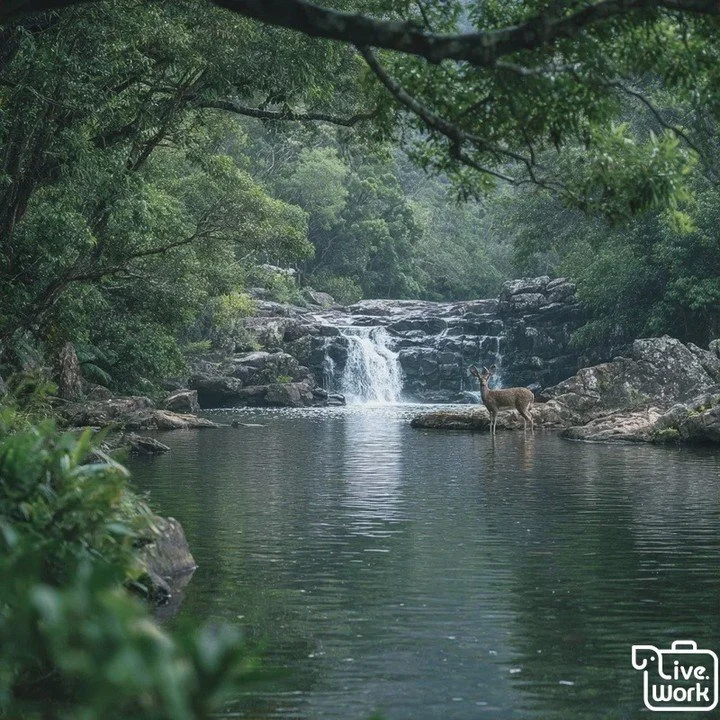
Khao Yai Wildlife Watching: How to Experience Thailand’s Forest Without Treating It Like a Zoo
Khao Yai is one of Thailand’s most rewarding national parks for wildlife lovers, but the best way to experience it is with realistic expectations. This is not a controlled safari park, a staged animal encounter, or a place where nature performs on schedule. It is a living forest. Animals move according to weather, food sources, time of day, human disturbance, and instinct. Some visitors have unforgettable sightings within the first hour. Others may spend a full day seeing only birds, deer, insects, and distant movement in the trees. Both experiences are part of what makes Khao Yai real.
The park’s official visitor information describes Khao Yai’s forest as a major dry evergreen ecosystem and notes habitat for white-handed gibbons, pileated gibbons, hornbills, wild elephants, serow, and dholes. Its mammal information also lists frequently seen animals such as Asian elephants, gaur, barking deer, sambar deer, gibbons, and pig-tailed macaques, while noting more than 70 mammal species recorded in the park.
That biodiversity is exactly why Khao Yai feels so exciting. But it is also why patience matters. The point is not to force a perfect animal encounter. The point is to enter the forest quietly enough that you begin to notice what is already happening around you.
The Right Mindset: Wildlife Watching Is Observation, Not Entertainment
The most important thing to understand before visiting Khao Yai is that wildlife sightings are never guaranteed. Even in a park known for animals, the forest decides what you see. A gibbon may call loudly from the canopy without ever becoming visible. A hornbill may glide over the road so quickly that the moment is gone before your camera is ready. Deer may appear at the forest edge in soft light, then disappear into shadow. Elephants may be nearby, but hidden by vegetation.
That uncertainty is not a weakness of the experience. It is the experience.
A forest is not a zoo because animals are not confined for human convenience. They are moving through their own habitat. This means your best sightings will often come from stillness rather than effort. The visitor who walks quietly, pauses often, listens carefully, and accepts distance will usually notice more than the visitor who rushes from viewpoint to viewpoint looking for a headline animal.
What You Might See on a Good Day
A good wildlife day in Khao Yai can feel wonderfully layered. The morning may begin with gibbon calls echoing through the canopy. These calls can carry far through the forest, creating an atmosphere that feels almost cinematic. You may not see the gibbons immediately, but hearing them is already a reminder that the forest is awake above you.
Hornbills are another highlight. Their movement is distinctive: large wings, strong silhouettes, and a prehistoric quality when they pass above roads or open patches of forest. Khao Yai is often associated with hornbill sightings, and seeing one glide between trees is one of those moments that makes the park feel truly wild.
Closer to the ground, macaques may appear near trails or roadsides, though they should always be treated with caution and distance. Sambar deer are often seen near forest edges or open areas, especially during calmer periods of the day. If you are very lucky and conditions align, you may see wild elephants from a safe distance. Elephants are one of Khao Yai’s most powerful wildlife experiences, but they also require the most respect and caution.
The key phrase is “from a safe distance.” A distant elephant sighting is not a disappointing sighting. It is the correct kind.
What You Probably Will Not See
It is just as important to understand what not to expect. You probably will not see animals posing close to the road for perfect photos. You should not expect tigers on demand, dramatic close-ups, or a steady stream of major wildlife every hour. Khao Yai has impressive biodiversity, but much of the forest’s life remains hidden, especially during busier parts of the day.
Even when animals are present, photography can be difficult. Forest light is uneven. Branches get in the way. Animals move quickly. Mist, shade, distance, and safety rules all shape what kind of images are possible. A responsible wildlife photo is often imperfect: a hornbill partly framed by leaves, a deer in low light, a gibbon high overhead, or an elephant viewed from far away.
Those imperfect images are often the most honest ones.
Best Times for Wildlife Watching
The best wildlife windows are usually early morning and late afternoon. These are the times when temperatures are cooler, human activity is lower, and animals may be more active. Early morning also gives you the acoustic experience of the forest waking up. Birds call, insects shift, and gibbons may vocalize from the trees.
Late afternoon has a different mood. The light softens, the roads become quieter, and forest edges can become more active. This is a good time to move slowly, watch clearings, and listen carefully rather than rushing toward another attraction.
Midday can still be beautiful, but it is usually less productive for wildlife watching. Heat rises, light becomes harsh, and many animals retreat deeper into shade. A good Khao Yai itinerary should respect this rhythm rather than fight it.
Why a Licensed Guide Can Change the Experience
A licensed guide does not magically guarantee wildlife, but a good guide can dramatically improve the quality of your observation. Guides understand animal calls, tracks, feeding patterns, road behavior, and safe viewing distances. They know where to pause, when to stay quiet, and when to move away.
This matters because beginners often look only for large animals. A guide helps you notice the smaller signs: a movement in the canopy, a distant call, a footprint near damp ground, a fruiting tree that may attract birds or mammals. They also help keep the experience safe. This is especially important with elephants, macaques, and any wildlife near roads.
A good guide also protects the park by modeling respectful behavior. They should not pressure animals, lure them with food, chase sightings, or encourage visitors to get closer than is safe.
Responsible Wildlife Behavior
Khao Yai’s rules are not just formalities. They exist because careless visitor behavior can harm animals, create dangerous encounters, and damage the forest. The park’s official safety and regulation page states that visitors should not feed or touch wild animals, should not remove plants, animals, or forest products, should not bring pets, should not use drones without permission, and should not consume alcohol in the national park.
Feeding wildlife is especially harmful. It changes animal behavior, makes animals associate humans with food, and can create aggressive or risky encounters. Macaques that learn to take food from visitors become more difficult to manage. Elephants drawn toward human food can become dangerous around roads and buildings. Even a small snack offered “just once” contributes to a larger problem.
Flash photography at close range should also be avoided. It can disturb animals, especially in low light. If you cannot get a photo without disturbing the animal, the better choice is to watch quietly and remember the moment.
Road behavior is another major part of wildlife ethics. When animals appear near roads, visitors often stop suddenly or block traffic. This can create danger for people and animals alike. If you see wildlife from a vehicle, slow down carefully, pull over only where it is safe, keep distance, and avoid crowding the animal. Never pressure an animal to move for a photo.
A Practical Wildlife Expectations Table
| Wildlife Experience | Realistic Expectation | Respectful Approach |
|---|---|---|
| Gibbons | You may hear them before you see them, especially in the morning canopy. | Stay quiet, look upward carefully, and avoid making loud calls or noises to attract attention. |
| Hornbills | Sightings may be brief, often as birds glide over roads or between forest gaps. | Watch open canopy areas patiently and photograph without chasing or disturbing them. |
| Macaques | They may appear near roads, trails, or visitor areas, sometimes quite close. | Do not feed them, keep food sealed away, and maintain distance even if they seem familiar with people. |
| Sambar Deer | They are often easier to spot near forest edges, open areas, or quieter roads. | Observe calmly from a distance and avoid walking toward them for a closer photo. |
| Wild Elephants | A sighting is possible but never guaranteed, and distance is essential. | Stay inside your vehicle if instructed, follow guide or ranger advice, never block the road, and never approach. |
Safety Around Wild Elephants
Seeing a wild elephant in Khao Yai can be unforgettable, but it is also a situation where calm behavior matters. Elephants are intelligent, powerful, and unpredictable when stressed. A road encounter should never become a close-up photo session.
If an elephant is on or near the road, the safest response is to give it space. Do not honk, shout, rev the engine, or try to pass closely. Do not step out for a selfie. Do not crowd behind other vehicles. If rangers or guides are present, follow their instructions immediately.
A respectful elephant encounter is often quiet and distant. You may see the animal cross the road, feed near the forest edge, or disappear between trees. That is enough. The goal is not to extend the encounter; the goal is to let the animal continue undisturbed.
Photography: How to Get Better Images Without Causing Harm
Wildlife photography in Khao Yai is about patience and restraint. The best photographers are not the ones who get closest. They are the ones who understand light, distance, and animal behavior.
Golden-hour light in the morning or late afternoon can make even distant sightings beautiful. A deer at the forest edge, a hornbill silhouette, or a macaque framed by leaves can become a strong image without intrusion. For gibbons and birds, a zoom lens helps, but even without one, you can capture the feeling of the forest: tall trees, misty roads, filtered light, and movement overhead.
The most important rule is simple: if the photo requires disturbing the animal, it is not worth taking. A blurry but ethical photo is better than a sharp image created by stress, baiting, crowding, or rule-breaking.
The Quiet Skills That Improve Every Visit
Wildlife watching is a skill, and Khao Yai rewards the quiet version of it. Walk slowly. Pause often. Listen before moving. Let your eyes adjust to the forest instead of scanning only for obvious shapes. Look for movement, not animals. A branch shaking, a leaf falling, or a sudden silence in bird calls can all be clues.
The forest is full of small signals. Once you start noticing them, even a day without a major sighting becomes satisfying. You begin to experience Khao Yai as an ecosystem rather than a list of species.
What to Bring for a Wildlife-Focused Day
For a wildlife-focused visit, comfort and quiet matter more than heavy gear. Neutral-colored clothing helps you blend into the environment, while comfortable shoes make it easier to stand, walk, and wait. A small pair of binoculars can completely change the experience, especially for birds and canopy animals. Water, insect repellent, sun protection, and a light rain layer are also useful because conditions can shift quickly.
Keep snacks sealed and do not eat near wildlife. If you carry food, store it securely in your bag and never leave it visible in vehicles or picnic areas. This is not only about cleanliness; it is about preventing animals from learning that humans mean food.
The Real Reward: Leaving the Forest Undisturbed
The most meaningful Khao Yai wildlife experience is not necessarily the one with the most animals. It is the one where you leave with a deeper respect for the forest.
A good visit means you observed without interfering. You stayed quiet. You followed marked areas. You kept distance. You did not feed animals. You did not block roads. You did not treat wildlife as entertainment. You allowed the park to remain wild for the next visitor and, more importantly, for the animals themselves.
That is what makes Khao Yai special. It is still a place where the forest feels alive on its own terms.
Conclusion
Khao Yai is one of Thailand’s best national parks for wildlife, but it should be approached with patience, humility, and respect. On a good day, you may encounter gibbons, hornbills, macaques, sambar deer, and perhaps even wild elephants from a safe distance. On another day, the forest may reveal itself more quietly through calls, tracks, shadows, and movement in the canopy. Both experiences are valuable. By visiting early or late, staying quiet, choosing a responsible licensed guide, and following park rules, you give yourself the best chance of meaningful sightings while helping keep Khao Yai wild, calm, and undisturbed.