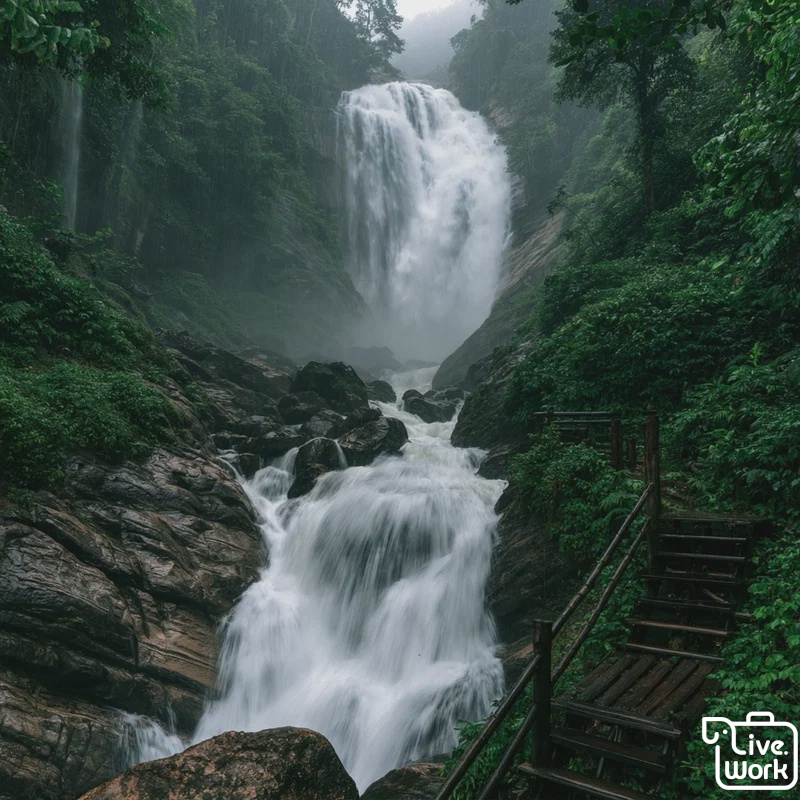
Thailand Waterfalls by Region: How to Choose the Right Waterfall for Your Trip
Thailand has waterfalls from the forested mountains of the North to the tropical islands and rainforests of the South, but the right waterfall depends heavily on where you are already traveling. A beautiful cascade that requires a five-hour detour rarely improves an itinerary when another good option sits close to the route.
Northern Thailand is ideal for travelers combining waterfalls with mountains, forest trails, and cooler highland scenery. Central and western Thailand offer some of the country’s most accessible national-park waterfalls for trips from Bangkok, Kanchanaburi, and nearby provinces. Eastern Thailand works particularly well when beaches and rainforest are part of the same journey, while southern waterfalls provide dense tropical vegetation and dramatic flows during wetter periods.
Season matters almost as much as location. Rain can transform a weak dry-season cascade into a powerful waterfall within days, but increased flow also makes rocks, trails, and swimming areas more dangerous. The best waterfall trip is therefore not necessarily the one with the most water. It is the one that fits the route, season, energy level, and current conditions.
Choosing a Thailand Waterfall by Region
Thailand’s geography creates very different waterfall experiences. Northern cascades are commonly associated with mountain forests and longer nature trips, while central and western waterfalls are often included in national-park excursions. Eastern waterfalls pair naturally with coastal road trips, and southern falls are surrounded by humid tropical forest.
| Region | Typical Waterfall Experience | Good Travel Pairings | Best Suited To |
|---|---|---|---|
| Northern Thailand | Mountain forests, tiered cascades, cooler mornings, mist, and nature trails. | Chiang Mai, Chiang Rai, Mae Rim, mountain viewpoints, and countryside trips. | Walkers, photographers, road-trippers, and travelers wanting forest scenery. |
| Central and western Thailand | National-park waterfalls, accessible trails, limestone pools, and practical weekend escapes. | Bangkok, Kanchanaburi, Saraburi, and road trips west or north of the capital. | Short-break travelers, families, and visitors wanting a manageable nature day. |
| Eastern Thailand | Dense forest, shaded pools, seasonal cascades, and humid tropical greenery. | Rayong, Chanthaburi, Trat, coastal drives, and island gateways. | Travelers combining beach time with inland nature. |
| Southern Thailand | Tropical jungle, fast-flowing streams, rainforest trails, and powerful wet-season scenery. | Phuket, Krabi, Phang Nga, Trang, Surat Thani, and Hat Yai. | Nature-focused travelers already exploring southern beaches or rainforests. |
Northern Thailand: Forest Trails, Mountain Air, and Tiered Falls
Northern Thailand offers some of the easiest waterfall combinations for travelers already staying in Chiang Mai or Chiang Rai. The surrounding mountains create cooler conditions than the lowlands, particularly early in the morning, and many waterfalls sit inside forest environments that make the journey as appealing as the final cascade.
Around Chiang Mai, Mae Sa Waterfall in the Mae Rim area is a useful choice for visitors who want several levels rather than one dramatic drop. Paths connect different sections of the waterfall through forest, allowing visitors to decide how far they want to continue according to weather and energy.
Bua Thong Waterfall, commonly known as the Sticky Waterfall, provides a completely different experience. Mineral-rich limestone creates unusually textured surfaces across parts of the cascade. Visitors often come specifically to experience the distinctive rock formation rather than to see a huge vertical waterfall.
Huay Kaew Waterfall near the base of Doi Suthep is the easiest choice when time is limited. Its flow depends strongly on rainfall, but its location makes it practical for a short nature break without committing to a long drive.
Near Chiang Rai, Khun Korn Waterfall offers a stronger forest-walking experience. Reaching the waterfall involves a trail through dense vegetation, making it more suitable for visitors who want an actual nature walk rather than a roadside stop.
When Northern Waterfalls Look Their Best
Northern waterfalls become stronger during the green season, generally from the rainy months into the early part of the cooler season. Forests are vivid, streams are fuller, and mist may settle around mountain areas.
The trade-off is slippery terrain. Tree roots, wet leaves, stone stairs, and mud can turn a comfortable trail into a more demanding walk after heavy rain.
Later in the dry season, smaller waterfalls may carry much less water. A destination can still be enjoyable for the forest, scenery, and picnic atmosphere, but travelers should not expect every waterfall to match photographs taken during peak flow.
Morning visits are usually the most comfortable. Temperatures are lower, trails may be quieter, and there is more time to adjust the plan if afternoon rain develops.
Central and Western Thailand: Easy Nature Escapes from Bangkok
Travelers based in Bangkok do not need to fly north or south to find substantial waterfalls. Central and western Thailand contain several national parks where cascades can be reached on a weekend or included in a short road trip.
Erawan Waterfall in Kanchanaburi is one of the best-known examples. It consists of multiple levels surrounded by forest and pale limestone pools. Visitors can remain around the lower sections or continue farther along the trail for a more active day.
Because Erawan is popular, it is better approached as a major national-park attraction rather than a quiet hidden waterfall. Early arrival gives visitors more comfortable temperatures and a better chance of experiencing the lower pools before the busiest part of the day.
Saraburi and surrounding provinces also contain waterfalls that can fit into shorter escapes from Bangkok. These may not have the scale or international recognition of Erawan, but they can work well when the objective is simply to spend several hours around forest and water rather than undertake a full destination trip.
The advantage of central Thailand is accessibility. A waterfall can often be combined with another attraction, local restaurant, or overnight stay instead of becoming the only purpose of the journey.
Erawan Waterfall: A Good Choice for Different Energy Levels
Erawan works particularly well for mixed groups because visitors do not need to reach the highest tier to enjoy the park. The lower levels already provide forest scenery and recognizable turquoise-toned pools when conditions are suitable.
Higher levels require more walking, and sections of the trail can become steep, uneven, or slippery. Travelers should turn around before fatigue becomes a problem rather than treating the highest point as compulsory.
Water depth and current vary. Swimming may be permitted in designated areas when conditions are safe, but local warnings and park instructions should always take priority.
A full visit deserves several hours. Trying to squeeze Erawan into an extremely short stop often creates more rushing than enjoyment.
Eastern Thailand: Waterfalls Between Bangkok and the Islands
Eastern Thailand is particularly useful for travelers following the coast through Rayong, Chanthaburi, and Trat. Beach destinations dominate many itineraries in this region, but inland forests provide a completely different landscape only a relatively short distance away.
Namtok Phlio National Park in Chanthaburi is one of the region’s established waterfall destinations. Forest surrounds the cascade and pools, creating a cool contrast to the hot coastal roads and beaches.
Khao Chamao-Khao Wong National Park, associated with Rayong and neighboring areas, provides another strong forest-and-water combination. Its streams and pools make it suitable for travelers who want to add a nature day to a Rayong coastline trip.
The East often feels particularly lush during the rainy months. Tropical vegetation becomes dense, rivers and streams expand, and shaded forest paths can remain cooler than exposed beaches.
This makes the region a good choice for travelers who do not want to decide between a beach holiday and a forest trip. A few days can include seafood beside the Gulf of Thailand, coastal scenery, and an inland waterfall.
Why Eastern Waterfalls Work Well with Coastal Trips
Many travelers pass through eastern Thailand primarily to reach Koh Chang, Koh Mak, Koh Kood, or other islands. Adding a waterfall on the mainland can make the journey more varied without requiring a completely separate trip.
A waterfall visit is particularly useful when sea conditions are poor. Strong wind or rough water may reduce the appeal of boat excursions while inland forests remain accessible, although heavy rain can create separate safety concerns around streams and trails.
Eastern waterfalls also provide a different style of photography. Instead of open beaches and horizon views, the scene becomes enclosed and green, with ferns, vines, wet stone, and filtered forest light.
Visitors driving between provinces should allow enough time to return before dark. Forest roads and rural routes become more difficult in heavy rain, and unfamiliar driving after sunset should be avoided where possible.
Southern Thailand: Jungle Waterfalls Behind the Beaches
Southern Thailand is often associated with islands, limestone cliffs, and beaches, but the region also contains extensive rainforest and a large number of waterfalls.
Around Phuket, Phang Nga, Krabi, Surat Thani, Trang, and farther south toward Songkhla, waterfalls provide an alternative to another day on the coast. Some are small local cascades reached by short walks, while others are hidden inside national parks and protected forests.
The environment is noticeably tropical. Tall trees, palms, vines, moss, ferns, and fast-growing vegetation surround many southern streams. Humidity remains high even in shaded areas, and rain can arrive quickly.
Ton Nga Chang Waterfall near Hat Yai is one of southern Thailand’s recognizable multi-level waterfalls. Its forest setting makes it suitable for travelers exploring Songkhla Province or using Hat Yai as a base.
Phuket also has smaller waterfalls such as Bang Pae and Ton Sai. These should be visited with realistic expectations: their flow can vary substantially through the year, and they are better understood as short forest excursions than enormous tropical cascades.
Why Southern Waterfall Conditions Change Quickly
Southern Thailand receives substantial seasonal rainfall, but rainfall patterns differ between the Andaman coast and Gulf side. A general statement such as “rainy season” therefore does not describe every southern destination equally.
Heavy rain can dramatically increase water volume within a short period. A gentle stream may become fast, brown, and difficult to cross after storms upstream.
This is one reason visitors should not judge safety only by the weather directly overhead. Rain may be falling in the mountains even when the waterfall itself remains dry.
When water becomes cloudy, rises rapidly, carries branches, or moves noticeably faster than before, visitors should leave the stream area and move to safer ground.
Which Region Is Best for Swimming?
Swimming conditions depend on the individual waterfall rather than the region. Some waterfalls contain calm designated pools, while others have shallow water, strong currents, submerged rocks, or no suitable swimming area at all.
Northern and central waterfalls often attract swimmers because of their recognizable pools, but water temperatures can be cool and depth may change abruptly.
Eastern waterfalls can have shaded forest pools that appear calm but become stronger after rain. Southern streams respond particularly quickly to heavy tropical showers.
The safest approach is to swim only where local authorities permit it and where current conditions are clearly suitable. Avoid entering water directly beneath powerful falls, near a drop-off, beside fast-moving channels, or in areas marked as restricted.
Never assume that people already in the water prove that conditions are safe. Local warnings, weather, and your own ability matter more.
Rainy Season Can Improve the View and Increase the Risk
Many Thailand waterfalls look their most dramatic during or shortly after the rainy season. More water produces stronger cascades, richer forest colors, and the misty atmosphere associated with tropical waterfall photography.
However, rain creates several hazards at once. Rocks become slippery, trails erode, river crossings deepen, currents strengthen, and sudden increases in flow become more likely.
Visitors should avoid climbing directly on wet rock faces simply to reach a better photograph. Dark stone can be covered with almost invisible algae that makes the surface extremely slippery.
Thunderstorms add another risk. Open viewpoints, riverbanks, and exposed pools are not appropriate places to wait for lightning to pass.
Heavy rain can also lead national parks to close particular trails or waterfall levels temporarily. These closures should be treated as safety decisions rather than inconveniences.
What to Wear for a Thailand Waterfall Trip
Secure footwear with good grip is more useful than ordinary flip-flops. Water shoes can work around pools, while lightweight walking shoes or secure sandals are often better for forest paths.
Quick-drying clothing is practical because waterfall spray, rain, and humidity can leave cotton wet for hours.
A small dry bag protects phones, money, cameras, and documents. Even if you do not plan to swim, unexpected rain or spray can soak an ordinary backpack.
A microfiber towel and change of clothes make the journey home more comfortable. Air-conditioned cars and vans can feel surprisingly cold after spending time in wet clothing.
Insect repellent is helpful in forested areas, and sun protection remains relevant even beneath partial tree cover.
Drinking water is essential. Humidity can make an easy forest walk more tiring than the distance suggests.
Waterfall Photography Without Taking Unnecessary Risks
Waterfalls encourage visitors to move closer to wet rocks, but the safest photograph is not always taken from the edge of the water.
Use established paths and viewing platforms wherever possible. A slightly longer lens can capture details without stepping onto slippery surfaces.
Overcast conditions are excellent for waterfall photography because soft light reduces harsh reflections on water and wet stone. A shower does not automatically ruin the photographs.
Early morning can provide quieter scenes, while cloudy afternoons may produce rich green colors in forests.
Keep camera straps secure and avoid changing lenses directly beside spray or flowing water. A lens cloth is useful because moisture collects quickly on glass.
Most importantly, never move beyond barriers or ignore warning signs for a photograph.
How Long Should You Allow?
A small roadside or city-adjacent waterfall may need only one or two hours. This works well for places such as Huay Kaew near Chiang Mai or smaller southern cascades.
A multi-level waterfall with forest trails deserves at least half a day. Mae Sa and similar destinations are more enjoyable when visitors can stop at several levels rather than rushing.
Major national-park waterfalls such as Erawan can easily become a full-day excursion once transport, walking, swimming, meals, and rest stops are included.
Travel time should be counted realistically. A waterfall that appears only 50 kilometers away may still require a slow mountain road, park entrance formalities, parking, and a walk from the trailhead.
Common Mistakes When Planning a Thailand Waterfall Trip
The biggest mistake is choosing a waterfall entirely from photographs. Images may have been taken during peak rainy-season flow while the visitor arrives late in the dry season.
Another mistake is adding a distant waterfall simply because it is famous. A smaller cascade close to the existing route can create a better travel day than spending hours in a car.
Unsuitable footwear causes many avoidable problems. Smooth sandals that work perfectly on a beach can become dangerous on wet rock and muddy forest paths.
Visitors also underestimate how quickly water conditions change. A pool that looks calm when arriving may become unsafe after rain upstream.
Trying to reach every waterfall tier is unnecessary. Turning around because of heat, slippery conditions, fatigue, or weather is good judgment.
Finally, visitors should avoid feeding fish or wildlife, leaving rubbish, using soap in natural pools, or damaging vegetation around the stream.
How to Choose the Right Waterfall for Your Thailand Itinerary
If you are already in Chiang Mai or Chiang Rai, choose a northern waterfall and combine it with a mountain, forest, or countryside day. Mae Sa works well for multiple levels, while Bua Thong offers an unusual limestone experience.
If Bangkok or Kanchanaburi is the base, central and western waterfalls make more sense. Erawan is suitable for a substantial nature day, while smaller parks closer to Bangkok can provide an easier half-day break.
If your route includes Rayong, Chanthaburi, Trat, or the eastern islands, add an eastern forest waterfall before or after the coast rather than traveling across the country for one.
If you are already in Phuket, Krabi, Phang Nga, Surat Thani, Trang, or Hat Yai, look for a southern waterfall that fits naturally between beach days. The rainforest atmosphere provides enough contrast without needing a long detour.
The best waterfall is therefore usually the one that strengthens the itinerary you already have.
Conclusion
Thailand’s waterfalls vary dramatically by region. Northern Thailand combines mountain forests, tiered cascades, and cooler mornings. Central and western Thailand provide practical national-park escapes from Bangkok. Eastern Thailand mixes rainforest scenery with coastal itineraries, while southern waterfalls offer dense jungle and powerful seasonal flows.
Timing matters as much as geography. Rain creates greener forests and stronger waterfalls but also increases current, erosion, slippery surfaces, and the possibility of temporary closures. Always follow park warnings, avoid dangerous water, and choose footwear suited to wet terrain.
Rather than crossing the country for one famous waterfall, select a destination that fits naturally into your route. A well-timed half-day forest stop can be more rewarding than a major detour, especially when it lets you experience another side of the region you are already exploring.