Talat Noi Walking Guide: Street Art, Heritage Shophouses, Hidden Courtyards, Riverside Views, and Bangkok’s Most Photogenic Lanes
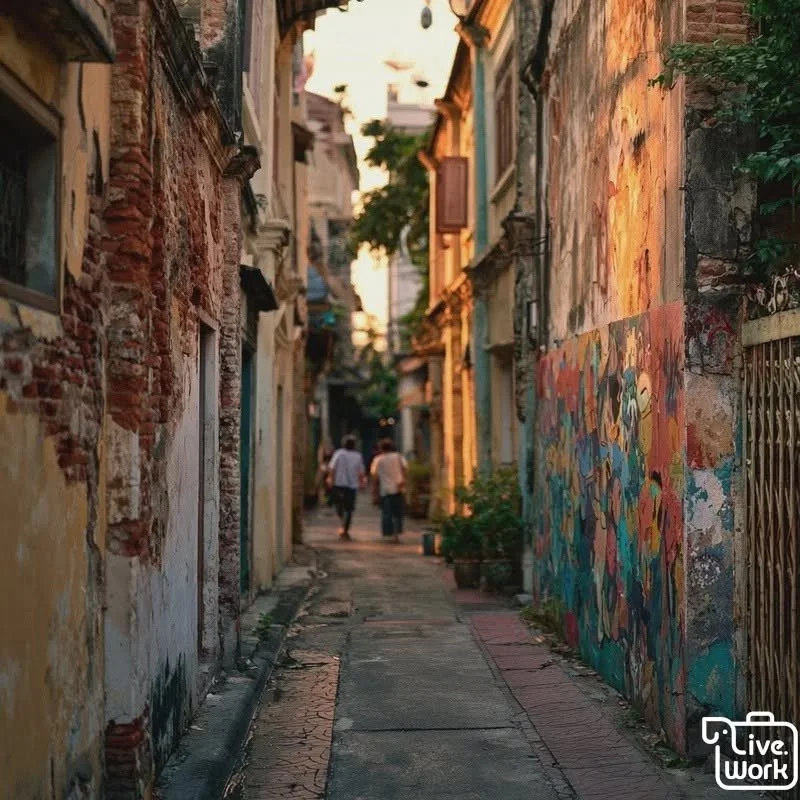
Talat Noi is one of Bangkok’s most photogenic neighborhoods because it does not feel designed for photography, even though almost every corner seems to ask for a camera. Its beauty is layered rather than polished. Weathered doors sit beside bold murals. Old mechanics’ shops spill metal parts and vintage textures into narrow lanes. Restored shophouses hide calm cafés behind aged façades. Courtyards appear unexpectedly between brick walls, plants, shrines, scooters, and wooden shutters. The Chao Phraya River waits nearby, adding breeze, light, and a sense of old Bangkok’s trading history.
This is not a neighborhood to rush. Talat Noi rewards slow walking, careful looking, and small detours. The streets are tight, the details are easy to miss, and the best photographs often come from noticing what is above eye level or half-hidden in a side alley. A peeling wall, a faded sign, a stack of engine parts, a red shrine lantern, a painted cat, a rusty door, or afternoon light hitting old timber can become the most memorable image of the day.
A good Talat Noi walk begins near the Hua Lamphong area, moves into the lane network of the neighborhood, reaches the riverside for Chao Phraya views, then loops back through the shophouse streets for murals, café stops, and more quiet discoveries. The route does not need to be complicated. The real point is not to “complete” Talat Noi. The point is to let the neighborhood reveal itself slowly.
Why Talat Noi Feels So Different
Talat Noi feels different from Bangkok’s larger tourist districts because it still carries the texture of daily work. It is creative, photogenic, and increasingly popular, but it has not lost the feeling of a real neighborhood. Mechanics’ shops, family businesses, shrines, old residences, cafés, galleries, river warehouses, and street art all sit close together. This mix creates the visual contrast that makes the area so compelling.
In many parts of Bangkok, old and new are separated by scale: historic buildings in one place, shopping malls in another, glass towers somewhere else. In Talat Noi, the contrast happens within a single lane. A mural may be painted on a weathered wall beside a working garage. A stylish café may occupy an old building that still shows its age. A quiet shrine may sit near a street-art corner where visitors stop for photos. The neighborhood does not present one clean story. It presents layers.
That layered quality is what makes Talat Noi such a good place for slow travel. You are not only looking at attractions. You are reading surfaces: doors, walls, signs, textures, shadows, wires, tiles, shutters, staircases, and shopfronts. The neighborhood becomes more interesting the longer you look.
Starting Near Hua Lamphong
Starting near the Hua Lamphong area gives the walk a useful sense of direction. From there, you can move gradually toward Talat Noi’s lane network and then toward the river. This approach works well because it lets the neighborhood build slowly. You begin in a more urban, transport-connected part of Bangkok, then step into smaller streets where the pace and scale change.
The transition is part of the experience. Large roads and station-area movement gradually give way to older shophouses, narrower paths, local businesses, and murals tucked into corners. Instead of arriving by taxi at a single photo spot, walking in from the edge helps you understand how Talat Noi sits within the wider old-city and Chinatown-adjacent fabric of Bangkok.
This is also a practical starting point because it is easier to reach by public transport than many smaller river neighborhoods. Once you are walking, however, the best thing to do is slow down. Talat Noi is not a straight-line route. It is a place of small turns.
Entering the Lane Network
The heart of Talat Noi is in its lanes. These narrow sois and passageways are where the neighborhood’s visual character becomes strongest. You may find old doors with peeling paint, walls covered in murals, metal workshops, tiny shrines, cats resting in shade, plants growing from balconies, and scooters squeezed into corners that seem too small for them.
This is where your camera becomes most useful, but also where patience matters most. The lanes can be tight, and people live and work here. Do not treat every doorway as a studio backdrop. Step aside when motorbikes pass. Avoid blocking shop entrances. Keep your voice low in residential corners. If someone is working in a garage or shop, observe respectfully rather than pushing close for a photo.
The best Talat Noi images often come from distance and angle rather than intrusion. A weathered doorway framed by shadow, a mural seen across a lane, a mechanic’s shop with tools arranged naturally, or a café entrance half-hidden behind plants can feel more authentic than a posed shot taken too close.
Go slowly. Talat Noi’s lanes reward attention more than speed.
Street Art with Heritage Texture
Talat Noi’s street art is powerful because it is not floating in empty space. It is painted onto walls that already carry time. Murals appear beside old shutters, rough plaster, rusted metal, and shopfronts that show years of use. This makes the art feel connected to the neighborhood rather than simply placed on top of it.
The murals vary in style. Some are playful and colorful. Some reference local life. Some use humor. Some work almost like visual greetings. Others blend with the architecture so naturally that you may not notice them until you turn around. This is why it helps to look more than once. A wall that seemed ordinary from one direction may reveal a whole composition from another.
Street art also gives Talat Noi a bridge between generations. The neighborhood’s heritage buildings and old businesses speak of the past, while murals, cafés, and creative spaces speak of ongoing change. The best walk is one that notices both. Talat Noi is not only an old neighborhood, and it is not only a trendy photo area. It is a place where memory and reinvention share the same walls.
Old Mechanics’ Shops and Vintage Details
One of Talat Noi’s most distinctive visual features is its mechanics’ shops and industrial textures. Old car parts, engines, tires, metal pieces, tools, oil-stained surfaces, workshop doors, and patched walls create a gritty layer that contrasts beautifully with cafés and murals. These details are not props. They are part of the neighborhood’s working identity.
For photographers, this is one of the richest themes in Talat Noi. The colors are earthy and deep: rust, black rubber, faded blue, old green paint, concrete grey, warm timber, and occasional bright mural color. The textures feel real because they are real. Peeling paint, dented metal, stained walls, and worn shutters cannot be faked convincingly. They carry use.
When photographing workshop areas, stay respectful. People may be repairing vehicles, moving parts, or doing business. Keep your distance, do not step into private workspaces, and avoid photographing workers closely without permission. The atmosphere is beautiful because it is active, not because it exists for visitors.
A Simple Talat Noi Walking Route
| Part of the Walk | Atmosphere | Best Focus |
|---|---|---|
| Hua Lamphong Starting Area | Urban, practical, and connected, with the city’s larger roads and transport energy still visible. | Use this as a simple starting point before gradually moving into the older lane network of Talat Noi. |
| Talat Noi Lane Network | Narrow, textured, and full of small details, with weathered doors, murals, workshops, shrines, plants, and local life close together. | Walk slowly, look up and sideways, and let side alleys reveal hidden courtyards, street art, and vintage surfaces. |
| Mechanics’ Shop Streets | Gritty, authentic, and visually rich, with tools, engine parts, old metal, shopfronts, and industrial textures shaping the scene. | Photograph respectfully from public space, focusing on textures, colors, and contrast without interrupting people at work. |
| Riverside Edge | Breezy, open, and reflective, with Chao Phraya views giving the neighborhood a wider historical and geographic context. | Pause for river light, boat movement, old buildings, and the feeling of Bangkok’s trading past meeting the present city. |
| Shophouse Loop Back | Layered and atmospheric, with heritage façades, restored buildings, cafés, galleries, and murals appearing between residential details. | Return through different lanes rather than retracing the same path, and use the loop for more street art, café stops, and slower photography. |
| Final Café Stop | Calm, shaded, and restorative, often inside restored old buildings that keep the neighborhood’s historic mood alive. | End with iced coffee, Thai tea, or a pastry, and use the break to review photos and let the neighborhood settle in your memory. |
Heading Toward the Riverside
The Chao Phraya River gives Talat Noi another dimension. After walking through the tight lanes, the riverside feels open and relieving. The air moves differently near the water, and the neighborhood’s history becomes easier to imagine. Talat Noi is not only a collection of photogenic walls. It is part of Bangkok’s old riverside trading landscape, shaped by movement, migration, commerce, and communities that lived close to the river.
The riverside views do not need to be dramatic to be meaningful. Watch boats pass, notice the opposite bank, look at old buildings near the water, and let the openness contrast with the dense lanes behind you. The river also helps reset your senses. After focusing on close-up textures and narrow compositions, the water gives you distance.
This is a good place to pause rather than hurry. Talat Noi is best experienced in alternating rhythms: tight lane, open river, narrow shophouse street, quiet café, hidden courtyard, another mural. The river is the walk’s breathing space.
Looping Back Through Shophouse Streets
After the riverside, loop back through the shophouse streets instead of returning exactly the way you came. Talat Noi changes when seen from the opposite direction. A mural hidden by shadow earlier may now catch the light. A doorway you passed without noticing may reveal a courtyard. A café sign may become visible from a different angle. The same lane can feel different after you have reached the river and returned.
The shophouses are central to the neighborhood’s mood. Their narrow façades, upper-floor windows, wooden shutters, old signs, tiles, and mixed-use structure tell the story of Bangkok’s older urban life. Many were built for living and working together: shop below, home above, family business woven into daily routine. Even when restored or adapted into cafés and creative spaces, the buildings often keep that layered feeling.
This is where Talat Noi’s beauty becomes especially subtle. Do not look only for the brightest murals. Look at balconies, rooflines, drainpipes, painted numbers, worn thresholds, and how newer businesses fit into older buildings. The neighborhood is full of small negotiations between preservation, use, decay, repair, and reinvention.
Café Breaks in Restored Old Buildings
Talat Noi’s cafés are part of the neighborhood experience, especially when they are set inside restored or adapted old buildings. These spaces often keep exposed walls, timber details, old staircases, courtyard corners, or industrial features that match the surrounding streets. A café stop here does not feel like leaving the neighborhood. It feels like entering another layer of it.
An iced coffee is ideal after walking in Bangkok heat. A Thai tea gives a sweeter, more local comfort. A simple pastry or small dessert is enough if you want a gentle pause before continuing. The best café stop is not necessarily the most famous one. It is the one that lets you sit quietly and absorb where you are.
Use the break to review photos, but do not let the camera take over the whole experience. Sometimes the real value of a café stop is looking back at the lane outside, noticing the wall texture across the street, or hearing the shift from traffic noise to indoor calm. Talat Noi is visual, but it is also atmospheric.
What to Photograph in Talat Noi
| Photo Subject | Why It Works | How to Capture It Respectfully |
|---|---|---|
| Weathered Doors | Peeling paint, old handles, wooden frames, and faded colors create the vintage texture that defines much of the neighborhood. | Photograph from public space, avoid entering private thresholds, and wait if residents or workers need to pass. |
| Street Art Walls | Murals add bold color and contemporary character to old shophouse surfaces and industrial lanes. | Take turns at popular mural spots, avoid blocking narrow lanes, and include surrounding textures rather than cropping the art too tightly. |
| Mechanics’ Shop Details | Engine parts, tools, tires, metal scraps, and workshop doors create strong contrast with cafés and heritage architecture. | Do not step into work areas, do not touch objects, and avoid close photos of workers unless permission is clearly given. |
| Hidden Courtyards | Small courtyards reveal plants, light, old walls, and quiet domestic details that soften the urban texture. | Check whether the space is public before entering, and photograph gently without disturbing residents or businesses. |
| Riverside Views | The Chao Phraya adds space, movement, boats, reflections, and historical context to the tight neighborhood walk. | Use the river as a pause point, watch boat movement, and avoid blocking piers or working river access areas. |
| Warm Afternoon Light | Late-day light brings out gold tones in old walls, shutters, brick, metal, and painted surfaces. | Move slowly, return to lanes from different angles, and let shadows become part of the composition. |
Best Time to Visit
Talat Noi can be visited in the morning or afternoon, but the mood changes with light. Morning is often calmer and cooler, making it easier to walk without heat fatigue. Cafés begin opening, lanes feel quieter, and the neighborhood has a softer daily-life rhythm.
Late afternoon is best for photography. The light becomes warmer, shadows grow longer, and old walls take on more depth. Peeling paint, rust, brick, wood, and mural color all become richer when the sun is lower. This is also a good time to end near the riverside, where the Chao Phraya reflects the changing sky.
Midday can be hot and harsh, especially if you are walking slowly with a camera. If you visit during the hottest part of the day, plan more café stops and keep the route short. Talat Noi is not a neighborhood where you need to push through discomfort. It is better to see less and notice more.
Looking Up: The Detail Many Visitors Miss
Most visitors photograph walls and doors at eye level, but Talat Noi rewards looking up. Upper-floor balconies, wooden shutters, plants, laundry, wires, rooflines, old signs, and window frames often tell as much of the story as the ground-level murals. The vertical layers show how people live above shops, cafés, workshops, and narrow lanes.
Looking up also helps you appreciate the architecture. Shophouses are not only façades for street-level businesses. Their upper floors carry domestic and historic details that can be easy to overlook. A faded balcony, a small shrine, an old window grille, or a plant growing from a ledge may add the strongest sense of life to a photograph.
Be mindful while doing this. Bangkok pavements and lanes can be uneven, and motorbikes may pass suddenly. Step aside before looking up or taking photos. The safest and most respectful photography comes from pausing properly rather than stopping abruptly in the middle of a narrow path.
Walking Slowly Without Blocking Local Life
Talat Noi’s lanes are narrow, and local life continues around visitors. People ride motorbikes, carry goods, open shops, repair vehicles, receive deliveries, clean entrances, and move through the area as part of daily routine. A good visitor makes space for that.
When you stop for photos, stand close to the side rather than in the center of the lane. If a motorbike approaches, move first and take the photo later. Avoid sitting on private steps, leaning against doors, or placing bags on someone’s threshold. If a shopfront is active, do not block it while reviewing your photos.
This kind of etiquette matters because Talat Noi’s charm depends on its realness. The neighborhood is photogenic because people still live and work there. Respecting that daily life is part of the experience.
A Camera-Friendly but Low-Stress Route
The best photography route is not the one with the most pinned locations. It is the one that gives you time to notice. Start near Hua Lamphong, enter the Talat Noi lanes, follow the murals and mechanics’ streets, turn toward the river, pause for Chao Phraya views, then loop back through different shophouse streets toward cafés.
This route works because it alternates tight and open spaces. The lanes give texture. The river gives distance. The shophouses give history. The cafés give rest. The loop also prevents the walk from feeling repetitive. By returning through different streets, you increase your chances of seeing murals, doors, and courtyards you would miss on a straight route.
Do not worry if you get slightly turned around. That is part of the neighborhood’s appeal. Keep your map available, but do not stare at it constantly. Some of Talat Noi’s best images appear when you take a small side turn for no reason other than curiosity.
What to Bring for a Talat Noi Photo Walk
| Item | Why It Helps | Best Use in Talat Noi |
|---|---|---|
| Camera or Phone with Enough Battery | The neighborhood is full of small visual details, and you may take more photos than expected. | Use it for murals, doors, textures, riverside views, café interiors, and warm afternoon light. |
| Small Power Bank | Maps, photos, and café searches can drain your phone during a slow walking route. | Keep it in a dry inner pocket and recharge during a café break if needed. |
| Comfortable Walking Shoes | The lanes are narrow and uneven in places, and the best route involves slow wandering rather than quick transport hops. | Wear shoes or secure sandals that make it easy to walk, pause, step aside, and explore side streets comfortably. |
| Water Bottle | Bangkok heat builds quickly, especially when you are walking slowly and stopping often for photos. | Drink between café stops and before heading toward the riverside or back through the shophouse lanes. |
| Light Umbrella | It protects against both sudden rain and strong sun, especially in exposed sections near the river. | Use it during rainy season, midday heat, or when moving between shaded lanes and open streets. |
| Small Cash | Useful for drinks, snacks, small local purchases, temple donations, or cafés that may have minimum card payments. | Keep it handy so you can support small businesses without interrupting the flow of the walk. |
| Respectful Patience | Talat Noi is a living neighborhood, not an outdoor photo studio. | Take turns at murals, avoid blocking lanes, and let residents and workers move through their own neighborhood first. |
Café Stops as Part of the Heritage Experience
A café in Talat Noi is not just a place to cool down. Many of the neighborhood’s calm café spaces are set inside old or restored buildings, which means the break can deepen the walk rather than interrupt it. Exposed walls, old beams, vintage furniture, industrial details, courtyard plants, and soft lighting often echo the textures outside.
A locally roasted iced coffee fits the mood well. It gives you energy without pulling you out of the neighborhood. Thai tea is a sweeter choice, especially if you want something familiar and comforting. A simple pastry can be enough if you do not want a full meal. The best café break is light, slow, and unforced.
Try not to turn the café into a long escape unless you need the rest. Talat Noi is best when you alternate inside and outside. Sit, cool down, review your route, then return to the lanes with fresh eyes.
Why Talat Noi Is More Than a Photo Spot
Talat Noi is famous because it photographs beautifully, but the neighborhood is more than a backdrop. It is a historic community, a working district, a creative pocket, a riverside neighborhood, and a place where Bangkok’s older urban identity is still visible. Its charm comes from coexistence: heritage and change, work and leisure, decay and restoration, local life and visitor curiosity.
This is why the best way to experience Talat Noi is with respectful attention. Take photos, but also listen. Notice sounds from workshops, temple bells, café grinders, river engines, footsteps, and motorbikes passing through tight lanes. Smell coffee, old wood, street food, metal, rain on concrete, or incense near shrines. The neighborhood is not only visual, even if it is one of Bangkok’s most visual places.
When you experience it slowly, Talat Noi becomes a reminder that Bangkok’s beauty is not only in grand monuments. Sometimes it is in a cracked wall, a narrow lane, a painted door, a restored shophouse, or light falling across rusted metal.
Conclusion
Talat Noi is one of Bangkok’s most rewarding neighborhoods for a slow photo walk because it combines heritage shophouses, hidden courtyards, riverside views, mechanics’ shops, bold street art, and calm cafés inside restored old buildings. Start near the Hua Lamphong area, wander into the narrow lane network, look for weathered doors and murals, move toward the Chao Phraya for a riverside pause, then loop back through the shophouse streets for more textures and café stops. Bring your camera, but bring patience too. The best images come when you walk slowly, look up, respect local life, and let the neighborhood’s layered history appear one frame at a time.