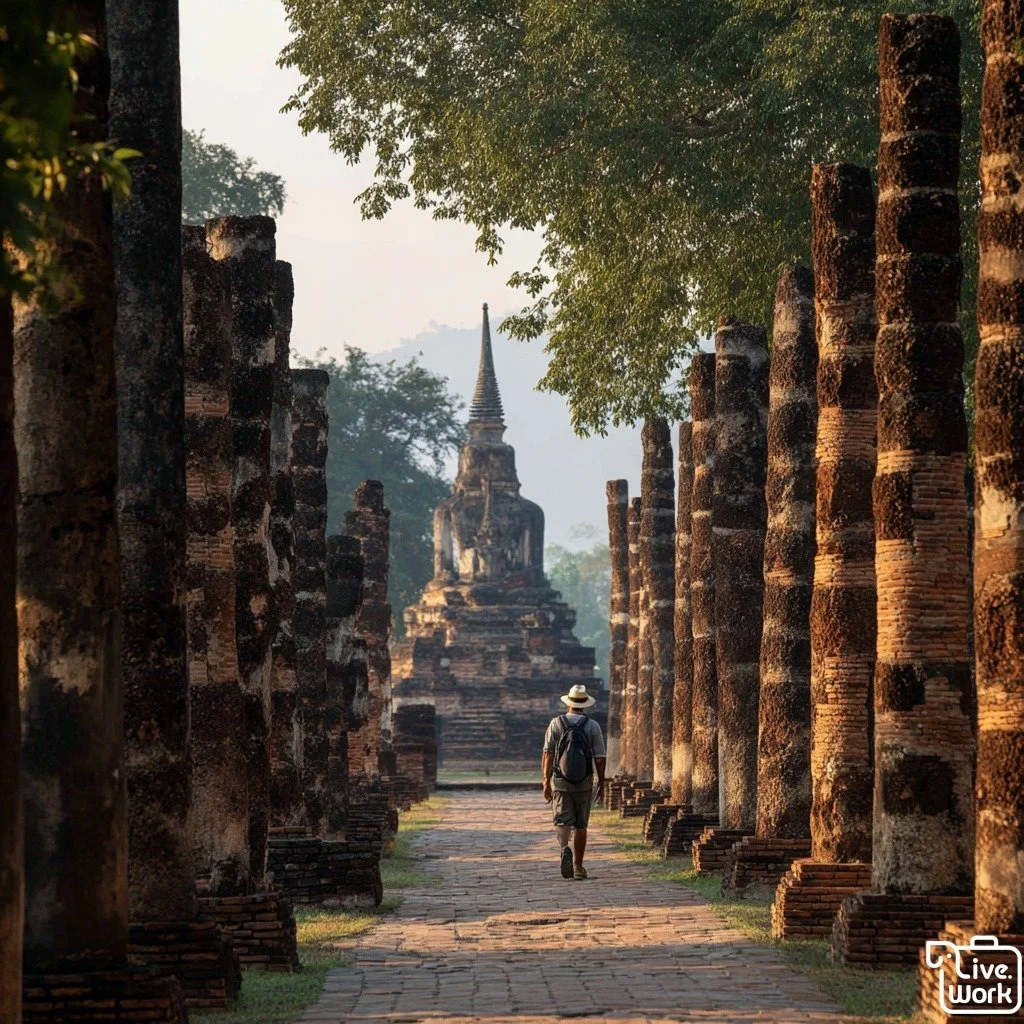
Sukhothai Historical Park: A Deep Journey into the Birthplace of Thai Civilization
Sukhothai Historical Park is far more than a UNESCO World Heritage Site — it is the living foundation of Thai culture, identity, language, and spirituality. As the capital of the first Thai Kingdom during the 13th and 14th centuries, Sukhothai shaped everything from political values to artistic traditions. Walking through its serene ruins is not just sightseeing; it is an immersive lesson in how Thailand became the nation we recognize today.
🏛️ The Dawn of the First Thai Kingdom
Sukhothai’s significance begins with the establishment of the first unified Thai state under King Si Inthrathit, followed by the reign of the visionary King Ramkhamhaeng the Great. During this era, the principles of justice, accessibility, and benevolent rule were emphasized. One of the most famous stories — the “royal bell” that citizens could ring to seek the king’s attention — symbolizes Sukhothai’s compassionate governance.
This early kingdom created a political model rooted in mutual respect, harmony, and community welfare. These values continue to influence modern Thai society and leadership philosophies.
✍️ The Creation of the Thai Alphabet
One of Sukhothai’s most enduring achievements is the development of the Thai writing system. King Ramkhamhaeng adapted and simplified existing Khmer scripts, making them suitable for tonal expression and everyday communication. This alphabet, still used today, allowed Buddhist teachings, legal decrees, poetry, and folklore to flourish.
The birth of Thai writing in Sukhothai helped unify the kingdom and laid the foundation for Thai literary culture. Every Thai book, song, and signboard traces its roots back to this cultural milestone.
🕉️ The Rise of Theravada Buddhism
Theravada Buddhism took a strong and unified form during the Sukhothai era. The religious reforms that took root here reinforced moral values and spiritual teachings that are still core to Thai society.
Temples from this period reflect the spiritual focus of the kingdom: calm walkways, balanced architecture, sacred lotus ponds, and Buddha statues with serene, compassionate expressions. The Sukhothai Buddha style — graceful, elongated, peaceful — became one of the most influential artistic forms in Southeast Asia.
Even today, visitors feel a gentle, meditative calm while exploring these spaces, as though the spiritual essence of Sukhothai still permeates the air.
🧱 Art & Architecture that Defined a Nation
Sukhothai’s artistic legacy remains one of the most admired in Asia. The famous “walking Buddha” — a sculptural innovation from this period — is a masterpiece of fluidity and elegance, symbolizing movement, spiritual progress, and inner balance.
The city’s grand temples, including Wat Mahathat and Wat Si Chum, demonstrate a refined blend of influences from Sri Lanka, the Khmer Empire, and Mon cultures. Yet the resulting style is unmistakably Thai — gentle, confident, and harmonious.
Stone chedis rise gracefully above lotus-filled ponds, while massive laterite pillars stand like silent guardians of history. These architectural elements reveal a sophisticated understanding of aesthetics, symmetry, and environmental harmony.
🌿 A City Built in Harmony with Nature
Sukhothai was engineered with remarkable precision. Its system of reservoirs, canals, and moats represented one of the most advanced water management systems of its time.
This allowed agriculture to flourish and the kingdom to prosper. The thoughtful layout — wide roads, green corridors, open spaces, and water features — demonstrates how the Sukhothai civilization balanced urban life with natural landscapes.
Modern visitors still notice this balance: reflections of temples on lotus ponds, cool breezes over open fields, and trails lined with ancient trees create a tranquil environment unlike anywhere else in Thailand.
🛕 Sukhothai as a Model for Modern Heritage Conservation
Today, Sukhothai Historical Park is recognized as one of Southeast Asia’s best-managed heritage sites. Conservation authorities carefully preserve structures while avoiding over-restoration. Local communities are actively involved, providing tours, crafts, and cultural programs that directly support the local economy.
Environmentally friendly transport — bicycles, electric shuttles, and walking paths — minimizes impact while enhancing the serene experience.
Sukhothai is often studied by professionals in:
Sustainable tourism
Architecture and heritage preservation
Cultural education
International development
Community-based economic planning
Its success demonstrates how ancient sites can remain relevant and sustainable in the modern world.
✨ Why Sukhothai Matters Today
Sukhothai is not simply a relic of the past — it continues to shape Thailand’s national identity. Its contributions to governance, spirituality, language, urban design, and cultural aesthetics remain deeply embedded in Thai consciousness.
Visiting Sukhothai provides:
A deeper understanding of Thai values
Insight into Southeast Asia’s cultural development
Inspiration for modern design, leadership, and community-building
A rare opportunity to reflect in a historically sacred landscape
For travelers, educators, creatives, and professionals, Sukhothai offers a rich case study on heritage and identity that continues to influence Thailand and the region.
Walking through the park feels like reading a history book written in stone, water, and silence — each monument revealing a new lesson, each pathway guiding visitors closer to the heart of Thai culture.