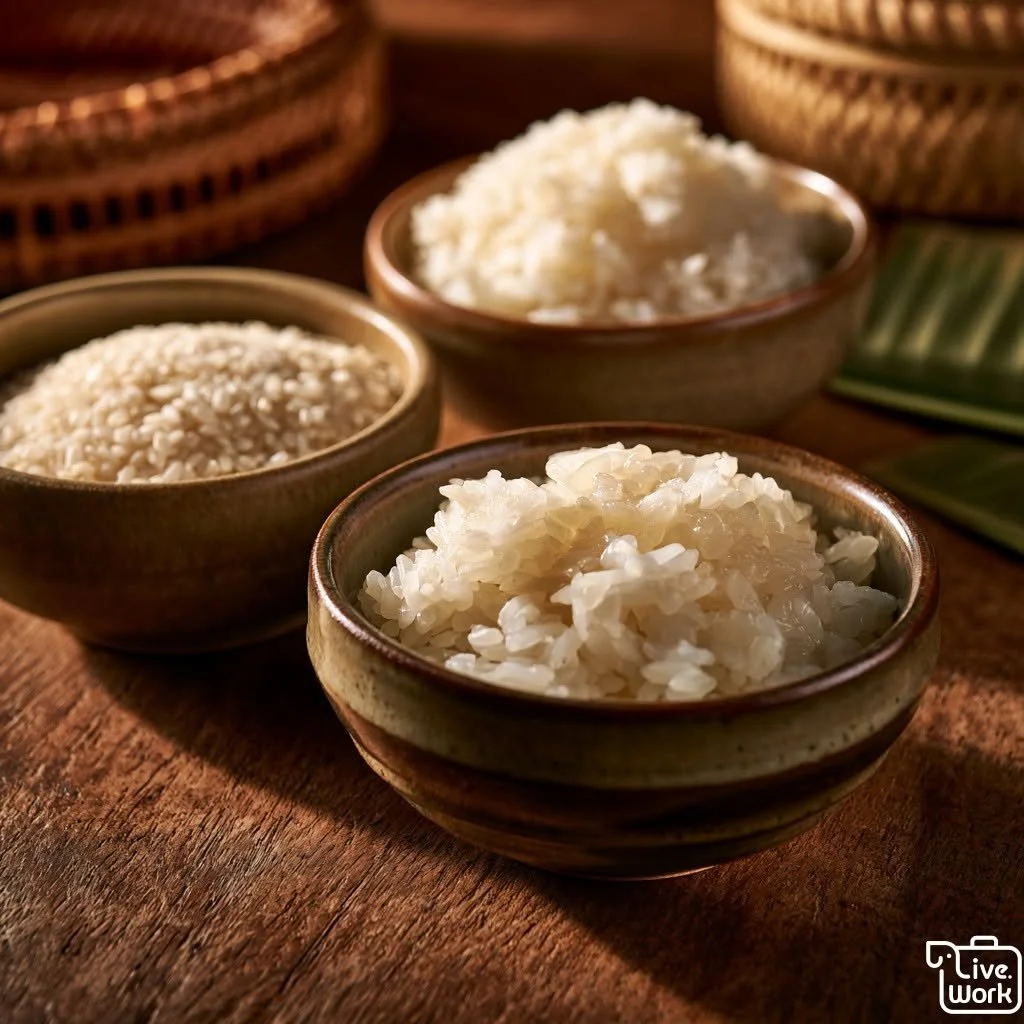
Rice is more than a staple food in Thailand. It is part of everyday conversation, agricultural traditions, regional identity, and the way meals are prepared and shared. Its importance is reflected in the Thai language, which uses different expressions to describe rice depending on how it has been processed, cooked, or served.
The basic Thai word for rice is ข้าว, pronounced approximately “khao.” Uncooked, milled rice is called khao san, ordinary cooked rice is known as khao suai, and sticky rice is called khao niao. Although these words share the same foundation, each describes something different.
Learning these expressions provides a useful introduction to both Thai food and everyday language. It can also help you understand restaurant menus, shop at local markets, and recognize the cultural importance of something that appears on Thai dining tables almost every day.
Khao: A Small Word with a Big Meaning
The Thai word ข้าว (khao) generally means rice, but its meaning extends beyond the grain itself. In everyday conversation, it can also refer to food or a meal more broadly.
One of the most familiar Thai expressions is กินข้าวหรือยัง (gin khao rue yang?), which literally translates as “Have you eaten rice yet?” In practice, it means “Have you eaten yet?” The question can be asked even when the meal consists of noodles, soup, or something else entirely.
Among friends, relatives, and colleagues, asking whether someone has eaten can also be a friendly way of showing care and starting a conversation. It reflects the close relationship between food, hospitality, and social life in Thailand.
Similarly, กินข้าว (gin khao), literally “eat rice,” is commonly used to mean having a meal. Rice is so closely associated with eating that the word has become part of the language surrounding food in general.
Understanding the Different Thai Words for Rice
Thai vocabulary distinguishes between several forms of rice, from harvested grains to the finished meal.
| Thai Word | Pronunciation | English Meaning |
|---|---|---|
| ข้าว | Khao | Rice, or food and meals in certain contexts. |
| ข้าวเปลือก | Khao plueak | Unhusked rice grains, also known as paddy rice. |
| ข้าวสาร | Khao san | Uncooked, milled rice grains ready for preparation. |
| ข้าวสวย | Khao suai | Ordinary cooked rice served with a meal. |
| ข้าวเหนียว | Khao niao | Sticky rice, also known as glutinous rice. |
| ข้าวหอมมะลิ | Khao hom mali | Thai jasmine rice, known for its fragrant aroma. |
| ข้าวกล้อง | Khao glong | Brown rice with its bran layer retained. |
| ข้าวเปล่า | Khao plao | Plain cooked rice served without other dishes or toppings. |
These expressions describe different characteristics of rice, so their meanings can overlap. Jasmine rice, for example, can be sold uncooked as khao san and served after cooking as khao suai.
Khao San: Rice Before It Reaches the Cooking Pot
ข้าวสาร (khao san) refers to uncooked, milled rice. These are the dry grains sold in supermarkets, fresh markets, rice shops, and large sacks throughout Thailand.
Before rice reaches this stage, it is harvested as khao plueak, or paddy rice, with its protective outer husk still attached. Milling removes the husk and, in the case of white rice, the bran layers.
The expression khao san is also connected to one of Bangkok’s most famous streets. Khao San Road, today internationally known for backpacker accommodation, restaurants, and nightlife, takes its name from its historical association with the rice trade.
What is now a busy tourism district was once associated with a much more ordinary but essential product: uncooked rice.
Khao Suai: The Rice on Your Dinner Plate
ข้าวสวย (khao suai) refers to ordinary cooked rice, typically prepared by boiling or using a rice cooker. It is the familiar rice served alongside Thai curries, stir-fries, grilled meats, soups, and vegetable dishes.
Interestingly, the word สวย (suai) also means “beautiful” in Thai. Although khao suai is an established expression for cooked rice rather than a description of its appearance, the literal combination is easy to remember as “beautiful rice.”
Thai jasmine rice is frequently used to prepare khao suai. When cooked well, the grains are soft, fragrant, and slightly moist without forming the dense, sticky texture associated with glutinous rice.
If you want to order an additional portion of plain rice at a Thai restaurant, you can also ask for ข้าวเปล่า (khao plao). This is a particularly useful expression when sharing several dishes or ordering a curry that does not automatically come with rice.
Khao Niao: Sticky Rice and Regional Food Culture
ข้าวเหนียว (khao niao) means sticky rice. The word เหนียว (niao) describes something sticky or chewy, making the name a direct reflection of the rice's texture.
Sticky rice is especially important in Northern Thailand and Isan, the northeastern region. In these areas, it is traditionally eaten with grilled chicken, spicy papaya salad, chili dips, grilled pork, sausages, and other shared dishes.
Unlike ordinary jasmine rice, sticky rice is traditionally soaked before being steamed. Once cooked, it holds together, allowing diners to take a small portion with their fingers and use it to scoop up food or chili dips.
It is often served in a small woven bamboo container called a kratip khao, which helps keep the rice warm while allowing moisture to escape.
Sticky rice is also used in desserts throughout Thailand. The most internationally recognizable example is ข้าวเหนียวมะม่วง (khao niao mamuang), or mango sticky rice, which combines sweetened coconut sticky rice with ripe mango.
Despite its alternative English name, glutinous rice does not naturally contain gluten. The term refers to its glue-like texture when cooked.
Khao Hom Mali: Thailand’s Fragrant Jasmine Rice
ข้าวหอมมะลิ (khao hom mali) is Thai jasmine rice, one of the country's most internationally recognized agricultural products.
The word หอม (hom) means fragrant, while มะลิ (mali) means jasmine. The name refers to the rice's characteristic fragrance, which develops naturally rather than through the addition of jasmine flowers.
Jasmine rice has a delicate aroma, a soft texture, and a mild flavor that complements strongly seasoned Thai dishes. It works particularly well with green curry, pad kra pao, garlic pork, grilled fish, and other dishes containing rich sauces or intense spices.
While sticky rice is closely associated with Northern and Northeastern Thai food traditions, jasmine rice is widely eaten throughout the country.
Rice Words You Will Recognize on Thai Menus
Once you recognize the word khao, many Thai dish names become easier to understand.
ข้าวผัด (khao pad) means fried rice, while ข้าวต้ม (khao tom) refers to rice soup, in which individual grains generally remain recognizable.
ข้าวมันไก่ (khao man gai) is Thai-style chicken rice, featuring chicken served with rice cooked using chicken stock and fat, accompanied by a distinctive dipping sauce.
ข้าวขาหมู (khao kha moo) combines rice with slow-braised pork leg, while ข้าวแกง (khao gaeng) refers to rice served with curries and other prepared dishes.
Another useful expression is กับข้าว (gap khao), which describes the dishes eaten alongside rice. A curry, stir-fried vegetable dish, omelet, or grilled fish can all be considered gap khao.
Understanding this expression also helps explain the structure of a traditional Thai meal. Rice forms the foundation, while several accompanying dishes provide different flavors, textures, and levels of spice.
Why Rice Matters So Much in Thai Culture
Rice cultivation has shaped Thailand's landscapes, rural communities, economy, and food traditions for centuries. Across the country, agricultural seasons influence village life, local celebrations, and the appearance of the countryside.
Rice also carries cultural and spiritual significance. In traditional Thai agricultural beliefs, Mae Phosop, แม่โพสพ, is the rice goddess associated with nourishment, fertility, and successful harvests.
Although everyday life has changed considerably, rice remains closely connected with ideas of abundance, hospitality, and well-being.
This cultural importance can be seen in simple daily habits, from sharing dishes around a table to asking someone whether they have eaten. Even a small expression such as gin khao reveals how deeply food and language are connected.
Conclusion
The Thai language offers a surprisingly interesting perspective on rice. Khao san describes uncooked, milled grains, khao suai refers to ordinary cooked rice, and khao niao identifies the sticky rice particularly associated with Northern Thailand and Isan.
Other expressions, such as khao hom mali, khao plao, and gap khao, reveal how rice varieties, preparation methods, and dining traditions shape everyday vocabulary.
Next time you enjoy a Thai meal, take a closer look at the rice on your plate. Recognizing which kind you are eating is a small but rewarding way to connect Thai language, regional cuisine, and everyday culture.