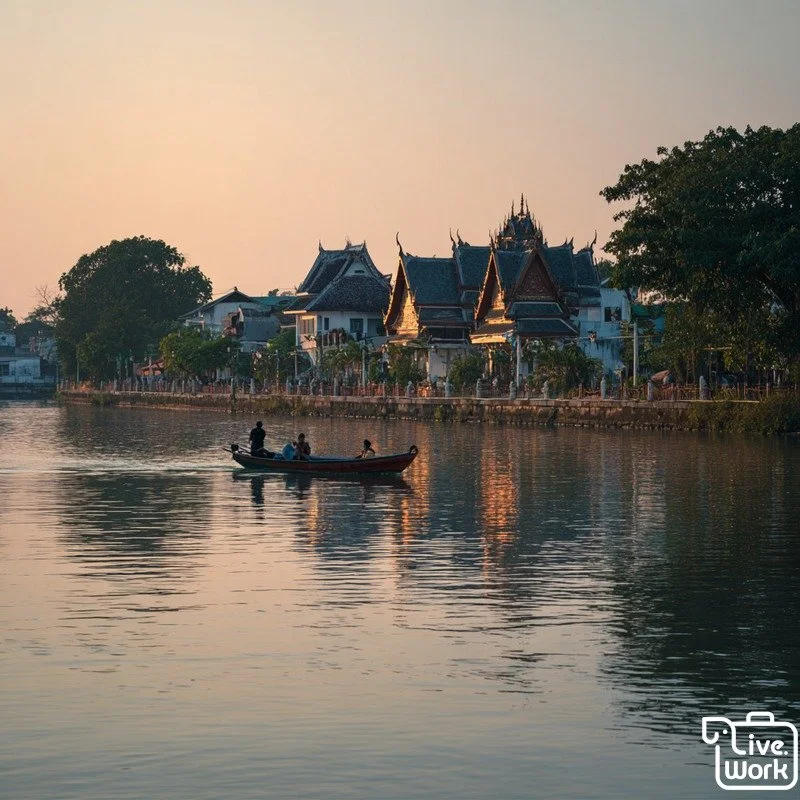
Phitsanulok & Thailand’s Lower North: A Historic Crossroads Shaping Trade, Faith, and Everyday Life
In Phitsanulok, geography explains history—and history explains identity. This is where Thailand’s Central Plains begin to rise toward the Northern highlands, where river corridors and road links have connected regions for centuries. As a result, the Lower North has long functioned as a bridge: for commerce, for migration, for belief systems, and for ideas.
Today, that connective character still defines the region. Phitsanulok feels both rooted and practical—steeped in heritage yet easy to navigate for modern travel, work, and exploration.
A Strategic Landscape: Rivers, Roads, and Movement
Phitsanulok’s position along the Nan River has shaped its development since early kingdoms. River corridors once carried traders, monks, and settlers between north and south, turning the city into a natural exchange point. Overland routes later reinforced this role, creating a steady flow of goods and people.
Even today, infrastructure mirrors that legacy. Highways radiate outward, connecting Bangkok to Chiang Mai and linking the east and west of the country. Rail lines and road networks make Phitsanulok both a transit hub and a practical base. It’s a place built on movement—but never overwhelmed by it.
Cultural Blending: North Meets Central Thailand
Because of its crossroads position, the Lower North carries a distinct cultural blend. In temple architecture, you’ll see northern design elements—tiered roofs, intricate woodwork—alongside central Thai proportions and ornamentation. In markets, dialects and food traditions overlap naturally.
Festivals feel layered rather than singular, reflecting influences from multiple regions. Daily life incorporates both central Thai rhythms and northern sensibilities, resulting in a cultural atmosphere that feels balanced and adaptable.
Sacred Identity: Wat Phra Si Rattana Mahathat
At the heart of Phitsanulok stands Wat Phra Si Rattana Mahathat, one of Thailand’s most revered temple complexes. Inside is the iconic Phra Buddha Chinnarat, widely considered among the most beautiful Buddha images in the country.
The temple anchors the city’s spiritual identity. Pilgrims arrive from across Thailand, offering prayers and paying respect. For visitors, it provides more than visual grandeur—it offers insight into the deep continuity of Thai Buddhist tradition in the region.
Early morning visits reveal the temple at its most contemplative, when incense drifts lightly and local worshippers set the tone.
Markets and Everyday Life
Step outside the temple grounds, and Phitsanulok feels refreshingly lived-in. Markets line riverbanks and neighborhood streets, selling fresh produce, cooked dishes, and regional specialties. The pace is steady but unhurried—functional rather than theatrical.
Here, the crossroads identity shows up in flavor:
Northern-style noodles
Central Thai curries
Snacks influenced by both traditions
Eating becomes a way of understanding the region’s layered history.
Beyond the City: Nature at the Doorstep
One of the Lower North’s strengths is accessibility to natural landscapes. Short drives from Phitsanulok lead to national parks, waterfalls, and forested highlands. These spaces offer cooler air and slower days—ideal for those who want to balance city time with outdoor exploration.
Rural areas surrounding the city reveal rice fields, small villages, and agricultural rhythms that feel calm and grounded. It’s a reminder that the region’s identity isn’t solely urban—it’s woven through land and water as well.
A Practical Base for Modern Life
Phitsanulok works well as more than a historical stop. Its infrastructure, educational institutions, and regional connections make it appealing for:
Professionals seeking alternatives to larger cities
Students attending local universities
Travelers wanting central access to both north and plains
Costs remain manageable, commutes are reasonable, and daily life feels stable rather than overwhelming.
Why the Lower North Matters
The Lower North isn’t defined by a single headline attraction. Its strength lies in balance: historically significant yet practical, culturally blended yet coherent, connected yet calm.
In Phitsanulok, you see how trade routes shaped belief systems, how geography influenced architecture, and how modern infrastructure builds on ancient pathways. It’s a region that feels purposeful in every direction.
Conclusion
Phitsanulok and Thailand’s Lower North stand at a true crossroads—where rivers, roads, and traditions converge. From the revered Wat Phra Si Rattana Mahathat and Phra Buddha Chinnarat to vibrant markets and nearby national parks, the region offers depth without chaos and history without isolation. If you’re curious about a place that bridges past and present while remaining practical for travel, work, and exploration, the Lower North delivers in every direction.