Mangosteen and Rambutan in Thailand: How to Choose, Open, Eat, and Enjoy Two of the Country’s Best Market Fruits
Thailand’s fruit season can feel like a treasure hunt, especially when mangosteen and rambutan begin appearing in markets in generous piles. These are not fruits you simply buy, peel, and forget. They are part of the full market experience: the color, the weight in your hand, the vendor’s quick sorting, the sticky fingers, the shells in a bowl, and the first bite that makes you understand why Thai fruit culture is so loved.
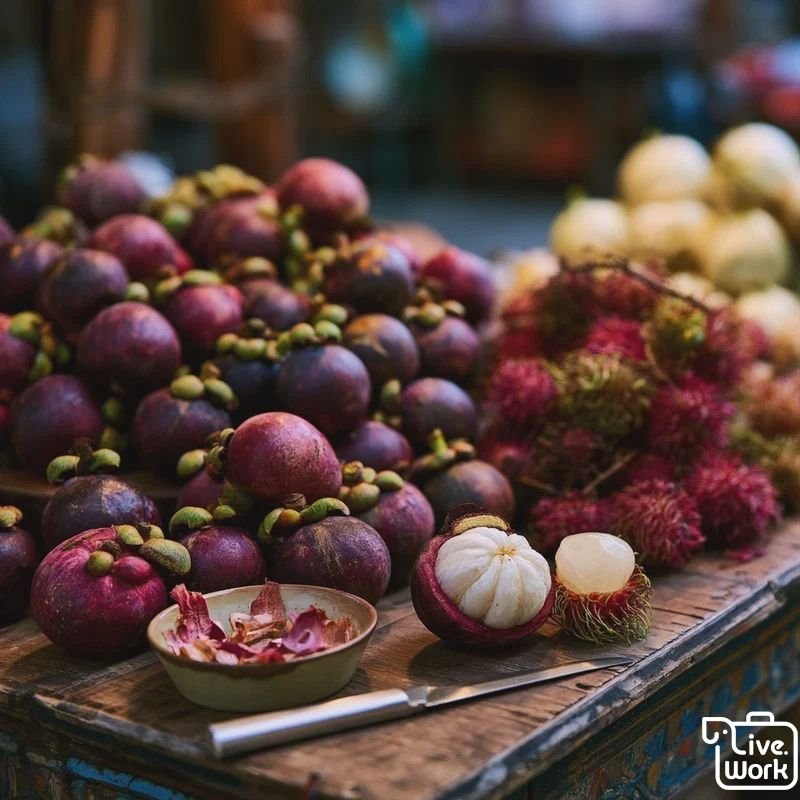
Mangosteen and rambutan are both easy to enjoy once you know what to look for, but they can feel mysterious the first time you see them. Mangosteen hides its delicate white segments inside a thick purple rind. Rambutan looks playful and wild, with red or red-yellow skin covered in soft hair-like spines. Both fruits are best when they are fresh, ripe, and handled gently. Both can also be disappointing if chosen badly: a hard mangosteen may be dry or difficult to open, while an old rambutan may look dull, dry, and tired.
The good news is that choosing them well is not complicated. Mangosteen should feel heavy and slightly yielding, with a deep purple rind that is not rock-hard and not squishy. Rambutan should look bright, plump, and fresh, with lively hairs that are not dried out. Once you learn these small cues, a Thai fruit stall becomes much easier to read. You stop guessing and start choosing with confidence.
Why Fruit Markets in Thailand Feel So Special
Fruit in Thailand is not only a snack. It is part of everyday life. Markets, roadside stalls, supermarket displays, neighborhood carts, night markets, and local fruit shops all make seasonal fruit easy to find. During good fruit periods, you may see piles of mangosteen, rambutan, mango, longan, lychee, durian, dragon fruit, pineapple, papaya, guava, and rose apple arranged in bright, generous displays.
What makes the experience special is the freshness and immediacy. Fruit is often sold by weight, sorted quickly by hand, packed into small bags, or peeled and prepared for immediate eating. Vendors know what is good that day. Locals often choose with a practiced eye: pressing gently, checking stems, looking at color, and feeling weight. Watching how people buy fruit is part of learning how to enjoy it properly.
Mangosteen and rambutan are especially fun because they are interactive fruits. You do not simply slice them like an apple. You open them, reveal them, and eat them piece by piece. Their outer skins are dramatic, but the edible flesh inside is soft, pale, juicy, and delicate. That contrast is part of the pleasure.
Mangosteen: The Purple Shell with Snow-White Cloves
Mangosteen is one of Thailand’s most beloved fruits because it feels almost hidden. From the outside, it looks like a small round purple fruit with a thick rind and a green cap. It can seem heavy and slightly mysterious. Inside, however, it opens into snow-white cloves that look like citrus segments but taste completely different.
The flavor is often described as sweet, floral, creamy, and lightly tangy. A good mangosteen has a soft, delicate bite. It is juicy but not watery, rich but not heavy, fragrant but not overpowering. It feels elegant. This is why many people fall in love with it immediately.
Mangosteen is also a fruit that teaches patience. If you rush it, squeeze it too hard, or cut too deeply, the purple rind can stain your fingers and the white flesh can be damaged. Opened gently, it feels almost ceremonial: score, twist, lift, reveal, eat.
How to Choose a Good Mangosteen
The best mangosteens usually have a deep purple rind that gives slightly when pressed. The word “slightly” matters. You are not trying to crush the fruit. You are checking whether the shell has a gentle softness. If it is rock-hard, it may be old, dry, or difficult to open. If it is very squishy, leaking, cracked, or unpleasantly soft, it may be overripe or damaged.
Weight is one of the simplest clues. A good mangosteen should feel heavy for its size. That usually suggests juiciness. If two fruits look similar but one feels heavier, choose the heavier one. The green cap should look reasonably fresh rather than completely brown and dried out, although market fruit can vary naturally.
Avoid fruits with obvious cracks, heavy yellow resin stains, moldy areas, or sections that feel strangely hard compared with the rest of the rind. A little variation in appearance is normal, but a mangosteen that feels dry, light, and hard is less promising.
When buying from a market, do not squeeze every fruit aggressively. Vendors may not appreciate rough handling, and mangosteen bruises can affect quality. Pick up gently, feel weight, press lightly, and choose respectfully.
How to Open Mangosteen Neatly
The neatest way to open mangosteen is to score the rind around the middle, like drawing an equator around the fruit. Use a small knife and cut only through the thick rind, not deeply into the white flesh. Once the rind is scored, twist the top and bottom halves gently. The shell should loosen, and you can lift the top half to reveal the white cloves inside.
If the fruit is ripe and the rind is soft enough, you may also be able to press gently around the middle with your thumbs until the shell cracks. This method can work well, but it is messier and can stain your fingers if the purple rind releases juice. For beginners, scoring is cleaner.
Once opened, eat the white segments carefully. Some segments may contain seeds, especially the larger ones. Smaller segments are often seedless and very soft. The flesh is delicate, so do not dig aggressively with a fork. Use clean fingers, a small spoon, or simply lift the segments gently.
The purple rind can stain fabric and surfaces, so keep a napkin nearby and place shells into a bowl or small bag rather than dropping them directly onto a light-colored table.
Rambutan: The Bright Red Fruit with a Juicy Center
Rambutan looks playful before you even open it. The fruit is usually red or red-yellow, with soft hair-like spines that give it a wild, tropical appearance. Inside, it contains glossy white flesh around a seed. The texture is crisp-juicy, and the flavor is mildly sweet, refreshing, and sometimes slightly floral. Many people compare it to lychee, but rambutan is often lighter, less perfumed, and more casual to snack on.
Rambutan is an excellent market fruit because it is easy to share. A small bag can be opened gradually while sitting at a hotel balcony, on a train journey, at a picnic table, or after dinner. It does not require a plate if you are careful, but it does create shells and juice, so a small bowl or bag is helpful.
The joy of rambutan is in its freshness. A fresh rambutan feels lively: bright color, plump body, flexible hairs, and juicy flesh. An old rambutan can become dry, dull, or harder to peel, which is why visual cues matter.
How to Choose a Good Rambutan
Look for rambutans with bright red or red-yellow skin and a plump, full shape. The hairs should look fresh rather than brittle or dried out. A little green on the tips of the hairs can actually be a good sign because it suggests freshness. Completely brown, shriveled, dry-looking hairs often mean the fruit is older.
The fruit should feel firm but not hard and dried. It should not look collapsed, heavily bruised, moldy, or wet in a sour-smelling way. If the outer skin looks dull and the hairs are dark and dry, choose another bunch.
Rambutan is often sold attached to small branches or in loose piles. If buying a bunch, look at the overall condition. One imperfect fruit is normal, but if most of the bunch looks tired, dry, or brown, it may not be the best choice.
Fresh rambutan is juicy, so a good fruit may feel pleasantly full in the hand. Once peeled, the flesh should look glossy and white, not dry or grey.
How to Open Rambutan
Rambutan is easy to open once you learn the motion. Hold the fruit firmly and crack the skin with your thumbnail, or make a small cut around the middle if your nail does not break the skin easily. Then peel the skin back like a small lid or jacket. The white fruit should slide out or lift away from the shell.
The flesh surrounds a seed. Bite gently around the seed rather than biting through it hard. Some rambutan varieties cling more tightly to the seed than others, so the eating experience can vary. If the flesh separates cleanly, it is especially pleasant. If it clings a little, simply eat around the seed and discard it.
Rambutan can be surprisingly juicy when perfectly ripe, so do not open it over your lap, phone, laptop, or clean white clothing. Keep a napkin ready and place shells and seeds into a small bowl or bag. This makes the experience much cleaner, especially if you are eating several fruits at once.
Mangosteen and Rambutan: Quick Market Comparison
| Fruit | What to Look For | How It Tastes and Feels |
|---|---|---|
| Mangosteen | Deep purple rind, slight give when pressed gently, heavy feel for its size, and a cap that does not look completely dried out. | Sweet, floral, creamy, and softly tangy, with delicate snow-white segments that feel tender and juicy. |
| Rambutan | Bright red or red-yellow skin, plump body, fresh-looking hairs, and a little green on the tips rather than dry brown spines. | Crisp-juicy, mildly sweet, refreshing, and lightly floral, similar to a gentler, less intense lychee. |
| Best Eating Mood | Mangosteen feels slower and more delicate, while rambutan feels more casual and snackable. | Choose mangosteen when you want a soft, elegant fruit and rambutan when you want something juicy, fun, and easy to share. |
A Mess-Free Way to Eat Both Fruits
Mangosteen and rambutan are not difficult to eat, but they can become messy if you are unprepared. Both fruits have shells that need somewhere to go. Both can release juice when perfectly ripe. Mangosteen rind can stain, while rambutan juice can run unexpectedly when the skin cracks.
The simplest setup is a small bowl for shells, a napkin, and a clean surface. If you are in a hotel room, use a plate or the small tray from your room if available. If you are eating at a market or outside, keep the vendor’s bag for discarded shells until you find a bin. Do not leave shells on benches, sidewalks, beaches, or temple grounds.
Open mangosteen slowly and avoid cutting too deeply. Open rambutan over the bowl rather than over your clothes. Keep your phone away from the fruit while eating. It is tempting to take photos between each piece, but sticky fingers and screens are not a good combination.
A little preparation keeps the experience relaxed. Fruit should feel joyful, not like a cleanup problem.
How to Eat Them Like a Market Snack
The best way to enjoy mangosteen and rambutan is fresh, simple, and close to where you bought them. They do not need sauces, sugar, salt, or complicated preparation. Buy a small amount first, taste, and then buy more if the batch is good. This is especially useful if you are not sure about ripeness or quality.
Mangosteen is better when eaten slowly. Open one fruit, enjoy the segments, and notice how the flavor changes from sweet to floral to slightly tangy. Rambutan is better as a casual handful fruit. Peel one, eat around the seed, discard the shell and seed, and continue.
Both fruits are excellent after spicy Thai food because they cool the mouth gently. Mangosteen feels especially soothing after chili-heavy dishes, while rambutan refreshes without feeling heavy. They also work well as an afternoon snack when the weather is hot and you do not want a full dessert.
If you are traveling with others, buy both and compare. The contrast makes each fruit more interesting.
Choosing, Opening, and Eating: Step-by-Step Table
| Step | Mangosteen | Rambutan |
|---|---|---|
| Choose | Pick deep purple fruits that feel heavy for their size and give slightly when pressed gently. | Choose bright red or red-yellow fruits with plump bodies and fresh-looking hairs that are not dried out. |
| Avoid | Avoid fruits that are rock-hard, very squishy, cracked, moldy, leaking, or unusually light and dry. | Avoid fruits that look dull, shriveled, heavily brown, moldy, collapsed, or wet in an unpleasant way. |
| Open | Score the rind gently around the equator, twist the halves, and lift the top shell away from the white cloves. | Crack the skin with your thumbnail or a small cut, peel it back, and slide the glossy white fruit out. |
| Eat | Eat the white segments gently, watching for seeds in the larger cloves. | Bite the flesh around the seed and discard the seed after eating the juicy white fruit. |
| Keep It Clean | Use a bowl for purple shells and a napkin because the rind can stain and the fruit can be juicy. | Open over a bowl or bag because ripe rambutan can drip and produces both skins and seeds. |
What the Flavors Tell You
A good mangosteen tastes balanced. It should not be sharply sour or flat. The best segments are sweet, fragrant, creamy, and lightly tangy. The texture should be soft but not mushy. If it tastes dry, the fruit may be old. If it tastes fermented or unpleasant, discard it.
A good rambutan tastes bright and juicy. It should feel refreshing and mildly sweet, not dry or rubbery. The flesh should be glossy and pleasant to bite. Some rambutans are sweeter than others, and some cling to the seed more than others, but the overall feeling should be fresh.
The fun of eating both fruits is that they show two different sides of tropical sweetness. Mangosteen is elegant and floral. Rambutan is cheerful and juicy. Mangosteen feels like a small dessert. Rambutan feels like a snack you can keep peeling.
Where to Buy Them in Thailand
Mangosteen and rambutan can appear in many places during season: fresh markets, fruit stalls, roadside vendors, supermarkets, night markets, and neighborhood carts. Fresh markets are often the most enjoyable because you can compare piles, watch locals choose, and ask vendors for help. Supermarkets may be easier if you want cleaner packaging or fixed pricing, but the market experience is more atmospheric.
Roadside fruit stalls can be excellent, especially in fruit-growing regions or along travel routes. If you are in a province known for fruit, the selection may be especially good. In cities such as Bangkok, Chiang Mai, Phuket, Pattaya, or Khon Kaen, look for busy fruit vendors where produce moves quickly. High turnover usually means better freshness.
If you are unsure, ask for a small amount first. A vendor may sell by kilo, but you do not need to buy a huge bag if you are tasting for the first time. Start small, eat soon, and return for more if the fruit is excellent.
How Much to Buy
It is easy to overbuy fruit in Thailand because market displays are so tempting. But mangosteen and rambutan are best when eaten fresh, and they take up more space than you expect because of their shells. A small bag is often enough for one or two people.
For mangosteen, a few fruits per person may be enough as a dessert or snack because each fruit contains several segments. For rambutan, a larger handful is easy to eat because each fruit is small, but remember that every piece creates a shell and seed.
If you are staying in a hotel without a proper bin or plate, buy less and eat neatly. If you have a balcony, kitchenette, or shared table, you can buy more comfortably. Fruit is most enjoyable when it does not create stress afterward.
Storage and Freshness
Mangosteen and rambutan are best eaten soon after purchase, especially if you buy them from a market on a hot day. If you cannot eat them immediately, keep them cool and out of direct sun. A refrigerator can help for short storage, but the fruit should not be forgotten for days.
Rambutan tends to show age visibly as the hairs dry and darken. Mangosteen can be trickier because the rind may hide problems inside, but a hard, dry shell is often not a good sign. The safest approach is to buy from busy vendors and eat within a short time.
Do not leave fruit sealed in a hot car or direct sun. Heat can quickly reduce quality and make the fruit less pleasant.
Pairing Mangosteen and Rambutan with Thai Food
Both fruits work beautifully after Thai meals. Mangosteen is especially good after spicy food because its soft, creamy sweetness feels calming. After som tam, larb, spicy curry, or chili-heavy noodles, a chilled mangosteen can feel like a gentle reset.
Rambutan is excellent as a walking snack or after grilled food. Its juiciness makes it refreshing after salty dishes, grilled pork, chicken, or fried snacks. It also works well in a mixed fruit plate with pineapple, dragon fruit, papaya, or mango.
Neither fruit needs much added flavor. Their natural sweetness is the point. Eat them fresh and let them contrast with the boldness of Thai meals.
Common First-Timer Mistakes
One common mistake is choosing mangosteens that are too hard. A hard shell can be difficult to open and may hide dry or damaged segments. Another mistake is cutting too deeply and slicing into the white flesh. The rind is thick, so use a shallow cut and gentle twist rather than force.
With rambutan, many first-timers choose fruits based only on bright color and ignore the hairs. Fresh-looking hairs matter. If they are dry, brittle, and dark, the fruit may be past its best. Another mistake is biting too hard into the seed. Eat around it instead.
The biggest mistake with both fruits is eating them without a plan for shells. A small bowl, bag, or napkin makes the experience much better.
A Simple Fruit-Market Routine
| Moment | What to Do | Why It Helps |
|---|---|---|
| At the Stall | Look for fruit with bright, fresh color and good turnover, then choose gently without squeezing too hard. | Freshness and careful handling matter, especially for delicate fruit hidden inside thick or hairy skins. |
| Before Buying a Lot | Buy a small amount first if you are unsure about quality or taste. | This lets you test the batch before committing to a large bag that may be too much to finish. |
| Before Eating | Prepare a bowl, bag, or napkin for shells and seeds. | Both fruits can be juicy, and having a clean discard space prevents sticky hands and messy tables. |
| While Eating | Open slowly, keep your phone away, and enjoy the fruit piece by piece. | Slow eating helps you avoid stains, spills, and damaged fruit while appreciating the texture and flavor. |
| Afterward | Dispose of shells properly and wipe your hands before touching bags, cameras, or phones. | Fruit juice and mangosteen rind can stain or stick, so a quick cleanup keeps the snack pleasant. |
Why These Fruits Are Worth Seeking Out
Mangosteen and rambutan are more than exotic-looking fruits. They are part of the joy of traveling through Thailand during fruit season. They invite you to slow down at markets, learn from small visual clues, taste seasonality, and enjoy food in a way that feels immediate and local.
Mangosteen gives you elegance: purple rind, white cloves, floral sweetness, and a creamy bite. Rambutan gives you playfulness: bright hairy skin, glossy flesh, juicy texture, and easy snacking. Together, they show why Thai fruit culture is so exciting. The flavors are not complicated, but they are vivid.
They also make excellent low-cost travel pleasures. You do not need a fancy restaurant or special occasion. You need a good market, a small bag of ripe fruit, and a few minutes to open them properly.
Conclusion
Thailand’s fruit season is a delicious adventure, and mangosteen and rambutan are two of the best fruits to start with. For mangosteen, choose deep purple fruits that feel heavy and give slightly when pressed, then score the rind around the middle, twist gently, and lift the shell to reveal sweet, floral, snow-white cloves. For rambutan, choose bright red or red-yellow fruits with plump bodies and fresh-looking hairs, then crack the skin, peel it back, and enjoy the glossy white fruit around the seed. Both fruits are simple once you know the cues, but both are better with a little preparation: a bowl for shells, a napkin for juice, and enough patience to enjoy them slowly. Buy fresh, eat soon, and let these two market favorites show you why Thailand’s fruit season is one of the country’s great pleasures.