How to Choose the Best Street Food at a Thai Night Market
Thai night markets can feel overwhelming at first. Dozens of stalls may be selling grilled meat, noodles, seafood, fruit, desserts, fried snacks, and unfamiliar dishes at the same time, often with no English menu and very little time to decide.
The easiest way to choose well is to use a simple “market radar.” Look for active cooking, local queues, fresh preparation, clean work areas, and food that is moving quickly. Instead of committing to one large meal immediately, try several smaller portions from different stalls. This gives you more variety and reduces the chance of filling up before finding something even better.
The goal is not to hunt for one supposedly perfect stall. It is to read the market, follow the strongest signals, and build a meal gradually.
Follow the Smoke and the Heat
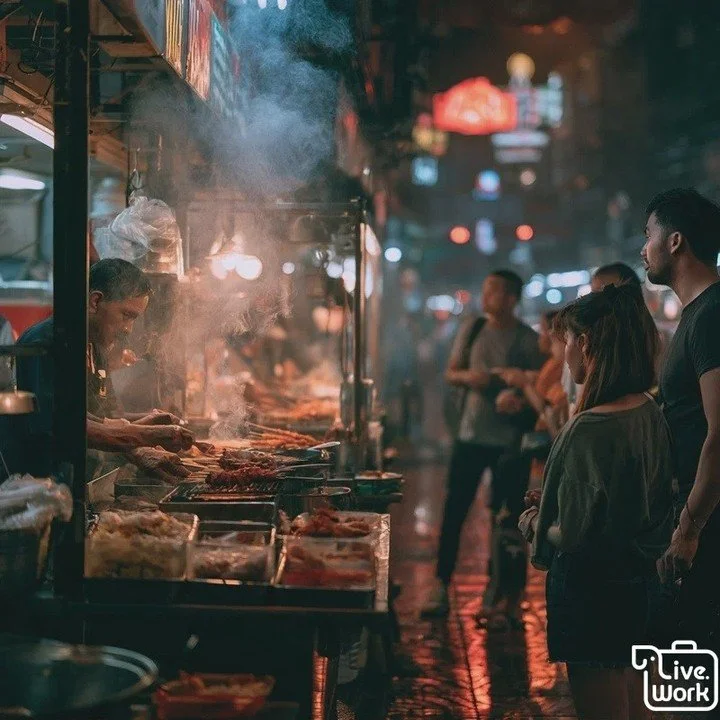
One of the best signs at a night market is active cooking.
A grill covered with fresh skewers, a wok being used continuously, or a vendor frying small batches usually means the food is moving quickly. High turnover is useful because ingredients spend less time sitting around, and dishes are more likely to reach you hot and freshly prepared.
Grilled chicken, pork skewers, seafood, sausages, and satay are especially easy to judge this way. If the stall is constantly cooking new batches rather than reheating old food, that is generally a good sign.
The same applies to noodle and stir-fry stalls. Watching noodles tossed over high heat or ingredients cooked directly after ordering gives you a clear sense of how fresh the final dish will be.
Trust a Queue, but Look at Who Is Waiting
A line of customers is one of the simplest market clues.
If local residents are waiting for a particular grilled chicken stall, noodle cart, dessert shop, or fruit vendor while the stalls beside it remain quiet, there is usually a reason. Popular vendors often build their reputation through repeat customers rather than advertising.
A queue also creates faster food turnover.
That does not mean you should automatically join the longest line in the market. Some stalls are famous because of social media, while others may simply be slow. Watch what customers are receiving and whether the food actually looks appealing to you.
The strongest signal is a steady stream of people ordering, receiving food, and leaving satisfied.
Look for Food Being Prepared in Front of You
Fresh preparation is another useful green flag.
Herbs being chopped, meat placed onto the grill after ordering, noodles cooked in a hot wok, som tam pounded in a mortar, or fruit cut in front of you all provide more information than food that has been sitting uncovered for a long time.
Some Thai market dishes are prepared in advance by design. Curries, stews, braised meats, and certain desserts are not supposed to be cooked individually for every customer.
In those cases, look instead at how the food is stored and how quickly it is being served. A busy curry stall with trays being replenished regularly can be an excellent choice.
Do a Quick Hygiene Check
Street food does not need to look like a restaurant kitchen, but basic cleanliness matters.
Look for relatively clean counters, covered or protected ingredients, separate utensils for raw and cooked foods, and food stored away from obvious sources of contamination.
Raw meat should not be handled with the same tongs used for cooked food unless those utensils are cleaned properly. Ingredients that need refrigeration should not appear to have been sitting in strong heat for long periods.
Money handling is another useful detail. At a busy stall, one person may handle payments while another cooks, or the vendor may wash or wipe their hands between tasks. No market stall will look clinically sterile, but an organized setup usually inspires more confidence than a chaotic one.
If a stall makes you uncomfortable, simply move on. Thai night markets usually provide plenty of alternatives.
Order Small and Build the Meal as You Go
The easiest mistake at a night market is buying one large dish immediately and becoming full before exploring the rest.
A better strategy is to start small. Choose two or three different items from separate stalls and share them if you are traveling with someone.
One grilled item, one fried or noodle-based dish, and one sweet snack already creates variety. After eating those, decide whether you want something else.
| Market Signal | What to Look For | Why It Helps |
|---|---|---|
| Active cooking | Busy grills, hot woks, and fresh batches being prepared continuously. | Usually means higher turnover and hotter, fresher food. |
| Local customers | A steady queue of residents or repeat customers. | Often indicates consistent quality and good value. |
| Fresh preparation | Ingredients chopped, grilled, fried, or mixed after ordering. | You can see how the food is handled and prepared. |
| Clean setup | Covered ingredients, tidy counters, and separate utensils for raw and cooked food. | Provides a quick indication of good food-handling habits. |
| Small portions | Choose several snacks instead of one huge meal. | Lets you try more dishes without becoming full too quickly. |
This approach is especially useful at large markets where the best stall may be hidden several rows away from the entrance.
Start Mild, Then Increase the Spice
Thai market food can be much hotter than visitors expect, particularly salads, chili dips, Southern dishes, and made-to-order stir-fries.
A useful phrase is เผ็ดน้อย, pronounced approximately “phet noi,” meaning “less spicy” or “a little spicy.”
For a first dish, ordering phet noi is often smarter than trying to prove your chili tolerance immediately. If that level feels comfortable, you can order something hotter at the next stall.
ไม่เผ็ด, pronounced “mai phet,” means “not spicy.” However, prepared dishes may already contain chili, so this request works best for food cooked after you order.
Spice levels are subjective. What a Thai vendor considers mild may still feel hot to someone unused to fresh chilies.
Mix Different Flavors and Textures
A good market meal is more enjoyable when everything does not taste the same.
If the first dish is rich and grilled, follow it with something fresh such as som tam, fruit, or a light noodle dish. If you start with something fried, balance it later with soup or fresh vegetables.
Thai desserts work particularly well as a final small stop. Coconut pancakes, sticky rice sweets, grilled banana, roti, jelly, or fresh fruit can provide a sweet finish without requiring a full dessert plate.
Cold drinks also help balance heat and spice. Thai iced tea, herbal drinks, fresh juice, or coconut water are easy additions, although many prepared drinks can be very sweet.
Ask Before Ordering When You Are Unsure
You do not need to know every Thai dish name.
Pointing at something and asking อันนี้คืออะไรครับ/คะ?, pronounced approximately “an-nee kheu a-rai khrap/kha?”, means “What is this?”
To ask the price, use เท่าไหร่ครับ/คะ?, “thao-rai khrap/kha?”
If you want the item, say เอาอันนี้ครับ/ค่ะ, “ao an-nee khrap/kha,” meaning “I’ll take this one.”
These few phrases are enough to handle many market situations, especially when combined with pointing and a smile.
Common Night-Market Mistakes
One common mistake is choosing only stalls closest to the entrance. Those may be convenient, but some of the strongest food options can be deeper inside the market.
Another is assuming that a polished stall must be better than a simple cart. Appearance matters less than turnover, preparation, cleanliness, and the quality of the food.
Buying too much too early is another problem. Night markets reward patience.
Visitors also sometimes focus so much on finding famous dishes that they ignore what the market actually does well. A locally popular grilled sausage or dessert may be more memorable than chasing a dish simply because it appeared on a travel list.
Finally, do not feel obligated to finish something you dislike. Trying new food is part of the experience, but forcing yourself through an unpleasant dish only leaves less room for the next one.
Conclusion
Choosing good food at a Thai night market becomes much easier once you know what to watch for. Follow active grills and woks, notice where local customers gather, look for fresh preparation, and choose stalls with tidy, well-organized work areas.
Start with small portions and build the meal gradually. Mix grilled, fried, fresh, spicy, and sweet foods rather than buying one large dish immediately.
If you are uncertain about spice, begin with เผ็ดน้อย, or “phet noi,” and increase the heat later. A night market is best explored one bite at a time.
The real skill is not knowing every dish before you arrive. It is learning to read the market, follow good signals, and stay curious long enough to discover what everyone else is lining up for.