Erawan Falls Day Trip Guide: How to Enjoy Kanchanaburi’s Seven-Tier Waterfall Safely and Comfortably
Erawan Falls is one of those places that feels almost unreal when the light is right. Pale turquoise pools sit below limestone cascades, forest closes in around the water, and each tier feels like a small reward for continuing a little farther up the trail. It is one of Kanchanaburi’s most famous natural attractions, but it is also a place where planning matters. A good visit feels refreshing, calm, and beautifully paced. A rushed visit can feel hot, crowded, slippery, and more stressful than it needs to be.
Erawan National Park is located in Kanchanaburi Province in western Thailand, and the park is especially known for Erawan Waterfall, which the Tourism Authority of Thailand describes as a 1,500-meter-long waterfall with seven tiers and swimming areas. The park itself was founded in 1975 as Thailand’s 12th national park and covers about 550 square kilometers, according to Thai National Parks.
For a day trip, the goal is not simply to “see the waterfall.” The goal is to arrive early, move carefully, swim where allowed, protect your belongings, and leave the park as clean and peaceful as you found it.
Why Arriving Early Changes the Whole Day
An early arrival is the single best decision you can make for Erawan Falls. The lower tiers are the easiest to reach, which also means they become busier as the day goes on. If you arrive early, you can enjoy the first pools before the midday crowds gather, take photos in softer light, and decide calmly whether you want to continue toward the higher tiers.
Morning also gives you time. Erawan is not a waterfall you should squeeze into a rushed schedule. The seven-tier structure invites a slower rhythm: walk, pause, look, swim, dry off, continue, rest again. If you arrive too late, every decision becomes compressed. You start thinking about closing times, return transport, tired legs, and whether it is worth going farther. Arriving early gives the day room to breathe.
The lower tiers are ideal for easing into the visit. They are more accessible, and they give you the first view of what makes Erawan special: clear pools, soft limestone formations, forest shade, and water that changes color depending on light and depth. Even if you never reach the top tier, a morning spent around the lower and middle levels can still feel complete.
Understanding the Seven-Tier Experience
Erawan Falls is not one single viewpoint. It is a sequence. That is what makes it memorable. Each tier has its own shape, pool, angle, and atmosphere. Some areas feel open and social, while others feel more enclosed by forest. Some pools are better for swimming, while others are better for standing back and watching the water move over the rock.
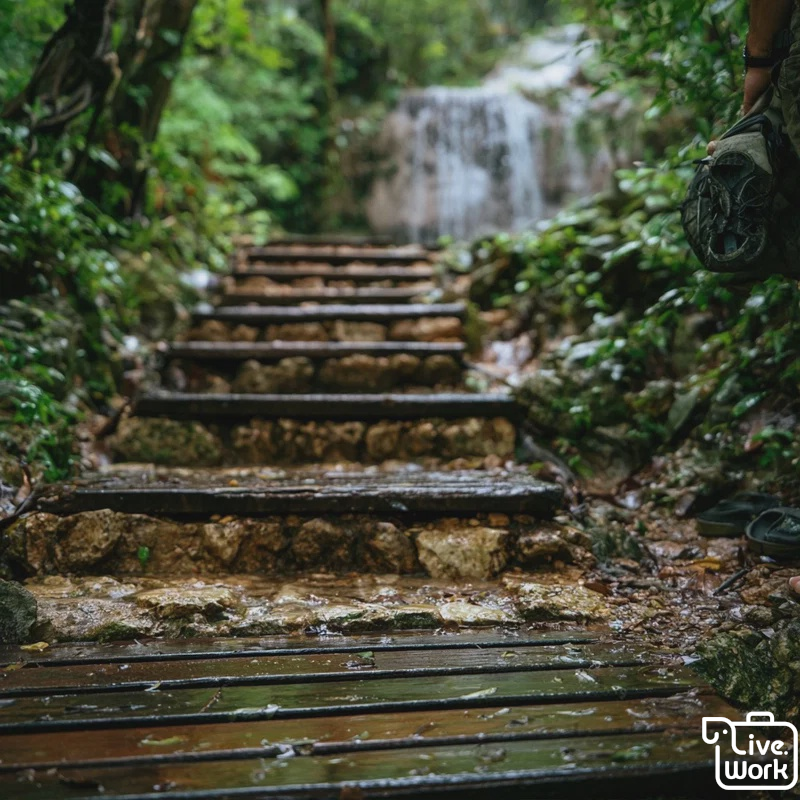
The first tiers usually feel easier and more relaxed. They are good for visitors who want a beautiful swim without committing to the full climb. As you continue upward, the walk becomes more demanding. The trail can include steps, uneven ground, roots, rocks, and damp sections, especially after rain. This is where the visit becomes less like a casual photo stop and more like a light forest hike.
You do not need to reach every tier for the trip to be successful. The best Erawan visit is not measured by how high you climb, but by how well you enjoy the place. If the trail feels slippery, if the weather turns, or if you simply find a pool you love, it is completely fine to stop there and spend more time.
Shoes Matter More Than You Think
Footwear can decide whether Erawan feels easy or uncomfortable. The rocks around waterfall pools can be slick, and boardwalk or trail sections may become slippery after rain. Flip-flops may seem convenient because you are swimming, but they are not ideal for walking longer sections or navigating wet stone.
Sturdy water-friendly shoes with grip are the best choice. They should be secure enough for walking, comfortable enough for damp conditions, and practical enough that you do not mind getting them wet. Quick-dry hiking sandals or water shoes with proper soles work much better than loose beach sandals.
This is especially important if you plan to climb beyond the lower tiers. The higher you go, the more you will appreciate shoes that let you step confidently without worrying about slipping, stubbing your toes, or losing a sandal in mud or water.
Swimming at Erawan Falls
Swimming is one of the great pleasures of Erawan, but it should always be done with care. The pools may look gentle, but natural waterfall areas can have uneven rock, changing depths, slippery edges, and currents near falling water. Swim only where swimming is allowed, follow signs and ranger instructions, and avoid climbing onto wet rocks for photos.
A quick-dry towel and swimwear make the day much more comfortable. It is worth arriving already prepared, especially if you want to swim at the lower tiers before the area becomes busy. After swimming, dry off before continuing up the trail so your clothes and bag do not become unnecessarily wet.
The fish in the pools are part of the experience for many visitors. They may come close, especially when people enter the water. Keep the moment natural. Do not feed them, do not chase them, and do not disturb the pool environment.
Packing for a Comfortable Waterfall Day
Packing for Erawan is about balancing comfort with lightness. You need enough to swim, walk, and protect your belongings, but you do not want to carry a heavy bag up the trail. A small day pack is usually enough if you organize it well.
A dry bag is one of the most useful items because it protects your phone, wallet, passport, camera, and keys while you are near water. Even if you do not plan to swim deeply, splashes, wet hands, sudden rain, and damp rocks can all put valuables at risk. Small cash is also useful for park-related expenses, food, drinks, lockers, or transport needs, depending on your plan.
| Item | Why It Helps | Best Use During the Visit |
|---|---|---|
| Sturdy Water-Friendly Shoes | Wet rocks, boardwalks, roots, and trail sections can be slippery, especially after rain. | Wear them from the start so you can move confidently between pools and higher tiers. |
| Swimwear | The waterfall pools are one of the main reasons to visit, and changing later can be inconvenient. | Wear it under light clothing if you want to swim early and avoid extra changing time. |
| Quick-Dry Towel | A normal cotton towel becomes heavy and damp after swimming. | Use it after swimming before continuing along the trail or returning to your transport. |
| Dry Bag | Protects your phone, wallet, passport, camera, and other valuables from water, spray, and sudden rain. | Keep valuables sealed whenever you are close to pools, waterfalls, or wet trail sections. |
| Small Cash | Useful for small payments, snacks, drinks, lockers, or transport-related needs. | Carry it separately from your main wallet so it is easy to access without exposing all valuables. |
| Light Change of Clothes | Dry clothing makes the return journey much more comfortable after swimming or rain. | Leave it in a locker or keep it protected in a dry bag until you are finished at the falls. |
Lockers and What to Carry on the Trail
Using lockers or safe storage is a smart choice if you have items you do not want to carry while hiking or swimming. The lighter you are on the trail, the easier it is to move, climb, and enjoy the pools. Heavy bags become annoying quickly, especially when the path gets humid or slippery.
Keep only what you truly need with you: water, dry bag, towel, phone, small cash, and perhaps a light snack if permitted and packed responsibly. Anything bulky, fragile, or unnecessary should stay behind. This includes larger camera bags, spare shoes, heavy clothing, and extra shopping items from earlier in the day.
Before leaving anything in storage, separate your essentials carefully. The worst moment to realize your phone, money, or towel is in a locker is when you are already halfway up the trail.
Moving Through the Park Respectfully
Erawan is popular, but it is still a national park, not a water playground built only for visitors. The forest, water, animals, and trails need care. Staying on marked paths protects both you and the environment. Shortcuts may damage vegetation, increase erosion, or lead to unsafe ground near water edges.
Noise also matters. Waterfalls naturally attract excitement, especially when people are swimming, but keeping voices moderate helps preserve the calm for everyone. Many visitors come to Erawan not only to swim but to enjoy forest sound, moving water, and the feeling of being away from traffic and city noise.
Wildlife should never be fed. Feeding animals changes their behavior and can make them dependent, aggressive, or more likely to approach visitors. It also disrupts the natural balance of the park. If you see animals, observe them quietly and let them move away naturally.
Taking trash back out is essential. Even small wrappers, bottle caps, tissues, or food scraps damage the experience and environment. A beautiful waterfall only stays beautiful if visitors treat it as a shared responsibility.
A Comfortable Day Flow for Erawan Falls
The best Erawan day is paced carefully. You want enough time to enjoy the lower tiers, enough flexibility to continue higher if you feel good, and enough energy left for the return journey.
| Part of the Visit | Atmosphere | Best Focus |
|---|---|---|
| Early Arrival | Cooler, calmer, and more spacious before the main visitor flow builds later in the day. | Enter early, organize your belongings, use lockers if needed, and enjoy the lower tiers while they are still quieter. |
| Lower Tiers | Accessible, scenic, and ideal for easing into the waterfall experience without rushing. | Swim where allowed, take photos carefully, and get used to the rocks, water, and trail conditions. |
| Middle Trail Sections | More active and forested, with a stronger sense of hiking between pools and cascades. | Move slowly, watch your footing, drink water, and decide honestly whether you want to continue higher. |
| Higher Pools | More rewarding but more demanding, especially in heat, humidity, or after rain. | Continue only if you have enough time, energy, and proper shoes, and avoid risky edges or slippery rocks. |
| Return Walk | Slower and more careful, especially once shoes, towels, and paths are wet. | Take your time descending, collect all belongings, and make sure no trash or personal items are left behind. |
Safety Near Waterfall Edges
Waterfall edges are where visitors need the most self-control. Wet limestone can look smooth and inviting, but it can also be extremely slippery. A place that seems safe for standing may become dangerous with one wrong step. Avoid climbing onto wet rocks for photos, especially near drops or fast-moving water.
Watch children closely, and do not assume shallow-looking water is even all the way across. Natural pools can change depth suddenly. If you are unsure whether an area is safe for swimming, stay out or ask park staff. The best photos and memories are never worth a fall or injury.
After rain, be extra cautious. Water flow may be stronger, rocks may be slicker, and muddy trail sections may make walking harder. This is when sturdy shoes and a slower pace matter most.
How to Enjoy the Higher Tiers Without Turning the Day Into a Race
Many visitors arrive determined to reach all seven tiers, but that mindset can make the day feel rushed. The higher tiers are worth considering if you enjoy hiking and have enough time, but they should not become a pressure point.
A better approach is to move tier by tier. At each stage, ask yourself whether you are still enjoying the walk, whether the trail feels safe, whether you have enough water, and whether you have time to return comfortably. If the answer is yes, continue. If not, stop and enjoy where you are.
Sometimes the best pool is not the highest one. It is the one where the light is beautiful, the crowd is manageable, and you have enough time to sit, swim, and listen to the water without looking at the clock.
Food, Water, and Keeping the Trail Clean
Bring water, but be careful with food. If you carry snacks, keep them sealed and take every piece of packaging back with you. Do not leave food scraps behind, and never offer food to fish, monkeys, birds, or any other wildlife.
A good strategy is to eat properly before entering the trail area, then keep only light, low-mess snacks in your bag if needed. This keeps your pack lighter and reduces the chance of attracting animals. After swimming and hiking, you can eat again near the entrance or outside the park area, depending on your plan.
Clean habits make a huge difference at popular natural places. When thousands of visitors come through over time, small careless actions add up quickly.
Who Erawan Falls Is Best For
Erawan Falls is ideal for travelers who enjoy nature but still want an accessible day trip. It works well for couples, friends, families with older children, photographers, swimmers, and anyone who wants a refreshing break from town or city travel. It is also a strong choice for visitors staying in Kanchanaburi who want one full nature-focused day.
It is less ideal for anyone who expects a completely quiet wilderness experience throughout the day. Erawan is popular, and the lower tiers can become busy. The key is to arrive early, move patiently, and accept that shared beauty attracts other people too.
Conclusion
A day trip to Erawan Falls is one of the most rewarding nature experiences in Kanchanaburi when you prepare well and move respectfully. Arriving early gives you quieter lower tiers and more time for the higher pools. Good water-friendly shoes protect you on slick rocks and damp trails. Swimwear, a quick-dry towel, a dry bag, small cash, and smart locker use make the day more comfortable. Most importantly, Erawan should be treated as a protected natural place: stay on marked paths, swim only where allowed, keep noise low, never feed wildlife, and take all trash back out with you. Visit with care, and the seven tiers feel not only beautiful but properly appreciated.