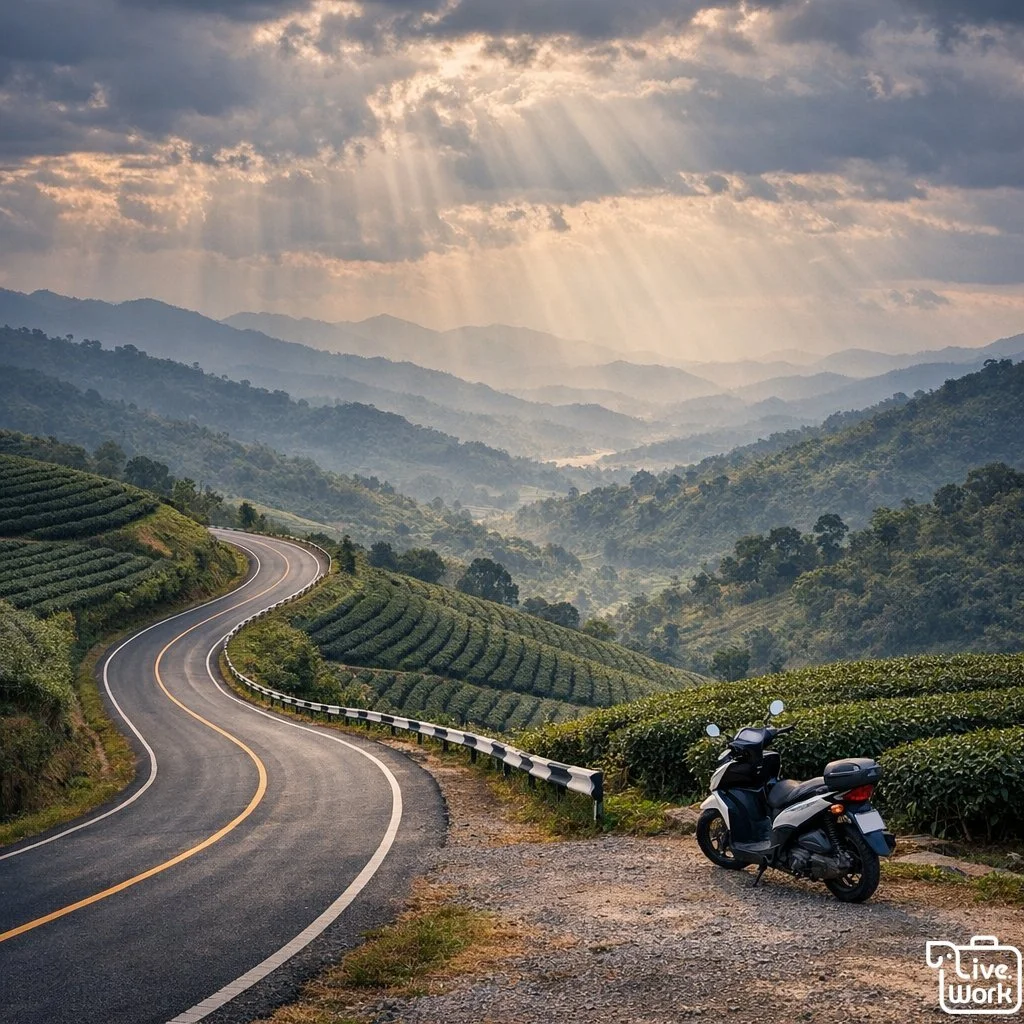
Chiang Rai’s Tea & Coffee Hills: A Slow Day of Mist, Mountain Light, and Tasting the Landscape
High above the lowland heat of northern Thailand, the hills of Chiang Rai unfold in long, curving lines of green. Tea bushes follow the contours of the mountains like careful brushstrokes, while coffee plants grow in shaded pockets where elevation and climate create ideal conditions. What makes this region special is not only what is produced here, but how it feels to move through it. The air is cooler, the light softer, and the pace naturally slower.
A day in these hills is less about covering distance and more about experiencing transitions—between mist and sunlight, between viewpoints and tasting tables, between quiet walks and moments of stillness.
Morning Light: When the Landscape Reveals Itself
The experience begins early, ideally before the sun has fully risen above the ridgelines. At this time, the hills are often partially veiled in mist, creating layers that shift gradually as the light increases. From a viewpoint near Doi Mae Salong, the valleys below appear soft and distant, while the tea fields closer to you catch the first light in a way that highlights their structure.
This is not a dramatic sunrise in the sense of bold colors. Instead, it is subtle and evolving. The mist lifts slowly, revealing more detail with each minute. The lines of the plantations become clearer, the greens deepen, and the sense of space expands.
Standing still during this transition allows you to notice how the landscape changes without needing to move. It sets the tone for the rest of the day—observational rather than hurried.
Moving Through the Plantations: Walking the Terrain
After the morning light settles, the focus shifts from viewing the landscape to entering it. Walking along plantation paths brings a different perspective. Instead of looking across the hills, you move within them, following narrow routes that weave between rows of tea plants or shaded coffee groves.
The texture of the environment becomes more noticeable at this level. Leaves catch the light differently depending on angle, and the air carries a mix of earthy and slightly floral notes. In coffee-growing areas, you may notice the contrast between sunlit clearings and shaded sections where the plants thrive under a canopy.
These walks are not long or strenuous, but they create a sense of connection to the land. You begin to understand how the terrain shapes the crops, and how the crops, in turn, shape the visual identity of the hills.
Tasting as Part of the Landscape
One of the defining elements of the region is the opportunity to taste what is grown here, often in the same place where it is produced. This is not a separate activity—it is a continuation of the experience.
A tasting session might include different expressions of locally grown coffee and tea. In coffee, the focus is often on Arabica varieties, which thrive at these elevations. The flavors can range from bright and slightly acidic to more rounded profiles with subtle sweetness. Honey-processed coffees, for example, often carry a softer, fruit-like note that reflects both the processing method and the environment.
Tea offers a different range of sensations. Depending on the type, it can feel light and floral or deeper and more grounding. The act of tasting here is slower than in a typical café setting. You are not just drinking; you are comparing, noticing, and relating the flavors back to the landscape you’ve just walked through.
Structuring the Day: Less Movement, More Depth
What makes a day in Chiang Rai’s highlands satisfying is restraint. Trying to visit too many estates or viewpoints can fragment the experience. Instead, focusing on a small number of locations allows each one to unfold more fully.
| Time of Day | Atmosphere | Experience Focus |
|---|---|---|
| Early Morning | Cool air, mist, soft light | Viewpoints, observing the landscape as it reveals itself |
| Late Morning | Clearer skies, balanced temperature | Walking through plantations, exploring paths and ridge lines |
| Midday | Warmer but still comfortable at altitude | Tastings and a long, relaxed lunch with tea or coffee |
| Afternoon | Changing light, occasional cloud movement | Short stops at viewpoints, photography, quiet observation |
This structure emphasizes continuity. Each part of the day builds on the previous one, rather than competing with it.
Lunch and Pause: Letting the Day Settle
By midday, the hills feel warmer, but the altitude keeps the temperature manageable. This is the ideal time to pause for a longer meal, ideally at a café or estate that overlooks the plantations.
The setting matters as much as the food. Sitting with a view of the hills, with a cup of tea or coffee that comes from the surrounding area, reinforces the connection between place and experience. The pace slows further, and the day takes on a more reflective quality.
Weather and Light: Adapting to Change
One of the defining characteristics of the highlands is how quickly conditions can shift. Clouds can move in unexpectedly, bringing cooler air or light rain, and then clear again just as quickly.
This variability adds to the atmosphere rather than detracting from it. Mist can return in the afternoon, softening the landscape again, while breaks in the clouds can create moments of intense clarity.
Being prepared for these changes ensures that they enhance the experience rather than interrupt it. A light rain jacket, an extra layer, and sun protection allow you to move comfortably between different conditions.
The Value of Slowing Down
What distinguishes Chiang Rai’s tea and coffee hills from more structured destinations is the absence of urgency. There is no single highlight that defines the experience. Instead, it is built from small, connected moments: the way light moves across the fields, the taste of a freshly brewed cup, the quiet of a ridge-line viewpoint.
By limiting the number of stops and allowing time at each one, the day becomes more cohesive. You are not collecting locations—you are experiencing a landscape in depth.
Conclusion
A day in Chiang Rai’s tea and coffee hills offers a different kind of travel experience—one defined by atmosphere, texture, and gradual transitions rather than constant movement. From misty morning viewpoints around Doi Mae Salong to slow tastings of locally grown coffee and tea, the region invites you to engage with both the land and its products in a meaningful way. By keeping the pace relaxed, choosing only a few locations, and allowing time for observation and rest, you create an experience that feels complete without being rushed. In the end, the lasting impression is not just of what you saw, but of how the day unfolded—quietly, steadily, and in harmony with the landscape.