Chiang Rai Beyond the White Temple: Slow Travel, Mountains, and Tea-Scented Mornings
For many travelers, Chiang Rai first appears on the map because of a single landmark. But once you arrive, it quickly becomes clear that this northern province offers far more than a famous photo stop. Chiang Rai is a place defined by space, silence, and subtlety—where mountains roll into misty horizons and daily life unfolds at a gentler pace than almost anywhere else in Thailand.
This is slow travel at its best: unhurried, immersive, and quietly memorable.
Morning Views: Where Mountains Meet the Clouds
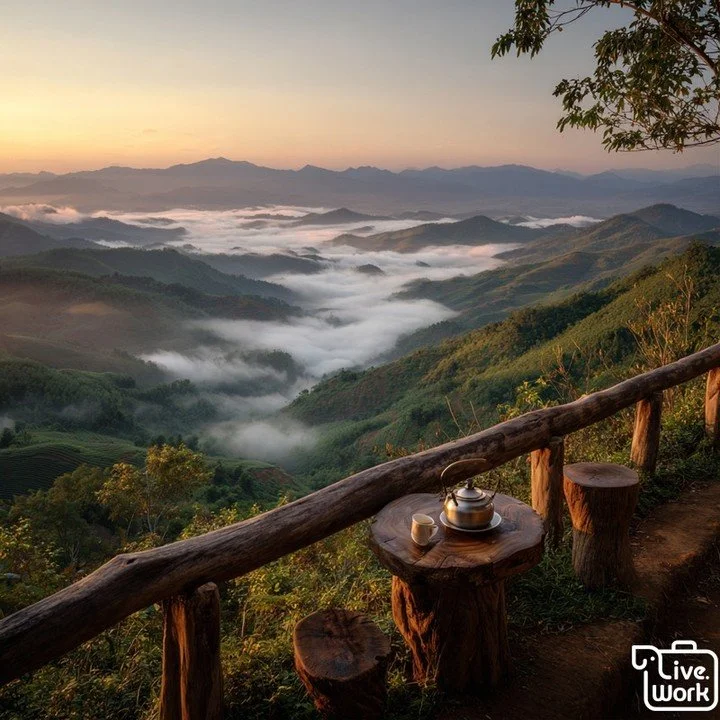
One of Chiang Rai’s greatest pleasures happens early in the day. As the sun rises, mountain viewpoints reveal layers of forested ridgelines draped in low-hanging clouds. The air feels cooler and cleaner here, carrying the scent of earth and leaves rather than traffic.
Winding roads lead to lookout points where nothing demands your attention—no fences, no crowds, just stillness. These moments set the tone for the day, encouraging you to move slower and stay present before descending back into valleys where village life begins to stir.
Quiet Villages and a Gentler Rhythm
Away from main roads, Chiang Rai’s villages offer a glimpse into everyday northern life. Homes sit among trees, local shops open when they’re ready, and conversations replace schedules. Time feels flexible here—not rushed, not rigid.
Stopping in these villages isn’t about sightseeing; it’s about observing:
Locals tending gardens and small farms
Children riding bicycles along quiet lanes
Temples that feel woven into daily routines
These encounters create a sense of connection that no single attraction can replicate.
Mae Salong: Tea Plantations and Mountain Calm
A highlight for many visitors is Mae Salong, a highland area known for its rolling tea plantations and Chinese-Thai heritage. Here, mornings often begin with mist drifting across neatly patterned slopes of tea bushes, creating a landscape that feels almost meditative.
Visiting a plantation offers insight into how oolong tea is grown, harvested, and brewed. Sitting with a warm cup while overlooking the hills becomes an experience in itself—quiet, sensory, and deeply calming.
Mae Salong is ideal for travelers who value:
Scenic drives and cool mountain air
Cultural layers beyond mainstream tourism
Slow afternoons that stretch effortlessly
Backroads, Cafés, and Northern Comfort Food
Chiang Rai rewards curiosity, especially for those who enjoy road trips. The backroads connect viewpoints, villages, and unexpected stops—small cafés perched above valleys, roadside eateries serving steaming bowls of khao soi, and photo spots that feel undiscovered.
Unlike more famous routes in the north, these roads rarely feel crowded. You’re free to pull over, linger, and explore without feeling like you’re following a well-worn script.
This freedom is part of Chiang Rai’s charm: the sense that you’re not rushing from highlight to highlight, but letting the landscape guide you.
Culture Beyond Landmarks
While Wat Rong Khun is undeniably striking and worth visiting, Chiang Rai’s cultural depth extends far beyond any single site. Local markets, craft stalls, and hill-tribe communities offer a more intimate understanding of the region’s identity.
Handwoven textiles, handmade tools, and traditional designs tell stories of heritage, migration, and adaptation. These encounters feel personal rather than performative, adding layers of meaning to your journey through the province.
Conclusion
Chiang Rai may draw you in with the White Temple, but it’s the quieter corners that stay with you. Misty mountain mornings, tea-covered hills in Mae Salong, winding backroads, and unhurried village life combine to create a deeply personal travel experience. If you’re looking for northern Thailand at its most reflective and rewarding, Chiang Rai offers space to slow down—and reasons to linger far longer than planned.