Bangkok’s Best Parks for a Quick Escape: Lumphini, Benjakitti, Rot Fai, and Queen Sirikit Park
Bangkok can feel intensely urban. Traffic, elevated railways, shopping districts, office towers, markets, and dense neighborhoods create an energy that is exciting but sometimes exhausting. Fortunately, several large public parks offer an easy way to slow down without leaving the city.
For a classic central Bangkok experience, Lumphini Park combines shaded walking paths, a large lake, outdoor exercise, local daily life, and regular sightings of water monitor lizards. Benjakitti Forest Park offers a more modern landscape of wetlands, elevated boardwalks, open views, and dramatic skyline backdrops. Farther north, Rot Fai Park provides broad lawns, mature trees, cycling paths, and enough space to find a quiet corner, while nearby Queen Sirikit Park feels more botanical and peaceful, with flowering plants, ponds, bridges, and carefully landscaped gardens.
The best Bangkok park depends on the atmosphere you want. Lumphini Park is ideal for people-watching and an introduction to everyday city life. Benjakitti Forest Park suits walkers, runners, photographers, and visitors interested in modern urban design. Rot Fai Park is particularly good for relaxed picnics and longer recreational visits. Queen Sirikit Park is a gentler choice for slow walks, flowers, and quiet lakeside scenery.
All four parks are most comfortable in the early morning or late afternoon, when temperatures are lower and the light is softer. A simple visit of one or two hours can provide a surprisingly effective break from Bangkok’s busy streets.
Which Bangkok Park Should You Choose?
Each of these parks offers greenery, walking paths, and space to relax, but their character is noticeably different. Choosing according to your preferred pace and activity usually creates a better experience than trying to visit every park in one day.
| Bangkok Park | Main Character | Best Suited To |
|---|---|---|
| Lumphini Park | A classic central city park with shaded paths, a large lake, active local life, and frequent water monitor sightings. | First-time visitors, casual walkers, runners, people-watchers, and anyone wanting an easy escape in central Bangkok. |
| Benjakitti Forest Park | A modern urban wetland landscape with elevated walkways, open views, long paths, and a strong contrast between nature and skyscrapers. | Photographers, runners, architecture enthusiasts, long-distance walkers, and visitors seeking skyline views. |
| Rot Fai Park | A spacious and local-feeling park with large lawns, mature trees, cycling areas, quiet corners, and room for picnics. | Families, cyclists, picnic groups, relaxed weekend visitors, and people who prefer more open space. |
| Queen Sirikit Park | A landscaped botanical park with flowers, ponds, bridges, peaceful paths, and a slower atmosphere. | Gentle walks, plant lovers, quiet photography, relaxed conversations, and visitors seeking a calm environment. |
Lumphini Park and Benjakitti Forest Park are convenient choices when staying in central Bangkok. Rot Fai Park and Queen Sirikit Park are located beside each other in the Chatuchak area and can easily be combined into a longer green-space visit.
Lumphini Park: Bangkok’s Classic Green Escape
Lumphini Park, also commonly written as Lumpini Park, is one of Bangkok’s best-known public parks. Located among major roads, office buildings, hotels, hospitals, and commercial districts, it provides a strong contrast to the dense city surrounding it.
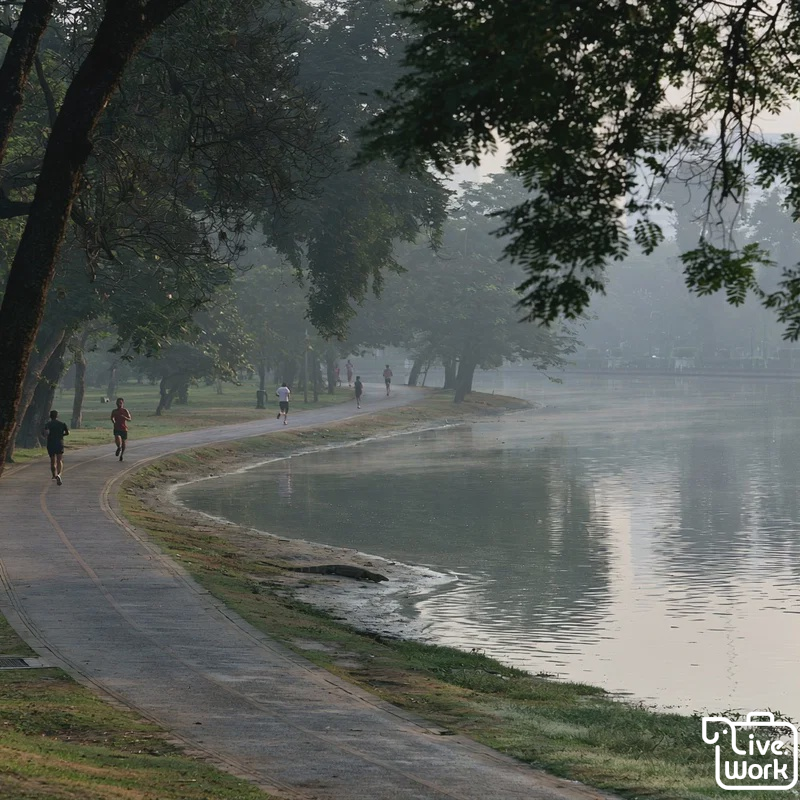
The park’s large lake forms the visual center of the landscape. Walking and running paths pass beneath mature trees, around open lawns, and beside areas where people gather for exercise, conversation, music, or quiet relaxation. The atmosphere changes throughout the day. Early morning belongs largely to runners, walkers, fitness groups, and residents beginning their daily routines. Late afternoon brings more families, casual visitors, photographers, and people resting after work.
One of Lumphini Park’s most memorable features is its population of Asian water monitor lizards. These large reptiles are often seen swimming in the lake, resting near the water, or slowly crossing grassy areas. Their size can surprise first-time visitors, but they are part of the park’s urban ecosystem.
Visitors should observe monitor lizards from a respectful distance and avoid feeding, touching, surrounding, or blocking them. A monitor resting beside a path may move unexpectedly, so leaving space is safer for both the animal and the visitor. Photography is usually easy without approaching closely.
Lumphini Park is particularly suitable for travelers who want to experience everyday life in Bangkok rather than visit only formal attractions. People practice tai chi, jog around the lake, exercise in groups, meet friends, read on benches, and take breaks beneath the trees. The park feels active without necessarily feeling rushed.
For photography, early morning offers softer light and fewer casual visitors, while the period before sunset creates warmer colors across the lake and surrounding buildings. Midday is generally less comfortable because heat and humidity are more intense and some open areas provide limited shade.
Benjakitti Forest Park: Wetlands, Boardwalks, and Skyline Views
Benjakitti Forest Park presents a very different vision of urban greenery. Instead of focusing mainly on lawns, ornamental gardens, and traditional park paths, much of the landscape is built around wetlands, water management, native vegetation, elevated walkways, and connections between people and urban ecology.
The raised boardwalks are the park’s defining feature. They pass above ponds, wetland plants, open grasslands, and lower paths, creating changing views across the landscape. In some directions, trees and reeds dominate the scene. In others, Bangkok’s towers rise directly behind the park, producing one of the city’s most striking combinations of nature and architecture.
The elevated paths are especially attractive in the late afternoon, when the sun becomes less intense and the skyline begins to catch warmer light. The open design provides excellent photography opportunities, although the same openness means that some sections receive strong sun during the middle of the day.
Benjakitti Forest Park is well suited to visitors who enjoy longer walks. The park includes multiple routes rather than a single short loop, and it connects with the older lake area of Benjakitti Park. Walking, running, cycling, wetland observation, and skyline photography can all be part of the same visit.
The wetland environment also attracts birds, insects, and other urban wildlife. Visitors may notice small fish, water birds, dragonflies, butterflies, and seasonal changes in vegetation. The landscape is designed to function as more than decoration, making Benjakitti Forest Park interesting for people who enjoy environmental design as well as recreation.
The park’s scale can be misleading. A short visit is possible, but exploring several boardwalks and completing longer loops requires more time than many first-time visitors expect. Comfortable shoes are useful, particularly when combining the forest park, lake paths, and surrounding connections.
Benjakitti is usually a stronger choice than Lumphini for modern skyline views and contemporary landscape architecture. Lumphini remains better for dense shade, traditional park atmosphere, and observing Bangkok’s daily routines. Visitors with enough time can experience both and compare two very different approaches to public green space.
Rot Fai Park: Wide Lawns and a More Local Atmosphere
Rot Fai Park is widely known in Thai as Suan Rot Fai, written สวนรถไฟ and pronounced approximately “suan rot fai.” The name means “Train Park.” Its official name is Wachirabenchathat Park, although many Bangkok residents continue to use the familiar Rot Fai name.
The park is located in the Chatuchak area and feels more spacious and recreational than many central Bangkok parks. Large lawns, mature trees, ponds, cycling routes, and quieter interior areas make it suitable for visitors who want to spend several unhurried hours outdoors.
Rot Fai Park is particularly popular for cycling. Its broad layout and longer routes make a bicycle feel more natural here than in smaller city parks. Walking remains enjoyable, but visitors should remain aware of designated routes and other park users, especially during busier periods.
The open lawns are one of Rot Fai Park’s greatest advantages. They create space for picnics, reading, informal games, relaxed conversations, and simply sitting beneath a tree. The park is large enough that quieter areas can often be found away from the main entrances and activity zones.
Compared with Lumphini Park, Rot Fai generally feels less dominated by surrounding towers and major commercial streets. It offers a more suburban sense of space, even though it remains within Bangkok. The atmosphere can be especially pleasant on weekday mornings, when the lawns and paths are quieter.
Late afternoon is popular for picnics because the heat begins to decrease and the light becomes softer. Weekend visits can be livelier, particularly in comfortable weather, but the park’s size helps distribute visitors across a wider area.
A picnic mat is useful because seating may not always be available exactly where you want to stop. Bringing water and light snacks can make a longer visit more comfortable, although visitors should remove all rubbish and leave the grass as they found it.
Queen Sirikit Park: Flowers, Bridges, and Lakeside Calm
Queen Sirikit Park is adjacent to Rot Fai Park but has a noticeably different identity. While Rot Fai emphasizes broad recreational space, Queen Sirikit Park feels more carefully landscaped and botanical.
The park contains extensive plant collections, flowering areas, ponds, bridges, lawns, and peaceful walking routes. Its design encourages slower observation. Rather than moving quickly around a single exercise loop, visitors can follow smaller paths, pause beside the water, look at seasonal flowers, and explore changing garden environments.
Queen Sirikit Park is a good option for people who prefer quiet walks to intense exercise. The paths are generally suitable for a gentle pace, and many parts of the park invite visitors to sit and enjoy the surroundings rather than complete a specific route.
The atmosphere is also well suited to photography. Bridges, reflections, flowering plants, lotus areas, and tree-lined paths create more detailed compositions than the broad open lawns of Rot Fai Park. Conditions change throughout the year, so the appearance of flowers and gardens depends on the season and recent weather.
Visitors interested in plants may want to allow more time than expected. Queen Sirikit Park contains a wide variety of species, and some areas are designed for education as well as recreation. Even without detailed botanical knowledge, the diversity of trees, flowers, and water features makes the park visually engaging.
Because Queen Sirikit Park and Rot Fai Park are next to each other, they create one of Bangkok’s most rewarding combined green-space experiences. A visitor can begin with a slow walk among the gardens, continue into the broad landscapes of Rot Fai Park, and finish with a picnic beneath the trees.
The Best Time to Visit Bangkok’s Parks
Bangkok’s climate strongly affects the park experience. Early morning is usually the most comfortable period for walking, running, and exercise. Temperatures are lower, the sun is less intense, and many parks are already active with local residents.
Sunrise is particularly suitable for runners and photographers who prefer quieter paths. The light is gentle, reflections can be attractive around lakes and wetlands, and the city often feels calmer before traffic and daytime heat build.
Late afternoon is usually the best time for relaxed walks, picnics, casual photography, and people-watching. As the sun becomes lower, open lawns become more comfortable and the light around water and buildings turns warmer. Benjakitti Forest Park is especially attractive during this period because the skyline becomes part of the evening scenery.
Weekdays generally offer a quieter experience than weekends. Rot Fai Park and Queen Sirikit Park can become more social during weekends, particularly when families and groups arrive for cycling or picnics. Lumphini remains active throughout the week because of its central location.
The middle of the day is usually the least comfortable time for a long visit. Heat, humidity, and strong sunlight can make exposed paths tiring. Benjakitti Forest Park has several open sections, while lawns at Rot Fai Park and Queen Sirikit Park may provide less shade than expected.
During the rainy season, short but heavy showers can change plans quickly. Paths may become wet, humidity can remain high, and thunderstorms should be treated seriously. Visitors should avoid exposed areas during lightning and wait in a safe location until conditions improve.
Air quality is another practical consideration. On days with elevated fine-particle pollution, strenuous outdoor exercise may be less advisable, particularly for sensitive individuals. Checking current weather and air-quality conditions before a long run or cycling session is a sensible habit.
How Much Time Should You Allow?
Lumphini Park works well for a quick visit of around one hour, particularly when the goal is a walk around the lake, photography, or a break between other activities. A longer stay allows more time to observe local life and explore quieter sections.
Benjakitti Forest Park generally rewards a slower visit. The boardwalk network, wetlands, lake area, and longer paths can easily fill two hours or more. Visitors combining Benjakitti with Lumphini should plan for a substantial walk and avoid scheduling the route during the hottest part of the day.
Rot Fai Park is suitable for anything from a short walk to a half-day picnic. Cycling, exploring quieter areas, resting on the lawns, and combining the visit with Queen Sirikit Park can turn the experience into a longer outing.
Queen Sirikit Park can be explored in roughly one to two hours at a relaxed pace, although plant enthusiasts and photographers may prefer more time.
Trying to visit all four parks in one day is usually unnecessary. Lumphini and Benjakitti form one logical central-city combination, while Rot Fai and Queen Sirikit form a second combination in the Chatuchak area.
Getting to the Parks Without a Car
Public transport is usually the easiest way to reach Bangkok’s major parks. Lumphini Park is accessible from both MRT and BTS stations, depending on which entrance is most convenient. Benjakitti Park is also close to MRT connections and can be approached from the Asok and Sukhumvit area.
Rot Fai Park and Queen Sirikit Park are located near Bangkok’s Chatuchak transport network. The final walk depends on the chosen entrance, and the parks are large enough that arriving at the wrong side may add considerable distance.
Using a navigation application shortly before departure is helpful because entrances, pedestrian routes, construction work, and transport conditions may change. The nearest station is not always the entrance best suited to the activity you have planned.
Taxis and ride-hailing services are practical alternatives during very hot weather, but pickup points near large parks can become busy in the late afternoon. Allow extra time when leaving during periods of heavy traffic.
What to Bring for a Comfortable Park Visit
Water is the most important item, even for a relatively short walk. Bangkok’s heat and humidity can cause dehydration faster than visitors expect, especially when walking on open boardwalks or exercising.
Sunscreen, a hat, and breathable clothing improve comfort during daytime visits. Insect repellent is useful near lakes, wetlands, and densely planted areas, particularly around sunrise, sunset, and after rain.
A small towel can help during longer walks or exercise. A picnic mat is especially practical at Rot Fai Park, where sitting on the grass is part of the experience. A light outer layer may be comfortable during cooler evenings or after rain, although Bangkok usually remains warm.
Comfortable walking shoes are preferable to footwear chosen only for appearance. Distances inside Benjakitti and Rot Fai can become longer than expected, and combining neighboring parks adds additional walking.
Visitors carrying food should keep it secured and remove all packaging afterward. Feeding birds, fish, monitor lizards, or other wildlife should be avoided because it can change natural behavior and create problems for both animals and park users.
Respectful Use of Bangkok’s Public Parks
Bangkok’s parks are everyday community spaces rather than attractions created only for tourists. Residents use them for exercise, family time, relaxation, social activities, and regular routines.
Keeping walking paths clear, respecting exercise groups, using designated cycling areas, and controlling noise helps maintain a comfortable environment. Photography should not interrupt private activities or treat people as part of the scenery without consideration.
Wildlife should be watched without interference. Monitor lizards, birds, turtles, insects, and other animals are best observed from a distance. Touching, chasing, feeding, or positioning animals for photographs can cause stress and create unsafe situations.
Visitors should also follow current park rules regarding pets, bicycles, commercial photography, smoking, alcohol, and restricted activities. Regulations may differ between parks and can change over time, so posted signs should take priority over older online information.
Conclusion
Bangkok’s major parks offer very different ways to take a break from the city. Lumphini Park is the strongest all-round choice for first-time visitors because it combines a central location, shaded paths, a large lake, local activity, and memorable wildlife. Benjakitti Forest Park offers a more modern experience shaped by wetlands, elevated walkways, long routes, and skyline views.
Rot Fai Park is ideal for visitors seeking space, cycling, picnics, and a relaxed local atmosphere. Queen Sirikit Park provides a quieter botanical environment with flowers, ponds, bridges, and gentle walking paths. Visiting the two Chatuchak parks together creates an especially varied day outdoors.
The most comfortable times are usually early morning and late afternoon. Bringing water, sun protection, insect repellent, comfortable shoes, and enough time to slow down will make the experience more enjoyable.
Bangkok’s parks are not simply empty spaces between buildings. They are active parts of city life, places where nature, recreation, community routines, and urban design meet. Even a short walk can provide the reset needed before returning to Bangkok’s busy streets.