How to Order Coffee in Thailand: Street Coffee, Café Drinks, and Useful Thai Phrases
Ordering coffee in Thailand is not always as straightforward as choosing between black coffee and coffee with milk. The same general order can produce very different drinks depending on whether you are standing beside a traditional street cart, visiting a small neighborhood coffee stall, or sitting in a modern specialty café.
At a street vendor, Thai iced coffee is often brewed strong, poured over a full cup of ice, and mixed with sweetened condensed milk, evaporated milk, sugar syrup, or a combination of these ingredients. The result is usually bold, creamy, refreshing, and much sweeter than many first-time visitors expect. At a contemporary café, familiar names such as americano, latte, cappuccino, and flat white normally refer to espresso-based drinks prepared in a style closer to international coffee culture.
Understanding these differences makes ordering coffee in Thailand easier and helps avoid unexpected sweetness. A few simple Thai phrases can also make a major difference, particularly when ordering from a street cart where the recipe may be adjusted by eye rather than according to fixed measurements.
Why Coffee in Thailand Can Mean Different Things
Thailand has several coffee traditions existing alongside each other. Traditional street-style coffee developed around strong roasted coffee mixtures, inexpensive preparation methods, generous amounts of ice, and sweet milk ingredients that balance the bitterness of the brew. These drinks are designed to remain flavorful even as the ice melts in Thailand’s hot climate.
Modern coffee shops operate differently. Most use espresso machines and offer internationally recognizable drinks, often alongside locally grown Thai coffee beans. In cities such as Bangkok and Chiang Mai, as well as in major tourist destinations, visitors can find everything from simple roadside coffee stalls to specialty cafés serving single-origin espresso, pour-over coffee, cold brew, and carefully prepared milk drinks.
The setting therefore provides important clues. A handwritten menu beside a market, food stall, or roadside cart may use traditional recipes and locally understood drink names. A café with an espresso machine will usually follow more familiar distinctions between an americano, latte, cappuccino, and flat white.
Neither style is more correct. Traditional Thai coffee and modern espresso-based coffee simply represent different approaches, ingredients, expectations, and drinking occasions.
What Is Kafae Yen?
The Thai term for iced coffee is กาแฟเย็น, pronounced approximately “kafae yen.” The word กาแฟ, or kafae, means coffee, while เย็น, or yen, means cold or iced.
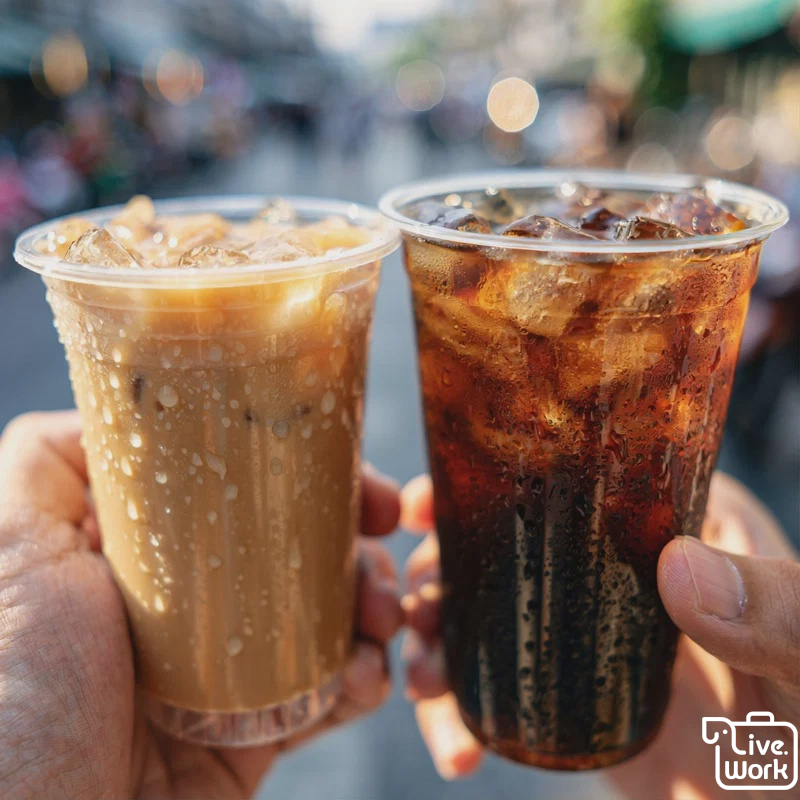
At many traditional coffee stalls, ordering kafae yen does not mean receiving ordinary black coffee poured over ice. Thai-style kafae yen is commonly a strong, sweet, milky drink made with brewed coffee, sweetened condensed milk, and often evaporated milk. Some vendors may also add sugar syrup, powdered creamer, or other milk products.
The coffee flavor is normally intense enough to remain noticeable beneath the sweetness and melting ice. Depending on the recipe, kafae yen may taste roasted, slightly smoky, chocolate-like, or mildly bitter before giving way to the rich sweetness of condensed milk.
The texture can also be heavier than that of a standard iced latte. Sweetened condensed milk adds both sweetness and thickness, while evaporated milk creates a smoother, creamier finish. Some vendors pour milk over the top of the drink, creating visible layers before the coffee is stirred.
Recipes are not standardized across Thailand. One cart may prepare kafae yen with a dark traditional coffee mixture, while another may use brewed ground coffee or espresso. The amount of condensed milk and sugar can also differ considerably, which is why two drinks with the same name may taste surprisingly different.
What Is Oliang?
โอเลี้ยง, usually written in English as oliang, is a traditional Thai-style black iced coffee. The pronunciation is approximately “oh-liang.”
Oliang generally has a darker, toastier flavor than standard espresso or filter coffee. Traditional commercial oliang mixtures may combine coffee with roasted grains, seeds, sugar, or other ingredients, although the exact recipe varies between brands and vendors. The resulting drink can have smoky, caramelized, earthy, or roasted cereal notes.
The word oliang traditionally refers to the dark coffee mixture served cold over ice. Although it is sometimes described internationally as Thai iced coffee, it is not necessarily the same as the creamy drink many visitors associate with that name. Plain oliang is normally black, although sugar may already be included or added during preparation.
Because street drinks are often prepared according to the vendor’s usual recipe, ordering oliang does not guarantee an unsweetened coffee. Visitors who prefer little or no sugar should still explain their preference when ordering.
Oliang is a good choice for people interested in trying an older style of Thai coffee rather than an espresso-based drink. Its roasted flavor is distinctive, and it often tastes quite different from coffee made only from modern Arabica beans.
Street Coffee and Modern Café Coffee Compared
Traditional coffee stalls and modern cafés can both serve excellent drinks, but they often use different ingredients and interpret menu names differently. The most useful distinction is that street coffee is commonly built around sweetness, strong brewed flavor, and plenty of ice, while modern café coffee usually begins with espresso and allows more control over milk and sugar.
| Coffee Style | What to Expect | Suitable For |
|---|---|---|
| Traditional kafae yen | Strong iced coffee with sweetened condensed milk and often evaporated milk. The flavor is usually creamy, bold, and noticeably sweet. | Visitors who enjoy rich iced coffee and dessert-like sweetness. |
| Oliang | Dark Thai-style iced coffee with roasted, smoky, or toasted flavors. Sweetness depends on the vendor’s recipe. | People interested in traditional Thai coffee flavors or a less milky drink. |
| Iced americano | Espresso combined with water and ice. Sugar is often optional, especially in modern cafés. | Drinkers who prefer a lighter-bodied black coffee without milk. |
| Iced latte | Espresso with fresh milk and ice. Sweetness may be optional but should be confirmed when ordering. | People who prefer a mild, smooth, milk-forward coffee. |
| Thai-style es yen | A strong espresso-based iced drink commonly prepared with sweet milk ingredients. It is usually richer and sweeter than espresso over ice. | Visitors who want modern espresso combined with a distinctly Thai sweet and creamy style. |
In a modern café, an iced americano is normally the safest choice for someone who wants black coffee without milk. However, some cafés add syrup unless customers request otherwise, particularly when drinks are designed for local preferences.
An iced latte usually contains espresso and fresh milk, but sweetness is not always handled consistently. Independent specialty cafés may serve it without sugar by default, while chains and smaller local cafés may ask for a sweetness level or use a sweetened house recipe.
The Important Difference Between an Iced Espresso and Es Yen
One menu item that often confuses visitors is เอสเย็น, commonly written as es yen. The name is associated with espresso, but the drink is not simply an espresso shot poured over ice.
Thai-style es yen is generally a strong, sweet, milky iced coffee made with espresso. Depending on the café, the recipe may include condensed milk, evaporated milk, fresh milk, syrup, or creamer. The coffee is usually concentrated so that its flavor remains strong after milk and ice are added.
Someone expecting a small, unsweetened iced espresso may therefore receive a much larger and sweeter drink. When ordering at a Thai café, it is useful to distinguish between es yen and a standard iced americano. An iced americano is normally closer to black espresso coffee over ice, while es yen usually represents a specifically Thai balance of strong coffee, sweetness, and milk.
Individual café recipes vary, so asking about sweetness is reasonable when the menu is unclear.
How to Ask for Less Sugar in Thai
One of the most useful phrases when ordering drinks in Thailand is หวานน้อย, pronounced approximately “waan noi.” It means “less sweet.”
Saying kafae yen, waan noi communicates that you would like Thai iced coffee prepared with less sweetness than the vendor’s normal recipe. The phrase is widely understood and can be used for coffee, Thai milk tea, fruit drinks, smoothies, and many other beverages.
However, less sweet is relative. A vendor’s reduced-sugar recipe may still taste quite sweet to someone accustomed to unsweetened coffee. Traditional drinks may receive sweetness from several ingredients, including condensed milk, sugar syrup, powdered drink mixtures, or sweetened creamer. Reducing only one ingredient may not remove all the sweetness.
For very little sweetness, customers may say หวานนิดเดียว, pronounced approximately “waan nit diao,” meaning “only a little sweet.” The result still depends on the vendor, but the phrase communicates a stronger preference than simply asking for less sweet.
People who want no added sweetness can say ไม่หวาน, pronounced “mai waan,” meaning “not sweet.” At many modern cafés, this is enough to request a drink without sugar or syrup. At a traditional stall, however, the recipe may depend on sweetened condensed milk, making the request more complicated.
How to Order Coffee Without Condensed Milk
Sweetened condensed milk is central to the flavor and texture of many traditional Thai coffee drinks. Removing it can therefore change more than the sweetness. The drink may become thinner, darker, and more bitter.
The phrase ไม่ใส่นมข้น, pronounced approximately “mai sai nom khon,” means “do not add condensed milk.” The word ไม่, or mai, means no or not; ใส่, or sai, means to put or add; and นมข้น, or nom khon, refers to condensed milk.
For greater clarity, sweetened condensed milk can be called นมข้นหวาน, pronounced approximately “nom khon waan.” A more specific request is therefore ไม่ใส่นมข้นหวาน, or “mai sai nom khon waan,” meaning “no sweetened condensed milk.”
A traditional coffee vendor may respond by using evaporated milk, fresh milk, creamer, or no milk at all. Because recipes vary, it helps to point at the menu or briefly confirm what will replace the condensed milk.
People avoiding dairy should not assume that removing condensed milk makes the drink dairy-free. Evaporated milk, fresh milk, or milk powder may still be used. Some vendors also use non-dairy creamer, which can contain ingredients that may not suit every dietary requirement. Travelers with allergies or strict dietary needs should confirm the ingredients rather than relying only on the drink name.
Ordering Familiar Café Drinks in Thailand
Modern café menus in Thailand often use English or internationally recognized Italian coffee names. Americano, latte, cappuccino, mocha, espresso, and flat white are widely available in cities and tourist destinations.
An americano is generally the simplest choice for people who want coffee without milk. It combines espresso and water and may be served hot or iced. In specialty cafés, it is commonly unsweetened unless sugar is requested. In other cafés, staff may ask customers to select a sweetness level.
A latte contains more milk and normally has a softer coffee flavor. An iced latte can be very refreshing in Thailand’s heat, but the proportion of milk may differ between cafés. Some local versions are sweeter than the standard unsweetened latte served in many European or Australian cafés.
A cappuccino usually contains espresso and foamed milk when served hot. Iced cappuccino recipes are less standardized and may include milk, foam, cream, syrup, or blended ingredients depending on the business.
A flat white is most likely to follow a familiar international recipe in specialty coffee shops. Smaller local stalls may not offer it, and cafés that do may interpret the milk volume and strength differently.
When precise flavor matters, asking whether a drink is already sweetened is often more useful than relying only on its name.
Choosing Coffee Based on Your Preferred Flavor
Visitors who enjoy strong, creamy, and sweet drinks are likely to appreciate traditional kafae yen. It is refreshing, rich, and designed to hold its flavor as the ice melts. The combination of dark coffee and condensed milk also makes it feel closer to a treat than a plain caffeine drink.
Oliang suits people who enjoy roasted, smoky, or slightly unusual flavors. It offers a clearer taste of traditional Thai coffee mixtures and is generally less creamy, although it may still contain sugar.
An iced americano is the most predictable option for someone who prefers black coffee. Ordering it mai waan, or not sweet, provides additional clarity when the café commonly offers different sweetness levels.
An iced latte is suitable for drinkers who want fresh milk rather than condensed milk. In a modern café, requesting an unsweetened iced latte will usually produce a smoother and less sugary drink than traditional Thai coffee.
Es yen sits between modern espresso culture and traditional Thai flavor preferences. It uses espresso but retains the strong sweetness and creamy texture associated with Thai iced drinks.
What to Expect at a Thai Street Coffee Cart
Street coffee carts are often fast, practical, and highly personalized. The vendor may prepare several drinks at once, pouring coffee, milk, syrup, and ice with practiced speed. Measurements are sometimes based on experience rather than standardized recipes.
Menus may be written entirely in Thai, displayed with photographs, or limited to a few familiar drinks. Pointing at a menu item is perfectly acceptable, and simple phrases such as waan noi are often enough to adjust the order.
A street cart may not be able to customize every ingredient. Some coffee bases are prepared in advance, and certain traditional mixtures may already contain sugar or other ingredients. Asking for a completely unsweetened version may therefore produce a different drink rather than the normal recipe with sugar removed.
It is also useful to watch how the drink is made. If the vendor reaches for condensed milk and you do not want it, politely repeating mai sai nom khon can prevent confusion.
Common Coffee-Ordering Mistakes
The most common mistake is assuming that “iced coffee” means black coffee with ice. At a traditional Thai stall, kafae yen usually implies a sweet and milky preparation.
Another frequent misunderstanding is believing that waan noi means barely sweet. The phrase means less sweet compared with the normal recipe, not necessarily low in sugar by international standards. People who strongly dislike sweetness may need to say mai waan or explain that they want only a very small amount.
Ordering es yen while expecting espresso over ice can also lead to surprise. Thai es yen is generally a larger, sweeter milk coffee rather than a plain chilled espresso.
Visitors sometimes assume that modern coffee names guarantee identical recipes everywhere. Although espresso-based menus are increasingly familiar, sweetness levels, milk quantities, serving sizes, and iced preparations still vary between cafés.
The easiest solution is not to memorize every possible drink. Instead, identify the three things that matter most: whether the coffee should be black or milky, whether it should be hot or iced, and how much sweetness is acceptable.
Coffee Culture in Thailand Today
Coffee in Thailand now ranges from long-established street drinks to modern specialty coffee made with locally grown beans. Traditional carts continue to serve sweet kafae yen and roasted oliang, while independent cafés experiment with espresso, hand-brewed coffee, cold brew, local ingredients, and regional coffee varieties.
The contrast is part of what makes exploring coffee in Thailand interesting. A small market stall may produce a strong, sweet iced drink in less than a minute, while a specialty café may focus on bean origin, processing method, roast level, and careful extraction.
For visitors, there is no need to choose only one style. Traditional Thai coffee offers insight into everyday local drink culture, while modern cafés show how Thailand participates in contemporary specialty coffee trends.
Trying both also makes the differences easier to understand. The sweetness, body, aroma, and preparation method reveal how coffee adapts to local climate, ingredients, habits, and changing tastes.
Conclusion
Ordering coffee in Thailand becomes much easier once the difference between traditional street coffee and modern café coffee is clear. Kafae yen is commonly strong, creamy, iced, and sweet, while oliang offers darker roasted flavors and a more traditional black-coffee style. Modern cafés are more likely to serve familiar espresso-based drinks such as americanos, lattes, and flat whites.
The most useful phrase for many visitors is หวานน้อย, or waan noi, meaning less sweet. People who want no condensed milk can ask ไม่ใส่นมข้น, or mai sai nom khon, while those who prefer unsweetened coffee can use ไม่หวาน, or mai waan.
Recipes still vary between vendors, so the drink name alone does not always provide the full answer. Paying attention to the type of coffee shop and clearly communicating preferences will make it much easier to receive the coffee you actually want.
Traditional Thai coffee is worth approaching as its own style rather than comparing it only with an international iced latte. Whether the final choice is a rich kafae yen, a smoky oliang, a strong es yen, or an unsweetened iced americano, understanding the differences turns a simple coffee order into a more enjoyable part of everyday life in Thailand.