Bangkok Without the Sky-Bar Price Tag: Where to Find Great Views for Less
Bangkok’s skyline is one of Southeast Asia’s most dynamic—layers of glass towers, temple spires, river reflections, and constant motion. It’s often associated with rooftop bars and high entry prices, but the reality is much more accessible. Some of the city’s most rewarding viewpoints don’t require a reservation, a dress code, or an expensive drink. They simply require good timing, a bit of awareness, and a willingness to explore.
At its core, Bangkok’s visual appeal comes from contrast. The modern skyline rises beside historic districts, the Chao Phraya River cuts through the city like a reflective spine, and the light changes everything depending on the hour. Understanding where to stand—and when—transforms the experience completely.
Riverside Perspectives: Where Movement Meets Light
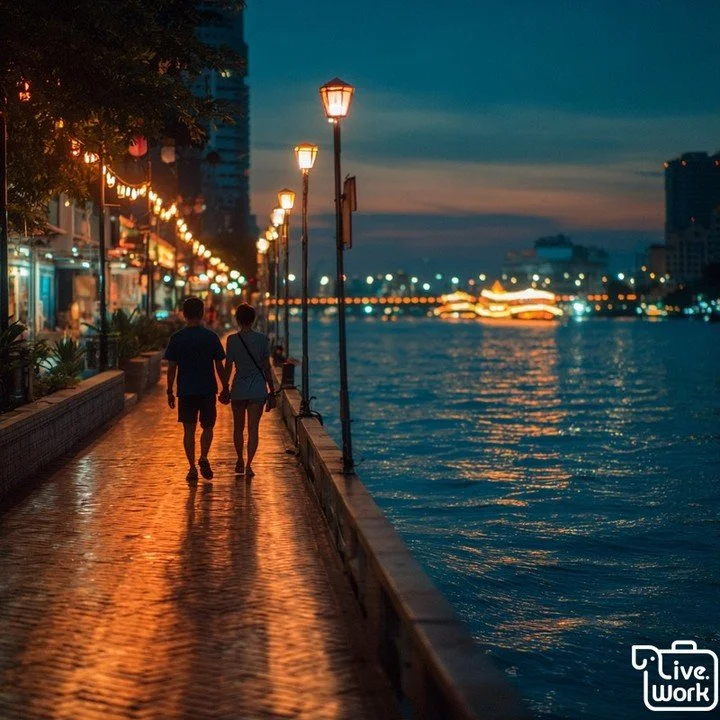
One of the easiest and most consistently rewarding places to experience Bangkok’s skyline is the riverside promenade at ICONSIAM. Unlike rooftop bars, this space is open, accessible, and designed for people to linger.
As sunset approaches, the atmosphere shifts gradually. Boats begin to catch the light, turning into moving reflections across the water. The skyline opposite the river softens in color, and the surface of the water mirrors everything—skyscrapers, clouds, and passing ferries. What makes this location special is not just the view itself, but the constant motion within it. Nothing stays static. Every few seconds, a new composition appears.
Because the promenade is wide and informal, it allows you to settle into the moment without pressure. You can walk, pause, lean against the railing, and simply watch as the city transitions from day to night.
Elevation Without Excess: Seeing Bangkok From Above
For those who want a higher vantage point, Bangkok still offers options that don’t revolve around expensive cocktails.
The MahaNakhon Skywalk provides one of the most striking perspectives in the city. Standing above the dense urban grid, you begin to understand the scale of Bangkok—how far it stretches, how tightly packed its neighborhoods are, and how the river weaves through it all.
Timing is everything here. Visiting during off-peak hours—particularly earlier in the day or just before sunset—changes the experience significantly. The crowds are lighter, the space feels more open, and the transition of light becomes more noticeable. As the sun lowers, the city shifts from bright detail to layered silhouettes, and then into a grid of lights that extends to the horizon.
Beyond well-known observation decks, some hotels and public spaces quietly offer access to upper levels during the day. These spaces often provide a more relaxed atmosphere, where the focus is on the view rather than the experience of being seen.
Bridges as Viewpoints: The Overlooked Advantage
Some of Bangkok’s best views come from places that aren’t designed as viewpoints at all.
Phra Pok Klao Bridge and Rama VIII Bridge offer wide, uninterrupted angles over the river. Standing on these bridges, you’re positioned between both sides of the city, which creates a sense of balance in your perspective.
During the day, these locations feel expansive and open. But it’s at night that they become particularly compelling. As the lights switch on, the river reflects the glow of buildings, streetlights, and passing boats. The movement continues, but the tone changes—calmer, softer, and more atmospheric.
Unlike structured viewpoints, bridges feel more immediate. You’re part of the city’s flow, not separate from it. Cars pass, people walk by, and the view exists within everyday movement.
Light as the Defining Element
More than location, it is light that defines how Bangkok looks and feels.
Golden hour, roughly 30 to 45 minutes before sunset, brings warmth and softness. Buildings lose their harsh edges, shadows lengthen, and the entire city takes on a more cinematic quality. This is when details still exist, but they are framed by a gentler contrast.
Blue hour, just after sunset, offers something entirely different. The sky deepens into cooler tones, while artificial lights begin to dominate. Windows glow, streets illuminate, and the river becomes darker and more reflective. The contrast between sky and city creates depth, and the skyline appears more structured and defined.
Understanding these transitions allows you to experience the same location in completely different ways.
Etiquette and Awareness: Sharing the Space
Because many of these viewpoints are public or semi-public, awareness of your surroundings becomes important.
Bangkok is a city where different rhythms coexist. Quiet temple areas can sit beside busy streets, and observation spaces may be shared by locals who are there for reflection rather than photography. Keeping voices low, respecting personal space, and avoiding obstruction of walkways ensures that everyone can enjoy the environment comfortably.
In temple-adjacent areas, modest dress is not just expected—it reflects an understanding of the cultural context. These details don’t limit your experience; they enhance it by aligning you with the space you’re in.
A Simple Timing Framework
To bring these elements together, it helps to think of your visit in terms of light and atmosphere rather than just location.
| Time Window | Atmosphere | Best Experience |
|---|---|---|
| Late Afternoon (16:30–17:45) | Warm light, softer shadows, gradual cooling | Arrive early, explore riverside areas like ICONSIAM, find your position before sunset |
| Golden Hour (≈30–45 min before sunset) | Rich, warm tones with cinematic lighting | Capture skyline reflections, moving boats, and layered city views |
| Blue Hour (after sunset) | Cool sky tones with glowing city lights | Best for night photography, bridges, and skyline contrast |
| Evening (after 19:00) | Fully illuminated skyline, calmer atmosphere | Relaxed walks, long exposures, and enjoying the city without daytime intensity |
The Experience Beyond the View
What makes Bangkok’s viewpoints memorable is not just what you see, but how you experience it. Without the structure of a rooftop bar, you’re free to move, pause, and observe at your own pace. The city becomes less of a spectacle and more of a living environment—something you’re part of rather than something you’re consuming.
You begin to notice smaller details: the rhythm of boats, the way light shifts across buildings, the contrast between old and new. These are moments that often disappear when the focus is only on height or exclusivity.
Conclusion
Bangkok’s skyline doesn’t belong only to luxury rooftops. It’s accessible from river promenades, bridges, observation decks, and quiet public spaces that offer equally compelling perspectives without the high cost. By focusing on timing, light, and location, you can experience the city in a way that feels both authentic and immersive. Whether you’re watching the sunset at ICONSIAM, taking in the city from the MahaNakhon Skywalk, or standing on a bridge as the lights reflect on the Chao Phraya, the most memorable views are often the ones that come without a price tag—just a moment of attention and the right place to stand.