Ubon Ratchathani: Where Rivers, Faith, and Isan Culture Flow Together
In Thailand’s far east, Ubon Ratchathani carries a quiet gravity. It’s a province shaped not by highways or high-rises, but by water. The Mun River threads through the city before meeting the mighty Mekong River, and that confluence defines more than geography—it sets the tempo of life.
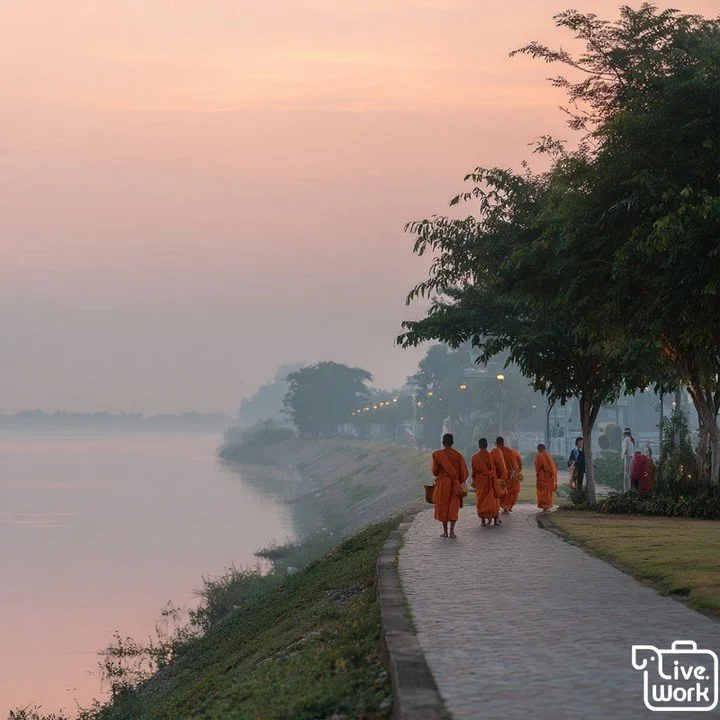
Here, mornings begin with river mist and temple bells, and evenings close with warm light reflecting off slow-moving currents. Ubon doesn’t rush to impress; it invites you to settle in.
A Spiritual Landmark: Wat Phra That Nong Bua
Begin at Wat Phra That Nong Bua, whose golden chedi rises prominently against the sky. Inspired by sacred stupas of the region, it anchors Ubon’s spiritual identity and reflects the province’s deep Buddhist roots.
Arriving early reveals the temple at its most serene. Monks move quietly across the grounds, incense drifts upward, and the morning air carries a cool clarity. It’s not simply a landmark—it’s an active center of devotion that shapes the daily rhythm of the city.
Temple-Lined Streets and Cross-Border Influence
Ubon’s temple culture extends beyond a single complex. Streets weave between monasteries, prayer halls, and community shrines. Architectural details reveal Isan craftsmanship, but you’ll also notice subtle influences from neighboring Laos and Cambodia—reminders of how porous borders have been historically.
This blending shows up in:
Decorative patterns and murals
Linguistic nuances in signage
Shared culinary and festival traditions
The result is a cultural texture that feels layered and lived-in.
Life Along the Mun and Mekong
The rivers are Ubon’s true backbone. Along the Mun River, early mornings are alive with fishermen casting nets and longtail boats gliding quietly past. Markets nearby open with baskets of fresh herbs, grilled fish, sticky rice, and river produce.
At the meeting point of the Mun and Mekong, life feels expansive. Communities here move with the water’s rhythm—fishing, trading, gathering, and sharing stories that echo generations past.
These riverbanks aren’t staged for tourism. They function as living spaces where daily routines unfold naturally.
Dawn Rituals and Everyday Grace
One of the most meaningful experiences in Ubon happens at first light: monks walking barefoot through quiet neighborhoods to collect alms. Residents wait patiently with prepared offerings, creating a calm, reverent atmosphere that defines the start of the day.
It’s a moment that requires no ticket or tour—just awareness and respect. Standing back and observing quietly allows you to witness a tradition that remains central to community life.
Markets, Food, and Isan Flavor
Food in Ubon reflects its geography and heritage. Riverside stalls serve grilled river fish and bold Isan dishes—som tam with real heat, herb-forward soups, and charcoal-smoked meats. Flavors are unapologetically regional, influenced by proximity to Laos and Cambodia.
Morning markets provide an intimate look at local ingredients, while evening food stalls become informal gathering points as temperatures soften.
Sunset: Cinematic Calm on the Water
As the sun drops, Ubon turns golden. Riverside viewpoints glow with warm light, and the water mirrors shifting colors of orange and pink. It’s a time for slow walks, quiet conversations, and reflection.
Unlike larger tourist centers, there’s space here—space to linger, to listen, and to let the day close gently.
A Province Deeply Connected to Place
What distinguishes Ubon Ratchathani is how strongly it feels rooted. Rivers dictate routine. Temples shape identity. Markets sustain community. Nothing feels imported or staged; everything belongs to its environment.
For travelers who value authenticity and cultural depth, Ubon offers an experience that feels complete without excess.
Conclusion
Ubon Ratchathani is one of Thailand’s most soulful provinces—a place where rivers guide daily life, temples anchor identity, and cross-border influences enrich culture. From Wat Phra That Nong Bua to the Mun and Mekong riverbanks, every frame tells a story of connection and continuity. If you’re seeking a Thailand experience that feels authentic, reflective, and deeply tied to its landscape, Ubon Ratchathani delivers in every moment.