Time by the Fields: How Rice Shapes Daily Life in Thailand’s Isan Region
In Isan, time isn’t measured by calendars or clocks—it’s read in water levels, cloud cover, and the color of the fields. Rice paddies define the rhythm of the day and the year, quietly organizing work, rest, and community life. To spend time here is to notice how the landscape sets the pace, and how people move with it rather than against it.
First Light: Cool Air and Narrow Dikes
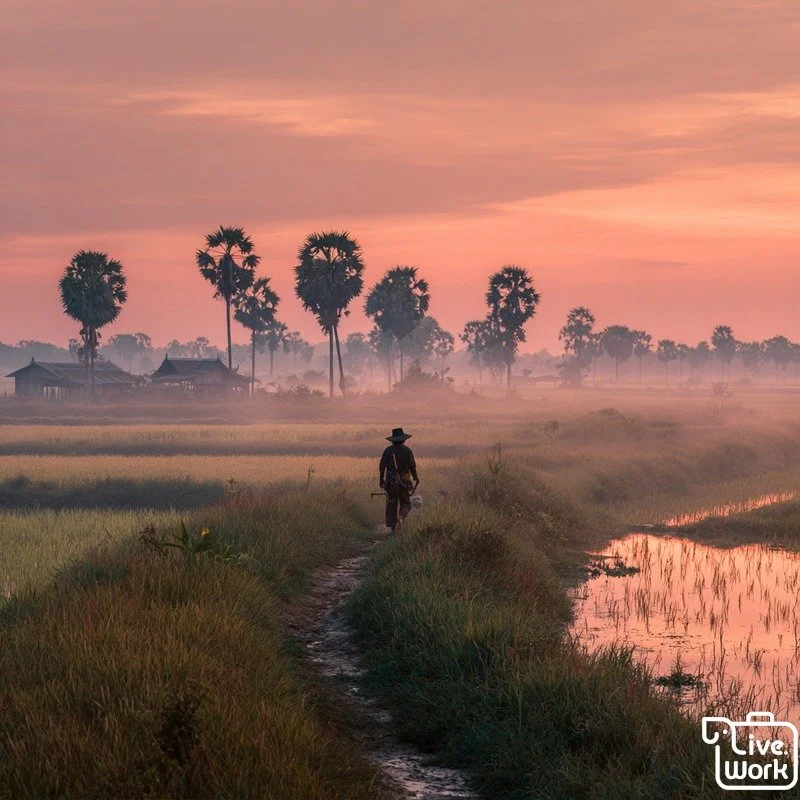
Before sunrise, the countryside feels hushed and expansive. Cool air settles over the paddies, and sounds travel far—roosters calling, a distant motor starting, footsteps along narrow dikes that separate field from field. The water is still, reflecting a pale sky as if the land is holding its breath.
This is a working quiet. People move with purpose but without rush, checking fields, preparing tools, greeting neighbors. The day begins softly, guided by light rather than alarms.
Mid-Morning Mirrors: Water, Sky, and Slow Change
As the sun rises, the paddies brighten. Shallow water turns each field into a mirror, clouds drifting across the surface at the same unhurried speed they move overhead. The heat builds gradually, and activity adjusts—shorter bursts of work, longer pauses in the shade.
These hours reveal the patience built into Isan life. Nothing happens instantly; growth is incremental, visible only if you’re paying attention. The fields teach you to look slowly.
Planting Season: Shared Rhythm and Laughter
During planting season, the fields become social spaces. Families and neighbors work together in steady lines—bundles of seedlings passed hand to hand, feet sinking into mud, backs bent in familiar motion. It’s labor, but it’s also conversation and laughter, punctuated by quick breaks beneath trees or makeshift shelters.
The work has a rhythm that’s almost musical. Everyone knows their role, and the pace is set collectively. Progress is measured not in hours, but in rows completed before the sun climbs too high.
Rains Arrive: The Land Turns Alive
When the rains deepen, Isan transforms. The countryside explodes into green—intense, saturated, and alive. Frogs call from flooded paddies, birds skim the water’s surface, and the air carries the rich scent of wet earth. The fields feel less like plots of land and more like a single, breathing ecosystem.
Life adjusts again. Days are shaped around weather windows, and evenings arrive with cooler air and fuller sounds. The land leads; people follow.
Harvest Time: Gold, Space, and Reflection
After harvest, the paddies change once more. Water drains away, leaving golden stubble under wide, open skies. The pace slows noticeably. Work shifts from constant tending to maintenance and planning, and community gatherings become more frequent.
This season carries a reflective quality—gratitude for the yield, stories shared, time reclaimed. The fields, now quiet, seem to invite people to pause and look ahead together.
Why the Fields Matter
Rice paddies in Isan are more than agriculture; they’re a living calendar and a social framework. They determine when people wake, how they work, and when they rest. They foster cooperation, patience, and a deep awareness of natural cycles—values that shape daily life as surely as the crop itself.
To witness these changes is to understand Isan from the inside out.
Conclusion
In Thailand’s Isan region, rice fields do what clocks cannot: they set a humane tempo for living. From cool mornings and mirrored paddies to muddy planting days, rain-soaked greens, and quiet post-harvest gold, the landscape guides each season with clarity and care. Spend time here, and you’ll feel how life aligns itself naturally—one field, one day, one season at a time.