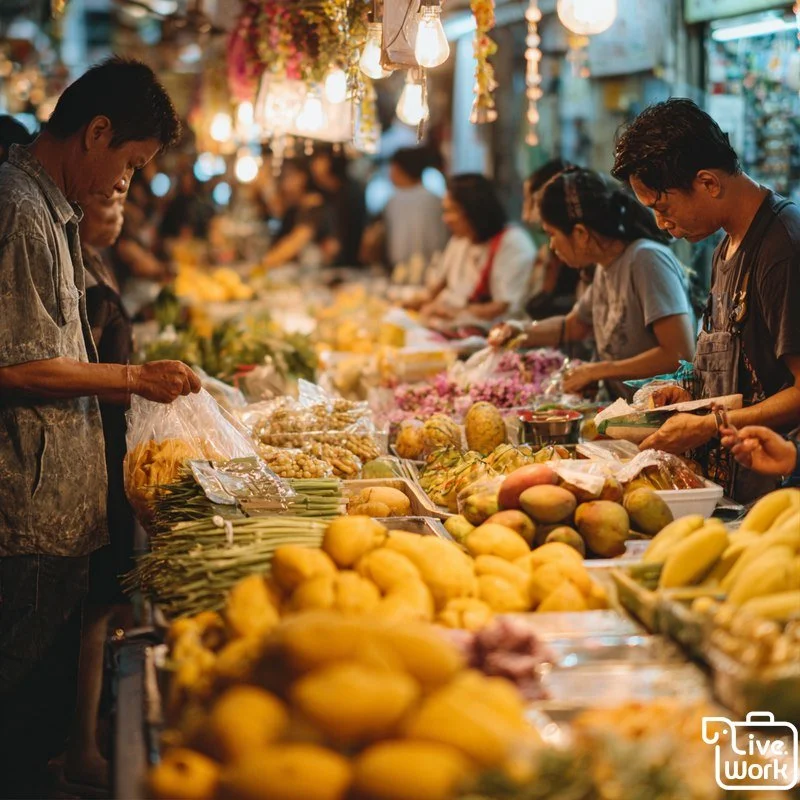
Thai Fresh Markets & Street Stalls: Etiquette Tips for a Smooth, Friendly Experience
Across Thailand, fresh markets and street stalls are at the heart of daily life. From morning produce markets to lively evening food streets, these places offer some of the most authentic interactions you can have in the country. They’re vibrant, efficient, and welcoming—but they also run on subtle social rules that locals follow naturally.
Understanding a few basic etiquette tips helps visitors blend in, avoid confusion, and enjoy a smoother experience while shopping or ordering food.
The Rhythm of Thai Markets
Markets in Thailand move quickly. Vendors often serve several customers at once while preparing food, counting change, and packaging items. Despite the fast pace, interactions remain polite and relaxed.
Locals tend to keep transactions short and respectful:
Customers know what they want before stepping forward
Vendors move efficiently between orders
Payment and pickup happen quickly
Observing this rhythm before ordering helps you understand how the stall operates.
Give Vendors Space While Browsing
Market stalls are usually compact, with limited space between the vendor and customers. If you’re browsing, stand slightly to the side rather than directly in front of the stall.
This allows others to order while you look more closely at ingredients or dishes. Blocking the counter—even unintentionally—can slow down service during busy periods.
A good rule of thumb: step forward only when you’re ready to buy.
Watch for Subtle Queues
Thai markets rarely have formal lines with barriers or signs. Instead, queues are often implied. Customers stand near the stall in the order they arrived, waiting patiently for their turn.
Before ordering:
Observe who arrived before you
Make eye contact with the vendor
Wait for a small nod or acknowledgment
Jumping ahead unintentionally can happen if you’re not watching carefully, so a moment of observation helps.
Pointing and Gestures
Pointing at food is perfectly acceptable in Thai markets, especially when language barriers exist. However, the polite way to do this is by using an open hand or your full palm rather than a single finger.
This gesture feels less abrupt and more respectful in Thai culture.
A relaxed posture and calm voice go a long way in keeping interactions friendly.
Handling Food Properly
Most ready-to-eat street food is prepared and portioned by the vendor. Customers generally avoid touching food directly.
Instead:
Let the vendor place items into bags or containers
Use tongs if they’re provided for self-service items
Avoid reaching across the stall
These small habits help maintain hygiene and keep service moving smoothly.
Paying and Confirming Prices
When it’s time to pay, having small bills ready is extremely helpful. Many stalls operate with limited change, especially early in the day.
Simple steps that make transactions easier:
Confirm the price before paying
Hand money directly to the vendor
Wait briefly while change is counted
A small verbal confirmation ensures everyone understands the total.
Politeness Goes a Long Way
Thai culture places strong value on politeness and calm communication. Even short exchanges are often softened with polite particles at the end of a sentence.
Men typically say “khrap” and women say “ka.”
Using these small additions signals respect and friendliness, even if your Thai vocabulary is limited.
Helpful Thai Phrases for Markets
A few simple phrases make ordering much easier and are appreciated by vendors.
• “Ao an-nee khrap/ka.”
I’ll take this.
• “Tao-rai khrap/ka?”
How much is it?
• “Raa-khaa nee chai mai khrap/ka?”
Is this the correct price?
Even if pronunciation isn’t perfect, the effort usually earns a smile.
Enjoy the Experience
Markets and street stalls are some of the best places to experience Thailand’s food culture. Beyond the dishes themselves, they reveal everyday interactions between neighbors, vendors, and regular customers.
Take a moment to watch how locals order, how vendors prepare dishes, and how quickly everything flows. Once you understand the rhythm, joining in becomes easy.
Conclusion
Thai fresh markets and street stalls are lively, welcoming places where good etiquette helps you blend in and enjoy the experience fully. By giving vendors space, respecting subtle queues, handling food properly, and using a few polite phrases, you’ll navigate markets smoothly and connect more naturally with local culture. With a little awareness and patience, these everyday food spots become one of the most rewarding parts of exploring Thailand.