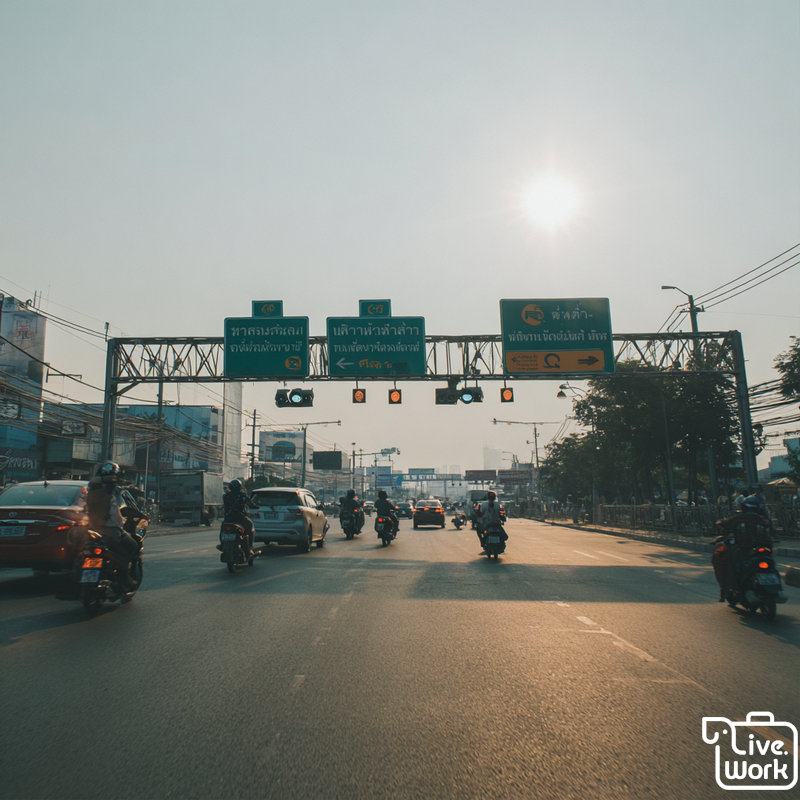
Reading Thai Street Signs & Public Symbols: A Practical Skill for Living and Working in Thailand
When planning a move to Thailand, most people focus on visas, jobs, housing, and cost of living. Yet one of the most underrated skills for daily life is far more practical: understanding Thai street signs and public symbols. This isn’t just a tourist convenience—it’s an everyday competence that directly affects safety, efficiency, and legal compliance once you’re living and working in the country.
From commuting to the office to visiting government buildings, knowing what signs mean saves time, reduces stress, and helps you blend more smoothly into your new environment.
How Thai Signs Work: Familiar Structure, Local Details
At first glance, Thai road and public signs feel reassuringly familiar. Thailand largely follows international conventions in shape and color:
Red circles signal prohibitions
Yellow or orange diamonds indicate warnings
Blue signs provide directions or services
However, the key difference is language. Many signs include Thai-only text or use symbols that aren’t common outside Southeast Asia. Directional signs may list destinations exclusively in Thai script, while temporary road signs, construction notices, or parking restrictions are often written without English translations.
This is where new arrivals can feel lost—even if the sign design itself looks familiar.
Road Signs and Everyday Safety
If you drive or ride a motorbike in Thailand, sign literacy becomes a safety issue, not just a convenience. Warning signs for sharp curves, flooding, animal crossings, or road narrowing appear frequently, especially outside major cities. Ignoring or misreading them can have real consequences.
Parking signs are another common challenge. What looks like an available space may actually be restricted during certain hours, reserved for officials, or prohibited entirely. Understanding the symbols and Thai abbreviations helps you avoid fines, towing, or uncomfortable interactions with local authorities.
For those commuting by bus or navigating intersections on foot, knowing pedestrian signs, bus stop markers, and traffic light variations makes daily travel smoother and safer.
Public Buildings, Services, and Daily Errands
Beyond the roads, Thai symbols play a big role in everyday administration. Immigration offices, hospitals, post offices, and municipal buildings rely heavily on signage and pictograms to guide visitors through complex spaces.
Recognizing common icons for:
Restrooms (often separated by gender symbols unfamiliar to newcomers)
Information counters
Ticket queues
Restricted-access areas
can dramatically reduce confusion—especially in offices where English support is limited.
For professionals, this matters more than you might expect. Running errands efficiently during a workday, handling visa extensions, or navigating healthcare facilities without hesitation builds confidence and independence.
Cultural Literacy in a Professional Context
Learning to read Thai signs is part of a broader concept: cultural literacy. Employers and colleagues often notice when foreigners understand basic local systems and norms. It signals adaptability, respect, and long-term commitment.
You don’t need fluent Thai to benefit. Even recognizing a handful of recurring words, colors, and symbols can change how you experience the city. Instead of constantly second-guessing yourself, you move with more certainty—and that confidence carries into your professional life as well.
A Small Investment With Daily Returns
The effort required to learn Thai signs is modest compared to the payoff. A few hours spent familiarizing yourself with common symbols and basic Thai wording can save you from repeated confusion, minor legal issues, and unnecessary stress.
Over time, this knowledge compounds. What once required conscious effort becomes automatic, freeing mental space for more important decisions—at work and beyond.
Conclusion
Understanding Thai street signs and public symbols is not just about getting from point A to point B. It’s about living more independently, safely, and confidently in Thailand. For anyone planning to work and build a life here, this practical skill quietly improves everyday experiences and professional routines alike. In a country where small details matter, learning to read the signs—literally—helps you feel at home faster.