Phang Nga Bay: Kayaking Through Thailand’s Limestone Dreamscape
There are places in Thailand that feel beautiful, and then there are places that feel almost unreal. Phang Nga Bay belongs firmly in the second category. Rising from calm, emerald-green water, towering limestone cliffs create a landscape that feels sculpted rather than formed—sharp, vertical, and impossibly dramatic. But what makes Phang Nga Bay truly special isn’t just what you see from a boat. It’s what you discover when you slow down and move quietly through it.
The real magic begins when you leave the engine behind and step into a kayak.
Entering a Different World: From Open Water to Hidden Spaces
At first glance, the bay feels expansive. Boats move between islands, longtails cut across the water, and the cliffs seem distant and monumental. But as your kayak approaches one of these formations, the scale shifts. The rock walls rise higher, the water becomes stiller, and the sounds begin to fade.
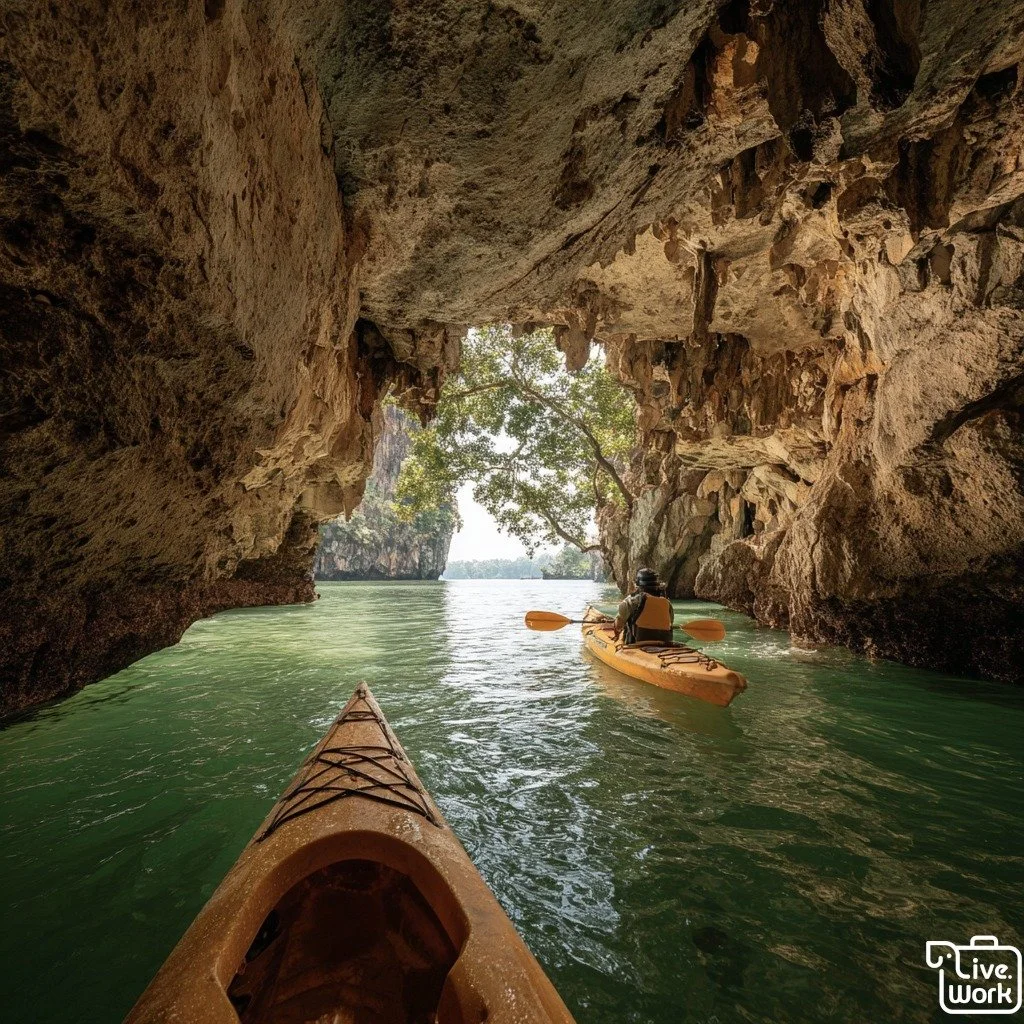
Then comes the moment that defines the experience: entering a sea cave.
Depending on the tide, you may need to lower your head or lie back slightly as your guide paddles you through a narrow, shadowed passage. The temperature drops, light dims, and the outside world disappears for a few seconds. Water drips softly from the ceiling, and the only sound is the rhythm of the paddle against the surface.
And then, suddenly, you emerge.
The “Hong” Lagoons: Silence Inside Stone Walls
Inside the limestone islands are hidden chambers known as hongs—collapsed cave systems that have opened to the sky, forming enclosed lagoons.
Here, everything changes again.
The water is often glassy and still. The cliffs form a natural wall around you, blocking wind and noise. Vegetation clings to the rock faces, and the space feels protected, almost secret. Birds move between branches, their calls echoing softly, and the only consistent sound is the gentle dip of paddles.
These lagoons are not places you pass through quickly. They invite you to pause, to look up, to notice details—the texture of the rock, the changing light, the subtle movement of water.
It’s not unusual to feel a sense of stillness here that’s hard to find elsewhere.
Mangrove Forests: Where Land and Sea Intertwine
Beyond the dramatic cliffs and hidden lagoons, Phang Nga Bay also reveals a quieter ecosystem: mangrove forests.
Gliding through these areas by kayak offers a completely different perspective. Instead of vertical cliffs, you move through low, intricate root systems that rise from the water like natural sculptures. The light filters through leaves, creating patterns on the surface, and the air feels thicker, more humid.
Mangroves are alive in subtle ways. You may notice:
Small fish darting between roots
Crabs moving along branches
Birds resting in the canopy
It’s a slower, more detailed experience—one that rewards attention rather than speed.
Why Kayaking Changes Everything
Many visitors see Phang Nga Bay from larger boats, but kayaking transforms the experience.
It allows you to:
Enter spaces boats cannot reach
Move quietly without disturbing the environment
Experience the bay at a human pace
Instead of observing from a distance, you become part of the landscape—moving through it rather than past it.
Choosing the Right Tour: Ethics Matter Here
Phang Nga Bay is both beautiful and fragile. The way you visit has a direct impact on its preservation.
The best experiences come from operators who prioritize low-impact exploration.
Look for tours that:
Use small groups rather than large crowds
Offer non-motorized kayaking in sensitive areas
Employ guides who understand and respect the environment
A good guide doesn’t just navigate—they interpret. They’ll explain how the caves formed, point out wildlife, and ensure that your presence doesn’t disturb the ecosystem.
Environmental Responsibility: Small Actions, Big Impact
Because the bay’s ecosystems are delicate, even small actions matter.
Responsible behavior includes:
Keeping a respectful distance from wildlife
Avoiding contact with cave formations or coral
Not feeding animals
Sustainability also extends beyond the water. Some operators are making efforts to:
Reduce single-use plastics
Provide refillable water options
Support local communities through fair wages and partnerships
Choosing these operators helps ensure that tourism benefits both the environment and the people who depend on it.
Photography: Capturing Without Disturbing
Phang Nga Bay is incredibly photogenic, but the best images come from patience rather than interference.
Instead of trying to stage a perfect shot:
Let the light and movement unfold naturally
Frame the cliffs, water, and reflections as they are
Capture the atmosphere rather than forcing interaction
The most meaningful photos are often the ones that preserve the moment without altering it.
Timing and Conditions: What to Expect
The experience in Phang Nga Bay changes with:
Tides, which affect cave access
Light, which shifts the color of the water and rock
Weather, which influences visibility and calmness
Early morning or late afternoon often provides softer light and a quieter atmosphere, but every time of day offers something different.
The Feeling You Take With You
Phang Nga Bay isn’t just about dramatic scenery—it’s about contrast.
You move from:
Open water to enclosed lagoons
Bright sunlight to cave shadows
Activity to stillness
That constant shift creates a layered experience that stays with you long after the trip ends.
Conclusion
Phang Nga Bay is one of Thailand’s most extraordinary landscapes, but its true magic reveals itself when you slow down and explore it thoughtfully. By kayaking through sea caves, drifting into hidden lagoons, and moving quietly along mangrove forests, you experience a side of the bay that larger tours often miss. Choosing ethical operators and practicing responsible travel ensures that this fragile environment remains intact for future visitors. In the end, the most memorable part of Phang Nga Bay isn’t just what you see—it’s how it makes you feel: small, present, and deeply connected to the natural world.