Isan Food Starter Pack: What to Order First When You’re New to Northeastern Thai Flavors
Isan food can feel intimidating the first time you sit down with a menu. The region’s cuisine is famous for bold flavors: lime, chili, fish sauce, herbs, toasted rice powder, grilled meat, sticky rice, raw vegetables, sour soups, and salads that wake up the whole table. For someone new to it, the question is not whether Isan food is delicious. The question is where to start without accidentally ordering something too spicy, too funky, or too unfamiliar on the first try.
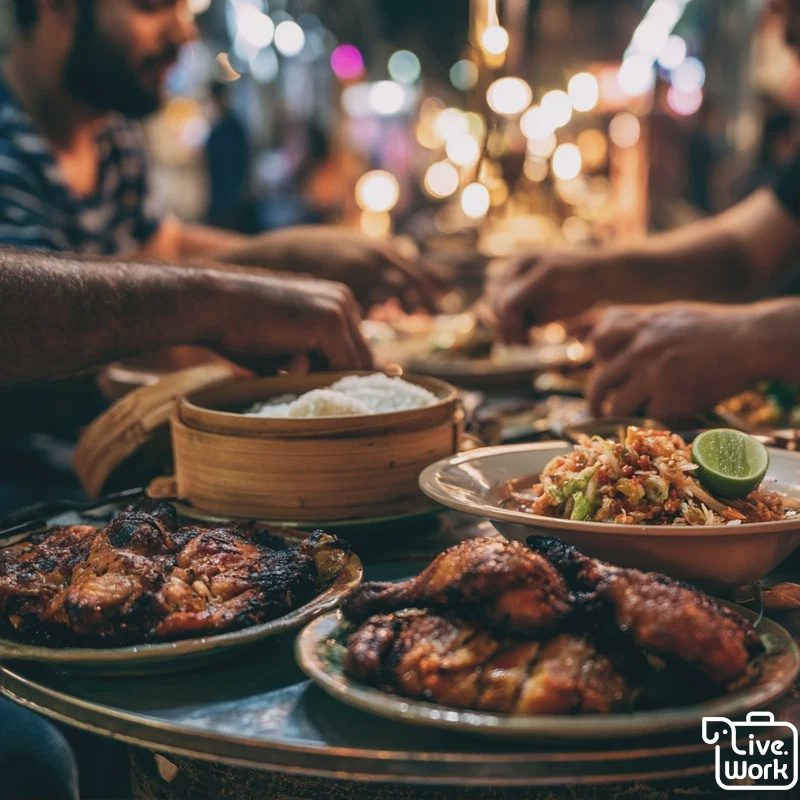
The best beginner approach is to order a small “starter pack” of approachable classics. These dishes show the soul of Isan cooking without forcing you immediately into the most intense versions. Start with gai yang, the smoky grilled chicken that almost everyone can enjoy. Add sticky rice, because it is not only a side dish but one of the main ways Isan food is eaten. Then bring in som tam Thai, the more beginner-friendly version of papaya salad, and ask for it mild so you can appreciate the sweet-sour crunch before the chili takes over. For soup, try tom saap with less chili so the lime, lemongrass, herbs, and hot broth can shine. If you want to be a little more adventurous, share larb moo, a minced pork salad lifted by lime, mint, shallots, and roasted rice powder.
This combination gives you a proper introduction to Isan food. It is smoky, sour, herbal, crunchy, warm, fresh, and satisfying, but it can be controlled. You can ask for less spice. You can use sticky rice to balance the flavors. You can share dishes instead of committing to one very intense plate alone. Most importantly, you can experience the brightness of Isan cuisine without feeling overwhelmed.
Why Isan Food Feels So Different
Isan food comes from Thailand’s northeast, a region with deep cultural, linguistic, and culinary links to Laos and the Mekong world. Compared with central Thai food, Isan cooking often feels sharper, fresher, smokier, and more direct. Coconut milk is less central than in many southern or central Thai curries. Instead, the flavor often comes from lime, herbs, chili, fermented ingredients, grilled meats, sticky rice, and vegetables eaten fresh beside the main dishes.
A classic Isan table is about balance, but not always in a soft way. It can be bright, hot, salty, sour, bitter, smoky, and herbal at once. The food is meant to be shared, and each dish plays a different role. Grilled chicken gives comfort and smoke. Sticky rice gives structure. Som tam gives crunch and acidity. Larb gives herbs and roasted rice aroma. Tom saap gives hot broth and sour depth. Fresh cabbage, cucumber, long beans, basil, and other vegetables help cool and reset the mouth.
For beginners, the most important thing to understand is that Isan food does not need to be painfully spicy to be good. Chili is important, but it is not the only story. The real beauty is in the combination of lime, herbs, smoke, salt, texture, and warmth. If you ask for less chili, you are not ruining the food. You are giving yourself a way to taste the structure first.
Start with Gai Yang and Sticky Rice
Gai yang, or grilled chicken, is the safest and most comforting first Isan dish. It is smoky, savory, slightly sweet in some marinades, and easy to understand even if everything else on the table feels new. The chicken may be served as a whole grilled bird, chopped pieces, wings, thighs, or smaller portions depending on the restaurant or stall. The best versions smell of charcoal and have a balance of juicy meat, lightly crisp skin, and marinade that has settled into the chicken rather than simply sitting on the surface.
Sticky rice, or khao niao, is essential with gai yang. It is not just “rice on the side.” In Isan eating, sticky rice is part of the method. You pinch a small amount with your fingers, roll or press it lightly, and use it to eat grilled meats, dip into sauces, or calm the heat from spicy salads. It makes the meal feel more grounded.
For a beginner, gai yang and sticky rice create a safe base. Even if the som tam is sharper than expected or the larb has more chili than planned, the chicken and rice keep the meal comfortable. This is why they belong at the center of a first Isan order.
Som Tam Thai: The Best Beginner Papaya Salad
Som tam is one of Isan’s most famous dishes, but not every som tam is equally beginner-friendly. The version to start with is som tam Thai. It usually includes shredded green papaya, lime, fish sauce, palm sugar, chili, garlic, tomato, long beans, peanuts, and dried shrimp. Compared with stronger versions that may include fermented fish sauce or salted crab, som tam Thai is often sweeter, cleaner, and easier for first-timers.
The key is to ask for it mild. When som tam is made very spicy, the chili can dominate everything else. When it is mild, you can taste the crunch of the papaya, the sweetness, the lime, the peanuts, the dried shrimp, and the freshness of the vegetables. The dish becomes bright rather than frightening.
Som tam Thai is a perfect bridge into Isan food because it teaches the basic flavor language: sour, sweet, salty, crunchy, fresh, and spicy. It also wakes up the table. A bite of grilled chicken followed by sticky rice and a little papaya salad gives you the classic contrast that makes Isan meals so enjoyable.
If you have allergies or dietary restrictions, pay attention. Som tam Thai commonly includes peanuts, dried shrimp, and fish sauce. Vegetarian or allergy-safe versions are not automatic, so you need to ask clearly if those ingredients are a problem.
Tom Saap: Hot-and-Sour Comfort Without Too Much Chili
Tom saap is a hot-and-sour Isan soup that can be deeply comforting once you understand it. It is often made with pork, pork ribs, or other meat, and the broth is lifted by lime, lemongrass, herbs, chili, and savory seasoning. The flavor should feel bright and warming rather than heavy. It is the kind of soup that makes sense when you want something hot, sour, and aromatic at the same time.
For beginners, tom saap is best ordered with less chili. This lets the lemongrass, lime, and broth come forward. If the soup is too spicy, the subtler aromatic notes can disappear behind the heat. With less chili, you can enjoy the way the soup opens the appetite and refreshes the palate between bites of chicken, sticky rice, and salad.
Tom saap is especially good when shared. You do not need a whole bowl to yourself. Place it in the middle of the table, spoon some broth into a small bowl, and return to it throughout the meal. It works like a warm reset between smoky, crunchy, and herbal dishes.
Larb Moo: The Adventurous but Still Approachable Choice
Larb moo is a minced pork salad and one of the most important dishes for understanding Isan flavor. It is usually made with minced pork, lime juice, fish sauce, chili, shallots, mint, and roasted rice powder. The roasted rice powder is the detail that makes the dish special. It adds a nutty aroma and a slightly grainy texture that clings to the meat and herbs.
Larb can be spicy, but it does not have to be overwhelming. Ask for it less spicy if you are new. The goal is to taste the lime, mint, shallots, pork, and toasted rice together. A good larb should feel lively and fragrant, not just hot.
Larb moo is a good dish to share because it is more intense than grilled chicken but more manageable when eaten in small bites with sticky rice and fresh vegetables. Take a little larb, add sticky rice, and follow with cabbage or cucumber if available. That rhythm makes the dish much easier to enjoy.
For a first Isan meal, larb moo is the “slightly adventurous” part of the order. It shows the herb-forward, roasted-rice character of the region without requiring you to jump straight into the strongest fermented or bitter dishes.
The Beginner Isan Starter Pack
| Dish | Why It Is Beginner-Friendly | How to Order It |
|---|---|---|
| Gai Yang | Smoky grilled chicken is familiar, comforting, and easy to enjoy even if the rest of the meal feels new. | Order it with sticky rice and use it as the safe, satisfying center of the meal. |
| Sticky Rice | It balances spicy, sour, and salty dishes while giving the meal its proper Isan structure. | Eat it by hand in small pinches, especially with grilled chicken, larb, and dipping sauces. |
| Som Tam Thai | This version of papaya salad is usually sweeter and more approachable than stronger fermented versions. | Ask for it mild so you can enjoy the lime, crunch, peanuts, dried shrimp, and sweetness before the chili takes over. |
| Tom Saap | The hot-and-sour soup is warming and aromatic, with lime and lemongrass giving it brightness. | Request less chili so the broth, herbs, and sour notes stay clear and enjoyable. |
| Larb Moo | Minced pork salad introduces herbs, lime, shallots, and roasted rice powder in a bold but shareable way. | Order it less spicy, share it with the table, and eat small bites with sticky rice and fresh vegetables. |
How to Build Your First Isan Meal
A good first Isan meal should not be one dish alone. Isan food makes the most sense as a shared table. If you order only som tam, it may feel too sharp. If you order only grilled chicken, you miss the bright and herbal side of the cuisine. If you order only larb, it may feel intense without balance. Together, the dishes support one another.
Begin with gai yang and sticky rice. This gives you the smoky, filling base. Add som tam Thai for crunch and brightness. Add tom saap for warmth and sour broth. Add larb moo if you want herbs and roasted rice powder. This gives you a complete beginner table that is still recognizably Isan.
The eating rhythm matters. Take chicken, then sticky rice. Take a little som tam, then rice. Sip soup. Try larb with cabbage or cucumber. Return to the chicken. The meal should move between comfort and brightness, not stay in one flavor zone.
This is also why ordering mild spice at first is smart. Once you understand the structure, you can increase heat on later visits. The first goal is not bravery. The first goal is appreciation.
Spice Levels and How to Ask Clearly
Spice is the part of Isan food that worries many beginners, but it is also one of the easiest things to manage if you know what to say. The most useful phrase is “phet noi na khráp” or “phet noi na khâ,” which means “less spicy, please.” Use “khráp” if you are using the masculine polite ending and “khâ” if you are using the feminine polite ending. If you want it not spicy, say “mai phet.”
In Thai script, less spicy is written as “เผ็ดน้อยนะครับ/ค่ะ.” Not spicy is written as “ไม่เผ็ด.” These phrases are useful, but expectations still vary. In some Isan restaurants, “less spicy” may still have noticeable chili. In very local places, “not spicy” may reduce the chili strongly but not remove every spicy sensation from sauces or condiments already prepared.
Smile, speak clearly, and point if needed. If you are ordering som tam, the vendor may ask how many chilies you want. One chili can still be spicy for a beginner, so you can say “one chili” or simply repeat “mai phet” if you want it very mild.
It is better to start too mild than too spicy. You can always add chili from condiments later, but you cannot easily remove it once it is pounded into the salad.
Useful Thai Phrases for Ordering Isan Food
| Thai Phrase | Pronunciation | Meaning and Best Use |
|---|---|---|
| เผ็ดน้อยนะครับ | Phet noi na khráp | Less spicy, please. Use this polite version if you use the masculine ending. |
| เผ็ดน้อยนะคะ | Phet noi na khâ | Less spicy, please. Use this polite version if you use the feminine ending. |
| ไม่เผ็ด | Mai phet | Not spicy. Use this when you want the vendor to avoid chili as much as possible. |
| พริกเม็ดเดียว | Phrik met diao | One chili. Useful at som tam stalls when the vendor asks how spicy you want it. |
| ข้าวเหนียว | Khao niao | Sticky rice. Order this with grilled chicken, som tam, and larb for the proper Isan meal balance. |
| อันนี้ | An-nee | This one. Useful when pointing to a dish, menu photo, or prepared item at a stall. |
| ขอบคุณครับ/ค่ะ | Khop khun khráp/khâ | Thank you. A simple polite close after ordering or receiving food. |
Understanding the Flavor Building Blocks
Once you recognize the main flavor tools, Isan food becomes much easier to understand. Lime gives brightness. Fish sauce gives salt and depth. Chili gives heat. Roasted rice powder gives nutty aroma and texture. Herbs such as mint, coriander, sawtooth coriander, spring onion, and other local greens make dishes feel fresh. Sticky rice gives body. Grilled meat adds smoke.
These flavors do not behave like a rich cream sauce or a mild stew. They are sharp and active. Each bite can feel alive. That is why the food pairs so well with fresh vegetables and sticky rice. The vegetables cool the mouth, while the rice softens the edges and helps you enjoy the sauces.
Roasted rice powder is especially important in larb and some dipping sauces. It is made by toasting rice until fragrant and then grinding it. The result is nutty, slightly smoky, and textured. It gives larb its distinctive dry-fragrant finish and makes the dish feel more deeply Isan.
Beginners often focus only on chili, but roasted rice powder, lime, and herbs are just as important. Once you notice them, the food becomes more interesting and less intimidating.
The Role of Fresh Vegetables
Isan meals often arrive with fresh vegetables: cabbage wedges, cucumber, long beans, Thai basil, mint, lettuce, or other greens depending on the restaurant. These are not decoration. They are part of how the food is eaten. They cool the mouth, add crunch, and give you a break between spicy or salty bites.
If the larb feels intense, eat it with cabbage. If the som tam is sharp, take cucumber afterward. If the grilled chicken is salty or smoky, fresh herbs can brighten it. This is the rhythm locals understand naturally, and beginners can learn quickly.
Do not ignore the vegetable plate. It is one of your best tools for enjoying Isan food comfortably.
What to Expect from Each Starter Dish
| Dish | Main Flavor | Beginner Tip |
|---|---|---|
| Gai Yang | Smoky, savory, lightly sweet, and comforting, with grilled aroma as the main appeal. | Use this as your safe base and pair it with sticky rice before moving into sharper dishes. |
| Som Tam Thai | Crunchy, sweet-sour, salty, nutty, and fresh, with chili heat depending on how it is ordered. | Ask for it mild and taste the dressing before adding extra chili or condiments. |
| Tom Saap | Hot, sour, aromatic, and herbal, with lime and lemongrass carrying the broth. | Request less chili so the soup feels warming and bright rather than overwhelming. |
| Larb Moo | Herbal, citrusy, savory, and nutty from roasted rice powder, with chili as a flexible background or main heat. | Eat small bites with sticky rice and fresh vegetables instead of taking large spoonfuls alone. |
| Sticky Rice | Mild, chewy, grounding, and slightly sweet in a natural rice way. | Use it throughout the meal to balance spice, pick up sauces, and connect the dishes. |
How to Eat Sticky Rice Properly
Sticky rice is eaten differently from loose jasmine rice. It often comes in a small woven basket or plastic bag. Take a small amount with clean fingers, press it gently into a bite-sized piece, and use it to accompany other dishes. You can pinch a bit of grilled chicken with it, dip it lightly into sauce, or eat it after a spicy bite to calm the mouth.
Do not take a huge handful and squeeze it into a dense ball. Small pieces work better. Sticky rice is meant to be eaten throughout the meal, not only at the end. It is the quiet connector between dishes.
If you are eating in a more formal restaurant or prefer utensils, that is fine, but sticky rice is traditionally very hand-friendly. Just wash or sanitize your hands first, especially at markets or casual stalls.
What to Avoid on Your First Isan Meal
A beginner Isan meal should be exciting but not punishing. It is usually wise to avoid the most intense versions until you understand the basics. Very spicy som tam with fermented fish sauce, bitter dishes, raw preparations, strong offal dishes, or heavily fermented flavors can be wonderful for experienced eaters but may be too much as a first introduction.
This does not mean those dishes are bad. It simply means they belong later in the journey. Start with gai yang, sticky rice, som tam Thai, tom saap, and larb moo. Once those feel comfortable, you can explore stronger regional dishes with more confidence.
The first meal should make you curious, not afraid.
A Simple First Isan Order for Two People
For two people, a good first order might be one portion of gai yang, one basket or bag of sticky rice each, one som tam Thai ordered mild, one tom saap ordered less spicy, and one larb moo to share if you are both curious. This gives enough variety without overloading the table.
If you are very hungry, add more sticky rice or another grilled item rather than ordering too many spicy salads. If you are cautious, skip the larb on the first round and add it later if the som tam and soup feel manageable. Isan meals are flexible. You do not have to order everything at once.
The goal is to build confidence through contrast: smoky chicken, chewy rice, crunchy salad, sour soup, herbal larb.
A Beginner-Friendly Isan Meal Plan
| Order Stage | What to Choose | Why It Works |
|---|---|---|
| Safe Base | Gai yang with sticky rice. | This gives you smoky comfort and a mild foundation before adding sharper flavors. |
| Fresh Crunch | Som tam Thai, ordered mild. | You get papaya crunch, lime, sweetness, peanuts, and freshness without jumping straight into extreme chili. |
| Warm Reset | Tom saap, ordered with less chili. | The hot-and-sour broth adds comfort and aroma while showing Isan’s love of lime and herbs. |
| Adventurous Share Dish | Larb moo, ordered less spicy. | It introduces roasted rice powder, mint, shallots, and minced meat in a dish that is bold but manageable when shared. |
| Cooling Support | Fresh vegetables and extra sticky rice. | These help balance spice, salt, and sourness so the whole meal stays enjoyable. |
How to Know If the Food Is Well Balanced
Good Isan food should feel alive, not flat. Som tam should be crunchy and bright, with sweetness, sourness, salt, and chili working together. Gai yang should smell smoky and taste seasoned through the meat. Tom saap should feel hot and sour, with herbs and lime lifting the broth. Larb should be fragrant, not greasy, with roasted rice powder adding aroma and texture.
If a dish tastes only spicy, it may be unbalanced or simply too hot for your current tolerance. If it tastes only salty, it may need rice, vegetables, or lime. If it tastes too sour alone, try it with grilled chicken or sticky rice. Isan food often makes more sense when eaten as a table, not as isolated plates.
This is why beginners should not judge the cuisine from one dish eaten alone. The magic is in combination.
Where to Try Isan Food
You can find Isan food across Thailand, not only in the northeast. Bangkok has many excellent Isan restaurants, from simple shopfronts to more polished dining rooms. Chiang Mai, Pattaya, Phuket, and other cities also have Isan food because people from the northeast live and work throughout the country. In Isan itself, the food is everywhere: markets, roadside grills, local restaurants, night markets, and family kitchens.
For a first meal, choose a place that looks busy and fresh rather than empty and uncertain. Grilled chicken should be moving from the grill. Som tam should be pounded fresh. Soup should be hot. Herbs and vegetables should look lively. A local crowd is usually a good sign, but beginner comfort matters too. A restaurant with a menu, photos, or staff used to visitors can make the first order easier.
Once you know the starter pack, local places become much less intimidating. You can walk in and order the same basic structure almost anywhere.
Common Beginner Questions
Many beginners wonder whether Isan food is always spicy. It is often spicy, but it does not have to be ordered that way. Chili can be reduced in many dishes, especially som tam, larb, and soups. Some sauces or pre-made items may still carry heat, but asking clearly helps.
Another question is whether sticky rice is necessary. It is not legally required, of course, but it changes the meal. Without sticky rice, Isan food can feel sharper and less grounded. With sticky rice, the dishes feel connected.
Some travelers also wonder whether som tam Thai is “authentic” if it is milder or sweeter. It is a real and common style, and it is a very good beginner version. More intense versions can come later.
The final question is whether larb is too adventurous. Larb moo is usually approachable if ordered less spicy and eaten with rice and vegetables. It is one of the best dishes for understanding Isan cuisine beyond grilled meat and papaya salad.
Growing Beyond the Starter Pack
Once you enjoy the starter pack, you can expand gradually. Try different som tam versions, grilled pork neck, nam tok, soups with stronger herbal profiles, Isan sausages, grilled fish, jaew dipping sauces, and more regional salads. Increase chili slowly rather than jumping from mild to local-level heat in one meal.
Pay attention to what you liked most. If you loved the smoke, explore more grilled dishes. If you loved the lime and herbs, try more salads. If you loved the roasted rice powder, look for nam tok or different larb variations. If you loved the soup, try other hot-and-sour broths.
Isan food becomes less intimidating when you treat it as a journey. The starter pack is the doorway.
Conclusion
If you are new to Isan food, start with a beginner-friendly table that shows the region’s flavor without overwhelming you. Order gai yang with sticky rice for a smoky, comforting base. Add som tam Thai and ask for it mild so you can enjoy the sweet-sour crunch of green papaya, peanuts, dried shrimp, and lime. Try tom saap with less chili for a hot-and-sour soup where lemongrass and lime can shine. Share larb moo when you feel ready for herbs, minced pork, shallots, and nutty roasted rice powder. Use helpful Thai phrases such as “เผ็ดน้อยนะครับ/ค่ะ” for less spicy and “ไม่เผ็ด” for not spicy, and let sticky rice and fresh vegetables balance the meal. Isan food does not need to be approached with fear. Start gently, eat slowly, share everything, and let the bright, smoky, herbal flavors introduce themselves one dish at a time.