First Time in Hua Hin: A Low-Stress Long Weekend of Beaches, Night Markets, and Calm Coastal Rhythm
Hua Hin is one of the easiest seaside escapes from Bangkok because it gives you the feeling of a proper beach weekend without requiring complicated planning. It is relaxed but not empty, polished but not stiff, and lively in the evening without becoming overwhelming. For a first visit, the best approach is simple: avoid trying to see everything, build your days around the beach, cafés, night markets, and rest, and let the town’s slow coastal rhythm do most of the work.
The Tourism Authority of Thailand describes Hua Hin as a seaside community accessible by train, bus, or car, with accommodation ranging from simple guesthouses to luxury resorts and spa retreats. That accessibility is a big part of why it works so well for a low-stress long weekend from Bangkok.
Why Hua Hin Works So Well for a First Visit
Hua Hin is not the kind of beach destination that demands a packed itinerary. Its appeal is softer and more practical. You come here for early walks by the sea, iced coffee after the beach, casual seafood dinners, market browsing, massages, and a general feeling that you can slow down without being bored.
Compared with more remote islands, Hua Hin is easy. You do not need ferries, internal flights, or complex transfers. Compared with louder coastal destinations, it feels calmer and more orderly. That makes it especially good for couples, families, remote workers, retirees, and first-time visitors who want a beach break but do not want to spend the whole weekend solving logistics.
The best version of Hua Hin is not rushed. It is a place where the morning belongs to the beach, the afternoon belongs to shade and air-conditioning, and the evening belongs to markets, food, and gentle movement.
Day 1: Arrival, Beach Time, and a Soft Landing
Your first day should be about arriving well rather than doing too much. Whether you come from Bangkok by van, bus, train, taxi, or private car, give yourself permission to keep the first afternoon light. After check-in, head toward Hua Hin Beach for a relaxed introduction to the town.
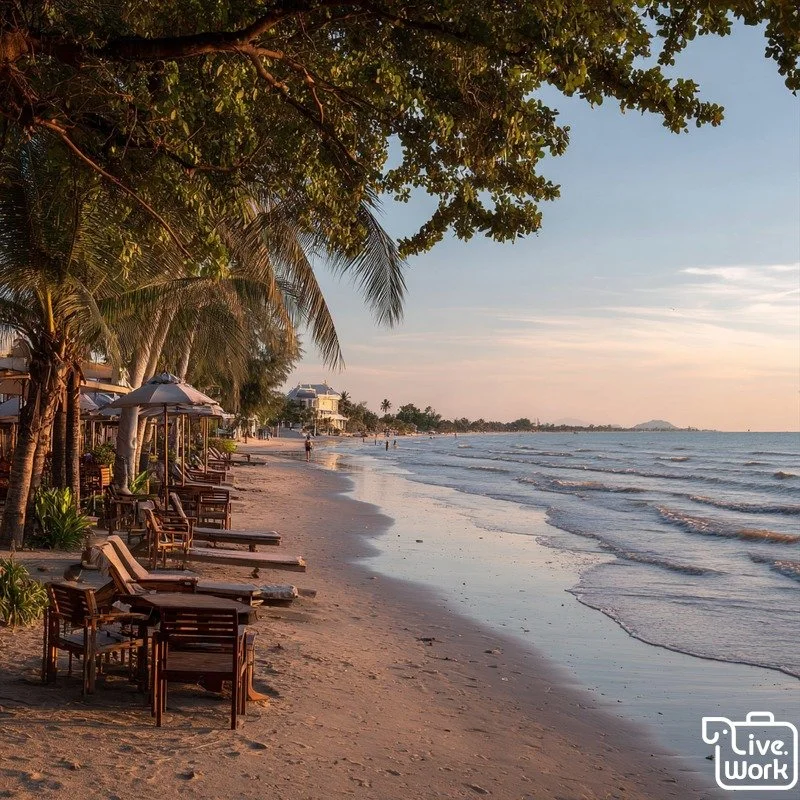
Hua Hin Beach is best experienced early in the day or later in the afternoon, but even on arrival day, a gentle walk on the sand helps you shift into weekend mode. The beach is long enough for a proper stroll, and the atmosphere is usually more relaxed than dramatic. You are not coming here for wild island scenery. You are coming for space, sea air, and an easy sense of arrival.
A seaside café makes the perfect first pause. Order an iced coffee, fresh juice, or something light, and avoid turning lunch into a heavy meal if the afternoon is hot. Hua Hin’s heat can build quickly, especially when you have just traveled, so a slow café stop gives you time to settle before the evening.
As sunset approaches, shift toward the night-market mood. Cicada Market is one of Hua Hin’s best-known evening spots, and the Tourism Authority of Thailand describes it as a night market where visitors can find unique items, souvenirs, contemporary art, artefacts, and handmade products. The official Cicada Market website lists opening days as Friday, Saturday, and Sunday, with hours shown as 16:30 to 23:00, so it fits especially well into a weekend plan.
If you want food more than browsing, Tamarind Market is often paired with Cicada because of its casual dining atmosphere nearby. The easiest first-night strategy is not to overthink it. Walk slowly, sample what looks fresh, and build dinner from small plates: grilled seafood, mango sticky rice, fresh juices, skewers, noodles, or whatever smells best as you pass.
Day 2: Early Beach Morning, Café Breaks, and Night-Market Dining
The second day is your main Hua Hin day, and it should begin early. This is when the beach feels most generous. The light is soft, the water is calmer, and the sand has not yet absorbed the full heat of the day. A morning walk along Hua Hin Beach gives you the town at its best: open space, gentle waves, locals starting their routines, and visitors moving slowly rather than crowding the shoreline.
This early window is also the best time for photos. The beach does not need dramatic poses or a complicated setup. The simple scenes are often the strongest: footprints in damp sand, umbrellas still closed, horses walking along the shoreline, fishing boats in the distance, and morning light turning the sea pale silver-blue.
After the beach, move into breakfast or brunch rather than continuing under the sun. Hua Hin’s café scene is part of its comfort. A good café stop lets you cool down, rehydrate, and plan the rest of the day without pressure. For a low-stress weekend, the middle of the day should not be overloaded. A massage, a nap, a hotel pool session, or a quiet café with strong air-conditioning is not wasted time. It is exactly how Hua Hin should be used.
In the late afternoon, return to the beach or take a gentle walk through town. The light becomes warmer again, and the heat begins to ease. If your visit falls on a weekend, this is another good evening for Cicada or Tamarind. If not, the central Hua Hin night market area offers a more traditional market feel with seafood restaurants, street snacks, and simple shopping.
The food rhythm should stay casual. Hua Hin is not a place where you need to chase fine dining every night. Grilled prawns, squid, fish, fruit shakes, roti, mango sticky rice, and Thai comfort dishes are enough to make the evening feel complete.
Day 3: Rainy-Day Flexibility or One Last Slow Morning
The final day depends on your departure time, but the principle stays the same: do not overpack it. A last beach walk, a café breakfast, or a slow market browse is usually better than trying to force in one more major attraction before returning to Bangkok.
If the weather is good, go back to the beach early. Even half an hour by the sea changes the mood of the day. If it rains, Hua Hin still works. This is one of the town’s advantages. A wet day does not ruin the trip because the atmosphere is not built only around sunbathing. Café hopping, massage, local shops, indoor market stalls, hotel spa time, and long lunches all fit the town naturally.
Rain can even make Hua Hin feel calmer. Streets become quieter, cafés feel cozier, and the sea takes on a softer, grey-blue mood. Instead of treating rain as a failure, use it as permission to slow down further.
A Simple Long-Weekend Flow
For a first visit, the best plan is flexible rather than ambitious. The table below gives a comfortable structure that covers beach time, food, markets, and rest without turning the weekend into a checklist.
| Part of the Trip | Atmosphere | Best Focus |
|---|---|---|
| Arrival Afternoon | Slow, transitional, and relaxed after the journey from Bangkok. | Check in, take an easy walk on Hua Hin Beach, and pause at a seaside café for iced coffee or a light meal. |
| First Evening | Lively but comfortable, with food stalls, market lights, and an easy weekend buzz. | Visit Cicada Market, Tamarind Market, or a central night market area for grilled seafood, mango sticky rice, fresh juices, and casual browsing. |
| Main Morning | Cooler, softer, and more spacious before the beach becomes busier and hotter. | Start early at Hua Hin Beach for a calm walk, gentle swimming conditions, soft light, and relaxed photos. |
| Midday Break | Hotter and slower, better suited to shade, air-conditioning, and recovery. | Choose café time, a massage, hotel pool time, or a long lunch instead of forcing outdoor sightseeing. |
| Second Evening | Warm, social, and food-focused as the town becomes active again after sunset. | Return to the markets, try different snacks, or enjoy a relaxed seafood dinner without rushing. |
| Departure Morning | Gentle and reflective, ideal for one final slow moment before heading back. | Take a last beach walk, visit a café, browse local shops, or keep plans flexible if rain changes the mood. |
Getting from Bangkok to Hua Hin
Getting to Hua Hin from Bangkok is straightforward, and your best option depends on budget, comfort, and how much time you want to save. The official tourism source notes that Hua Hin is accessible by train, bus, or car, which gives first-time visitors several practical choices.
A van or minibus is often the budget-friendly choice. It is direct, common, and relatively quick, though space can be limited if you travel with larger luggage. Travel booking sources commonly describe Bangkok–Hua Hin vans as taking around three to four hours, depending on traffic and departure point.
A comfortable bus is a good middle option if you prefer more space and a smoother ride than a minivan. It can be especially appealing if you are traveling with family or do not want to squeeze into a smaller vehicle.
A taxi or private car is the easiest and most flexible choice. It costs more, but it removes many small stresses: no station transfer, no luggage squeeze, no waiting around, and no need to coordinate arrival with public transport schedules. For a low-stress long weekend, that convenience can be worth it, especially if you are traveling as a couple or group.
Train travel gives the journey more character. It is slower in feeling but atmospheric, and Hua Hin’s railway connection is part of the town’s historic charm. Recent rail timetable sources describe Bangkok to Hua Hin train journeys as typically scheduled around three to four hours, depending on the service.
| Transport Option | Atmosphere | Best For |
|---|---|---|
| Van or Minibus | Direct, budget-friendly, and practical, though luggage space can feel limited. | Travelers who want a low-cost transfer and do not mind a tighter seating setup. |
| Bus | More spacious and comfortable than many vans, with a steady point-to-point travel rhythm. | Families, couples, and travelers who want reasonable comfort without paying for a private car. |
| Taxi or Private Car | Flexible, door-to-door, and the least stressful option, especially with luggage or a group. | Travelers who value comfort, privacy, and saving time over minimizing cost. |
| Train | Scenic, slower-feeling, and more atmospheric, with a classic travel experience. | Visitors who enjoy the journey itself and want a more relaxed, old-school route to the coast. |
What to Do If It Rains
Hua Hin is forgiving on rainy days because its appeal is not only the beach. If the weather turns wet, shift the day indoors or semi-indoors without seeing it as a compromise.
A café-hopping day works especially well. Choose one café for breakfast, another for afternoon coffee, and perhaps a seaside restaurant for a long lunch while the rain passes. A massage is another excellent rainy-day option because it fits the town’s relaxed wellness mood. Local shops, covered market areas, hotel lounges, and indoor dining spots keep the day comfortable without forcing you to sit in your room.
If rain arrives in the late afternoon, the markets may still be worth visiting depending on conditions. Bring a compact umbrella or light rain jacket, keep your footwear practical, and check current opening hours before heading out.
How to Keep the Weekend Low-Stress
The main rule is to avoid overplanning. Hua Hin is best when you leave space between activities. A beach morning should not immediately become a packed sightseeing day. A market evening should not require rushing across town. A café stop should be allowed to become a longer break.
Choose one main experience per part of the day. Morning can be beach. Midday can be café, massage, or rest. Evening can be market and food. That rhythm is enough for a first visit.
It also helps to stay somewhere that matches your plan. If your priority is walking to the beach, stay close to the shoreline. If markets and restaurants matter more, choose a central location. If peace and comfort are the goal, a resort slightly outside the busiest area may feel better.
Conclusion
A first long weekend in Hua Hin should feel easy. Start with early beach mornings, slow café breaks, simple seaside lunches, and relaxed night-market evenings. Choose transport from Bangkok based on your comfort level, not just price, and keep rainy-day options flexible with cafés, massages, and local shops. Hua Hin works because it does not require a complicated plan to feel rewarding. With a light schedule and a calm pace, you can cover beaches, bites, and coastal atmosphere without exhausting yourself—and that is exactly what makes the town such a dependable escape from Bangkok.